




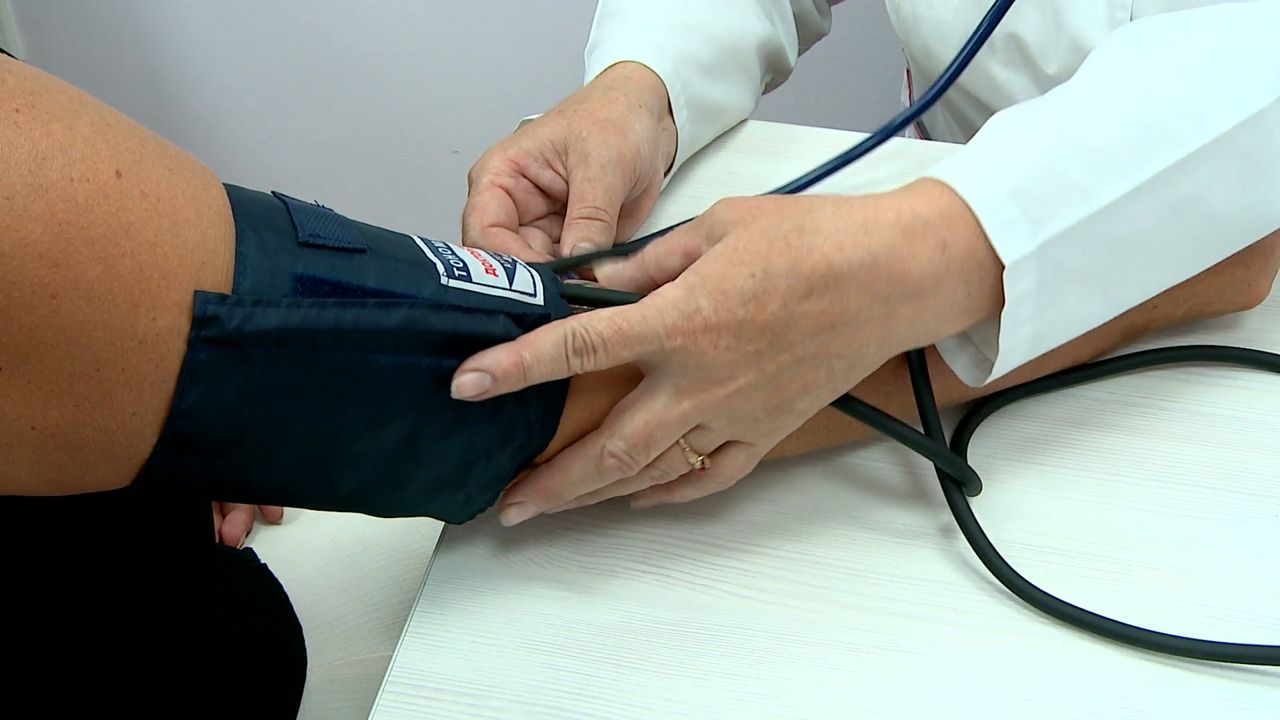
WASHINGTON, D.C. — The 583,443 Ohioans who in 2025 bought health insurance through the federal marketplace created by the Affordable Care Act are in for some sticker shock next year, after the 11 health insurance companies that offer plans in Ohio through the marketplace are requesting to increase premiums by 2.5 to 43%.
What You Need To Know
- Ohioans who buy health insurance through the federal marketplace are set to pay up to 43% more in premiums next year
- Insurance companies cited the possible expiration of enhanced subsidies as a reason for the increases
- Democrats are demanding an extension of the enhanced subsidies in exchange for their support for a measure to fund the government
The Affordable Care Act of 2010 created federal health insurance marketplaces for people who don’t get coverage through work, Medicare or Medicaid. That can include people who are unemployed or have jobs that don’t offer insurance.
Starting in 2014, the government began subsidizing the plans through tax credits. During the COVID-19 pandemic, the Biden administration temporarily raised the tax credits through the end of 2025.
Health insurance companies cited the possible expiration of those tax subsidies as a major reason for their requested premium rate increases. Though the tax credits go to patients, not insurance companies, the theory is that healthier people will stop buying marketplace insurance if it costs more, leaving insurance companies to cover patients who are sicker and require more expensive care.
Health policy experts said abruptly ending the enhanced subsidies would have cascading effects beyond higher premiums.
“If people drop coverage, they're uninsured. Now, free clinics and health centers are completely overwhelmed, and hospitals and doctors aren't getting paid because people who don't have insurance often can't pay their medical debt, even if they're stuck with medical debt for a long time,” said Brian O’Rourke, health care policy analyst at the Health Policy Institute of Ohio.
Democrats have said extending the enhanced subsidies could prevent that from happening and are demanding such an extension in exchange for supporting a measure to fund the government and allow it to reopen.
Republicans have said they would not support a funding measure with those extensions, and that even if were packaged in separate legislation, the program would need reforms before they would vote for it.
“We have enormous fraud in this program; probably 60% of it of these COVID subsidies that created $0 premiums have enormous fraud. So what we’re saying is, ‘Hey, we’ll have a conversation about that, but that’s no reason to shut down the government,’” said Sen. Bernie Moreno, R-Ohio.
“I’m the first person that wants to have a discussion about how do we make health care more affordable. It’s the most runaway spending that we’ve had in the country, has been around health care. It’s inflationary. It hurts families. It hurts small businesses. I’m happy to engage in trying to make health care more affordable in this country. But you can’t have those discussions when you’re just holding your breath and punishing the American people by not opening the government,” said Sen. Jon Husted, R-Ohio.
Even if Congress renews the enhanced subsidies this year, health experts said premiums would still rise as insurers across the country report growing health care costs.
“They are also talking about considerations like increasing utilization of care, the increasing prices of services. They’re talking about pharmaceuticals and biologics and all these new medications that are coming out that have really great health impact but are also really expensive to cover,” said O’Rourke. “So this isn’t about fixing the spending problem, but it is about making sure that people don’t face this massive cliff of premium increases next year.”
Ohio ACA premium rates are usually finalized by late summer. But with less than a month until open enrollment, the proposed rates are still estimates while insurers wait to see if Congress renews the enhanced subsidies. Until the premium rates are finalized, patients cannot see exactly how much they will pay for health insurance next year.