




AUGUSTA — Lawmakers on Tuesday approved a temporary ban on data centers, making Maine the first state in the country to attempt to slow the massive development projects.
The bill now heads to Gov. Janet Mills, who said on Friday that she wants the bill to exempt a planned project in Jay. As passed by the House and Senate, the bill does not specifically mention the Jay project, which is proposed to be built at a former mill site.
Bill sponsor, Rep. Melanie Sachs (D-Freeport), said in a statement that she hopes Mills, a fellow Democrat running for the U.S. Senate, will sign the bill.
“This bill positions Maine to respond deliberately and responsibly to a rapidly evolving industry,” Sachs said. “Since I brought this bill forward, people and communities across the state have been asking the Legislature to take action and temporarily pause these projects, which could have significant impacts on ratepayers, our electric grid and our environment.”
Her bill would prohibit municipalities, state agencies and quasi-independent entities from issuing an approval for a data center with a load of 20 megawatts or more.
The moratorium would last until Nov. 1, 2027. The bill creates the Maine Data Center Coordination Council to study risks and benefits of data centers.
On Monday, Bangor City Council passed a six-month data center ban to give the city time to consider potential impacts.
Late last month, town leaders in Jay wrote to Mills to urge her to veto the bill unless it allows a proposed project in their town to move forward.
“The closure of the Pixelle paper mill has had a profound and lasting negative impact on our community,” they wrote. “The loss of this facility eliminated a major source of employment and resulted in a substantial reduction in property tax revenues that once supported essential municipal services.”
The current data center proposal for Jay is described as a “small scale” project that will use the existing electrical grid and will tap into less than 1% of the water that had been used by the mill.
The $550 million investment is projected to generate 800 to 1,000 jobs during construction and 125-150 “high paying jobs” once it’s up and running.
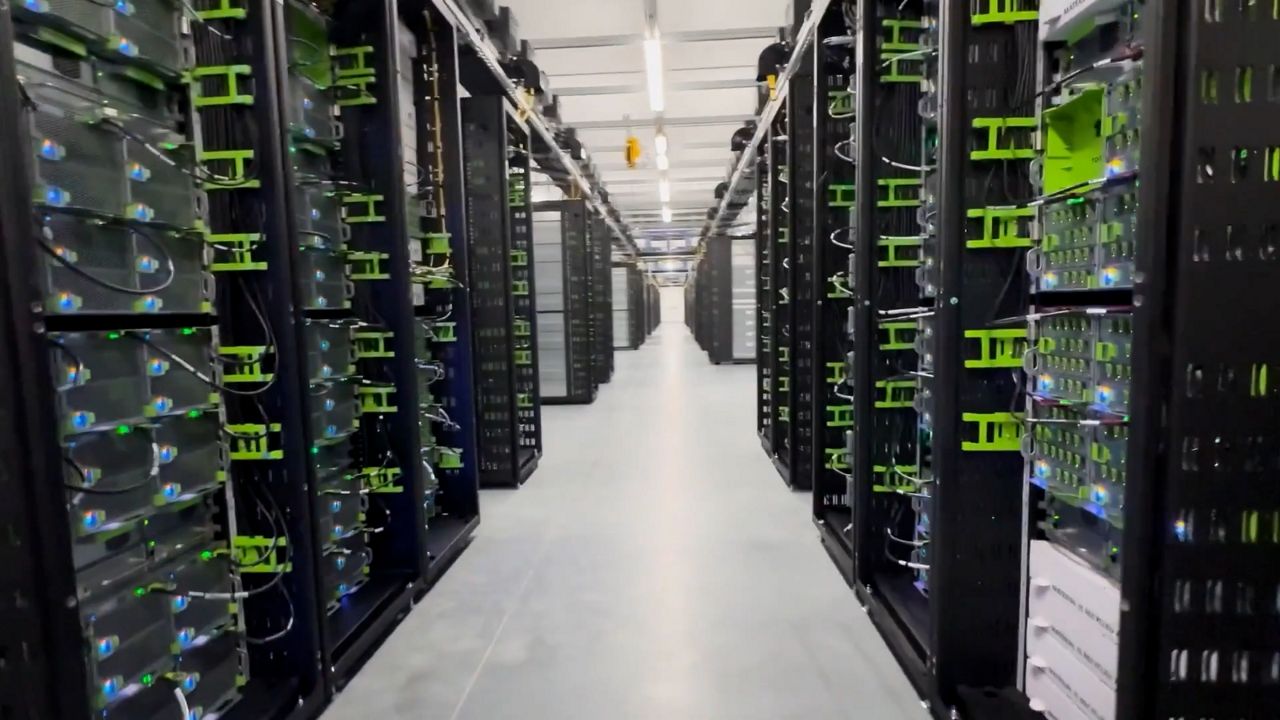
Across the country, data centers — which are large buildings that house computer systems — have been criticized for their water use and the potential to increase electricity prices.
Mills said Friday that the state can’t ignore the artificial intelligence boom and the need to support increased use of technology.
“It’s a popular subject all across the country,” she said. “I think there are mixed feelings about data centers, but look, we all use those cellphones, we all use AI in some form or another everyday so let’s be realistic as well.”
Mills has 10 days to sign, veto or let the bill become law without her signature.