




WASHINGTON — The White House on Thursday indicated there may be some wiggle room around the July deadline for countries to secure a new trade deal with the U.S. before President Donald Trump’s tariffs, tailored to specific nations, are set to take effect.
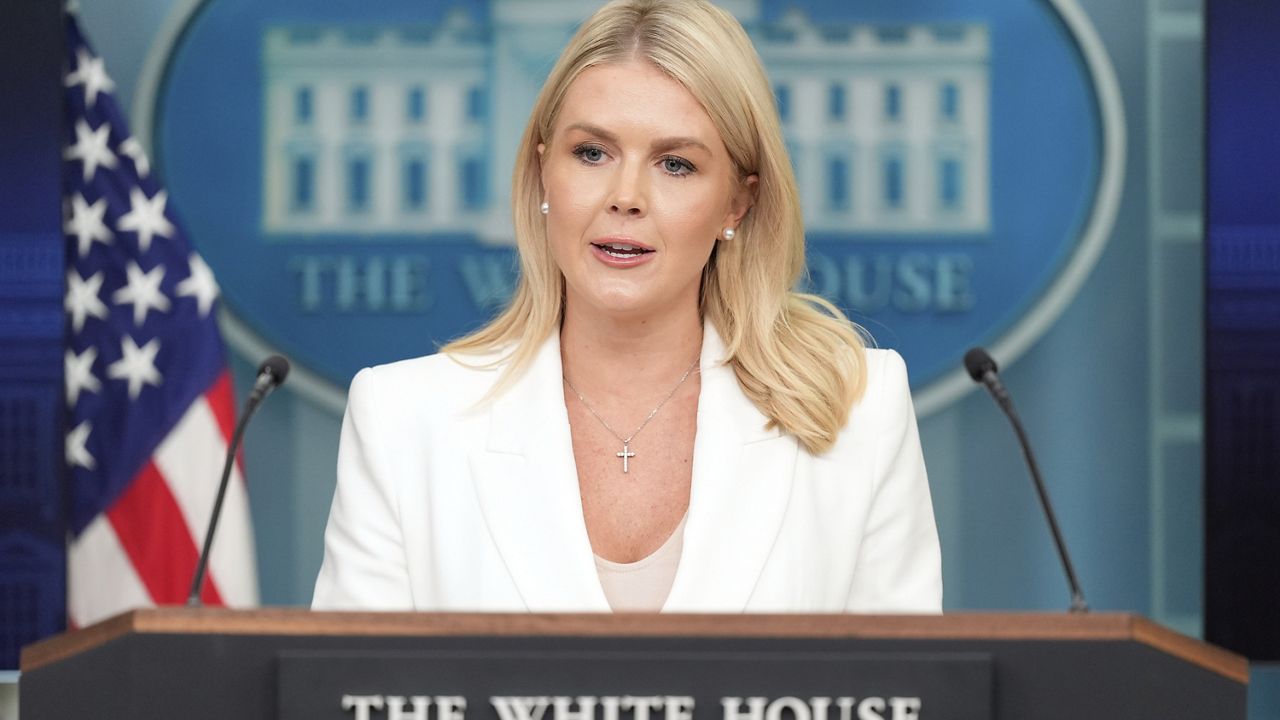
Addressing reporters at Thursday’s White House briefing, press secretary Karoline Leavitt referred to July 8 — the day in which the pause Trump issued on his so-called “reciprocal” tariffs is set to lapse — as “not critical.” At the same time, she noted Trump could set a new tariff rate for trading partners unilaterally at any point if no mutual agreement is reached.
"The deadline is not critical,” Leavitt said. “The president can simply provide these countries with a deal if they refuse to make us one by the deadline, and that means the president can pick a reciprocal tariff rate that he believes is advantageous for the United States and for the American worker.”
Asked later if the pause on the tariffs scheduled to lift on July 8 could be pushed back, Leavitt said “perhaps it could be extended.”
The 90-day pause issued by Trump just a week after he announced the sweeping tariffs on what he dubbed “Liberation Day,” was framed by the administration as a chance to secure “90 deals in 90 days” and leave America with fairer trade relationships around the globe. Thus far, the U.S. has announced just two new trade deals with one being temporary less than two weeks away from when the pause is set to end.
Leavitt’s comments appear to build off of what Treasury Secretary Scott Bessent told lawmakers during a House committee hearing earlier this month when he said it was “highly likely” the July 8 deadline would be pushed back. But he noted that would only be the case for countries that were currently engaged in good-faith negotiations with the U.S. but had yet to reach a final agreement. He mentioned 18 countries or groups in the case of the European Union that could be included in that camp.
Trump separately granted the EU’s request to delay a 50% tariff he floated imposing until July 9.
While administration officials have often indicated they are on the cusp of trade deals with nations like Japan and India, only one full one with the United Kingdom has been announced. Trump and U.K. Prime Minister Keir Starmer touted and cemented the new agreement at the Group of Seven Summit in Canada last week.
Other than that, the U.S. and China struck a temporary deal to put a plug on what was a quickly escalating trade war between the world’s two largest economies.
Trump has also said more than once, including back in mid-May, that his administration was going to start sending out letters within weeks unilaterally deciding and informing countries what its tariff rate would be, saying it would be impossible to negotiate a deal with them all.
At the NATO summit this week, the president blasted Spain for not agreeing to a new goal set by allies in the military alliance to eventually spend 5% of their GDP on defense, saying that the U.S. will make the country “pay twice as much” as part of a new trade deal in response.
White House National Economic Council Director Kevin Hassett, meanwhile, told Fox Business this week that the administration was waiting to announce new trade deals until after Congress passes the massive bill containing some of the president’s biggest legislative priorities on tax cuts, the border and defense and more.
Hassett added he expects “a sequence” of trade deals will be announced after the Fourth of July, the date Trump has set for Republicans to get the legislation, dubbed the “one big, beautiful bill,” to his desk.
Meanwhile, a series of court rulings has also thrown question around the future of Trump's tariff and trade agenda. A court first found Trump’s tariffs not legal using the authority he cited before another decision allowed him to forge ahead in imposing them for now. The White House is insisting that Trump's trade agenda will continue whether under the authority he cited or a new one if necessary.