




WASHINGTON — Lawmakers across the political spectrum are expressing a range of reactions to seemingly escalating strikes by President Donald Trump’s administration on vessels it says are smuggling drugs from other countries as part of his self-declared war on cartels.
Responses from lawmakers on both sides of the aisle poured in over the weekend after Defense Secretary Pete Hegseth announced on Friday that the U.S. hit another target he claimed was operated by the Venezuelan gang Tren de Aragua in the Caribbean Sea, bringing the total number of vessel strikes the administration has carried out over the last few weeks, which have killed dozens, to the double digitals.
The same day Hegseth announced the administration’s tenth strike, the Department of Defense said it was deploying the Gerald R. Ford Carrier Strike Group to the Latin American region as part of Trump’s “directive to dismantle Transnational Criminal Organizations,” in what marks a significant step that some lawmakers suggested could signal an imminent escalation of the effort.
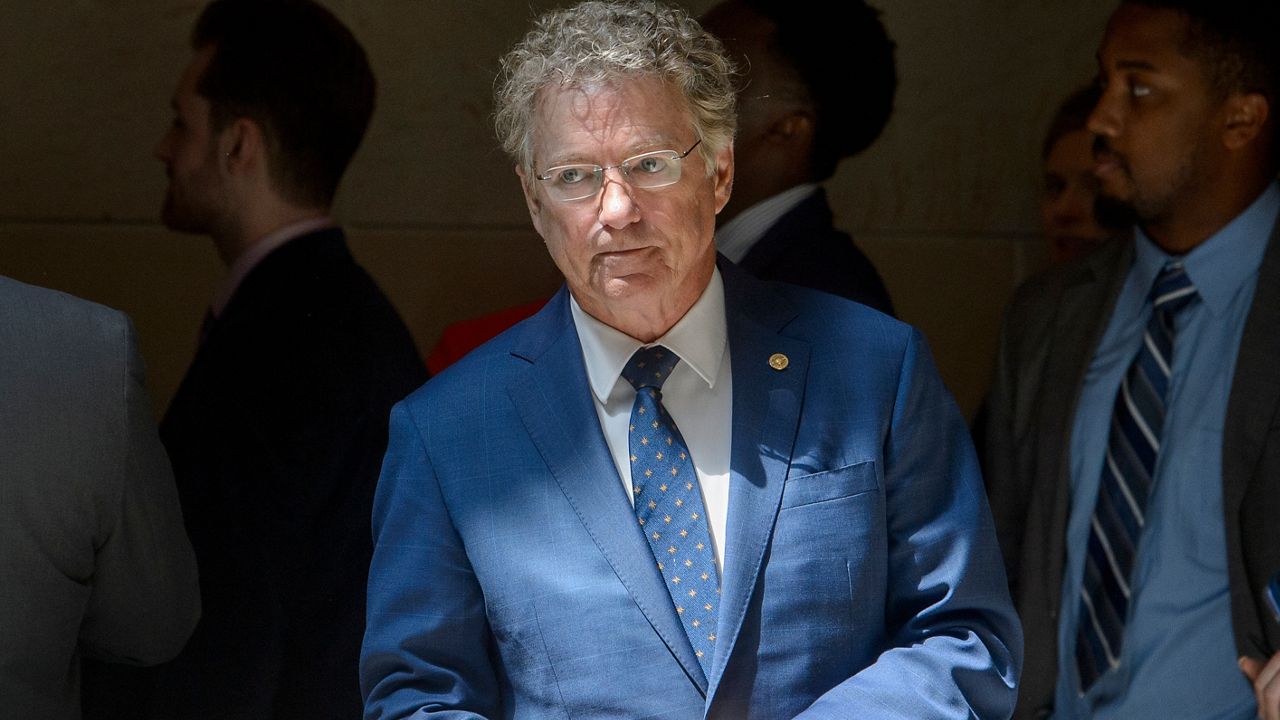
In a joint appearance on Fox News on Sunday, Republican Sen. Rand Paul of Kentucky and Democratic Sen. Tim Kaine of Virginia – who have both teamed up with Sen. Adam Schiff, D-Calif., to seek to legislatively block Trump from ordering U.S. troops to engage in hostilities against Venezuela without Congressional consideration – slammed the moves.
Paul, who often finds himself at odds with the president and has been the most outspoken Republican against the strikes, specifically took issue with the fact that the public has not seen evidence to show those targeted are smuggling drugs, chalking the actions up to “extrajudicial killings” at this point.
“This is akin to what China does, to what Iran does with drug dealers,” Paul argued. “They summarily execute people without presenting evidence to the public, so it’s wrong.”
Joining Paul, Kaine went on to stress Congress should be playing a role in debating and authorizing any action and noted that the strike group order to the region on Friday includes an “awful lot” of his constituents from Virginia.
“They shouldn’t be sent in harm’s way unless Congress has the guts to vote about whether a war is in the national interest,” Kaine argued.
Asked about the deployment of the carrier during an interview on CBS News’ “Face the Nation” on Sunday, Republican Sen. Lindsey Graham of South Carolina, meanwhile, called the U.S. carrying out strikes on land, which Trump has repeatedly not ruled out in regards to Venezuela, a “real possibility.”
“I think President Trump's made a decision that Maduro, the leader of Venezuela, is an indicted drug trafficker, that it's time for him to go,” Graham said, referring to Nicolás Maduro, who the Department of Justice has brought narcoterrorism charges against.
Graham, a close-ally of the president, went on to say that Trump told him over the weekend that he plans to brief Congress “about future potential military operations against Venezuela and Colombia” when he returns from his nearly week-long trip to Asia, set to conclude on Thursday.
“So, there will be a congressional briefing about a potential expanding from the sea to the land,” Graham said.
While he said he supported such an update for lawmakers, he argued Trump already has “all the authority he needs” regardless.
The South Carolina Republican went on to slam comments from his Democratic colleague, Sen. Ruben Gallego of Arizona, who referred to the strikes as “murder” in his own appearance on NBC News’ “Meet the Press” over the weekend.
”If this president feels that they're doing something illegally, then he should be using the Coast Guard,” Gallego argued. “If it's an act of war, then you use our military, and then you come and talk to us first. But this is murder.”
The Arizona Democrat also criticized Trump personally for “killing people or doing something in the name of war” without having served in the armed forces himself.
While also critical of the moves, Arizona’s other Democratic senator, Sen. Mark Kelly, was less forceful in his calculation of the situation in an interview on ABC News on Sunday, calling the legality of the strikes “questionable” and saying lawmakers on both sides of the aisle have a lot of things they would like answered about the moves.
Kelly also said that the administration has “a secret list of 20 something” organizations that they have authorized to “use kinetic action against without the normal approach that we have for law enforcement.” Earlier this month, multiple outlets reported on a memo from the Trump administration that declared the U.S. in a “non-international armed conflict” with drug cartels.
The Arizona senator said he has seen evidence that “there were drugs on some of these boats,” although declined to give details, and said there was not fentanyl, specifically. He also appeared to agree with Graham that the move to deploy the carrier strike group could be signaling the U.S. is considering an escalation but criticized such a possibility.
“You don’t move a battlegroup all the way from where it was to the Caribbean unless you’re planning on either to intimidate the country, which is rather intimidating, or you're going to start conducting combat operations in Venezuela,” Kelly said. “And this doesn't make the United States more safe. This makes us less safe.”
Last week, Republican Sen. James Lankford of Oklahoma expressed concern about the amount of insight Congress is being given on the actions, saying it is not about seeking “permission” but rather “typical consultation.”
“If this was happening with this level of insight under the Biden administration, I’d be apoplectic,” he said.
Trump’s apparent full-force campaign against transnational cartels has included strikes against vessels in the Caribbean and the Pacific and killed about 40 people, according to figures given by the administration. Trump also confirmed he authorized the CIA to carry out covert operations inside Venezuela.
Administration officials have insisted they know exactly who is on the boats they are targeting and where they are coming from but Trump has faced questions, both internationally and from some lawmakers at home, over his power to carry out such actions.
Last week, Trump said his administration would brief Congress on the strikes, but he dismissed the idea that he needs any official approval from lawmakers.
“Well, I don’t think we’re going to necessarily ask for a declaration of war," he said in response to a question from a reporter. "I think we’re just gonna kill people that are bringing drugs into our country."