




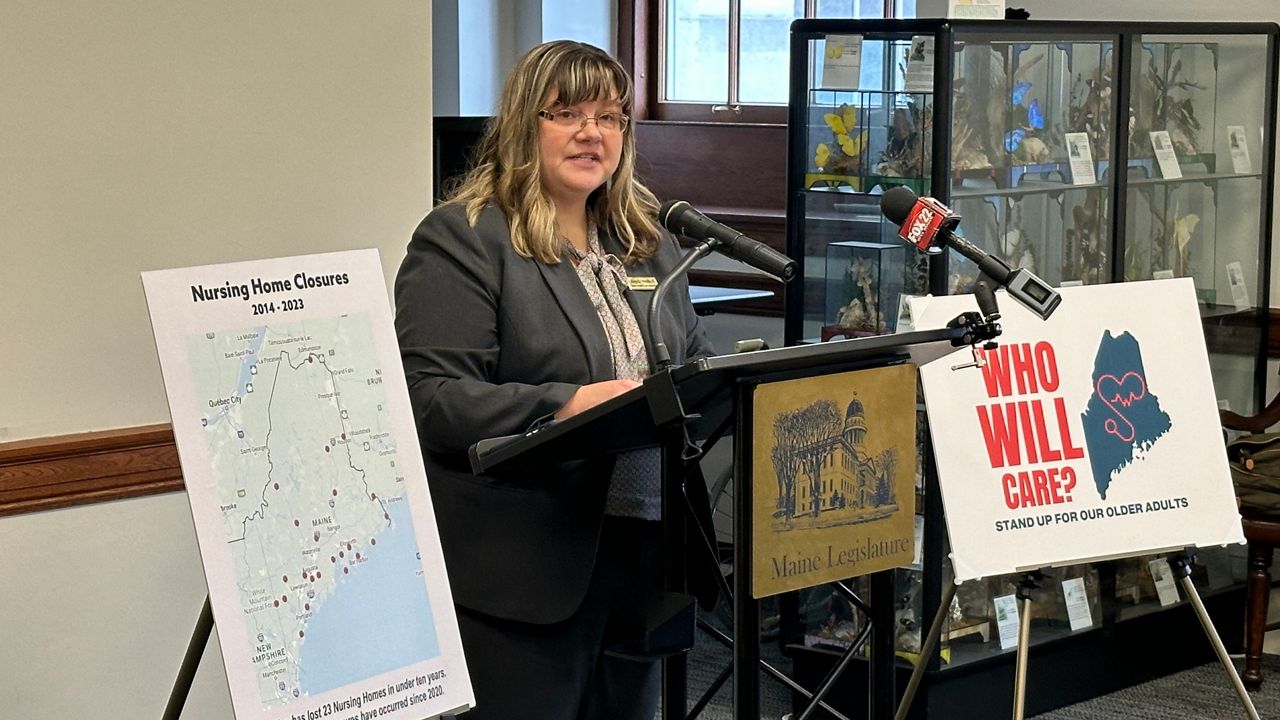
Nursing homes across Maine need $28 million more in state funding to fend off future closures and keep beds available for an aging state population, a new coalition said Monday.
The Maine Health Care Association is leading the “Who Will Care” campaign, which is urging state lawmakers to help nursing homes stay afloat amid a $120 million shortfall, which is a combination of state and federal funds.
“Chronic underfunding and lack of staff have seriously impeded Maine’s ability to provide long-term care services to our aging population,” said Angela Westhoff, CEO of the association, during a State House news conference.
Senate President Troy Jackson (D-Allagash) said while there’s $3 million in the proposed supplemental budget, the amount falls $28 million short of what’s needed. Those state funds could then be used to draw down federal money, which would help the nursing homes fill the $120 million gap.
Jackson said for years, lawmakers have failed to provide enough money to keep nursing homes operating statewide. In 1995, Maine had 132 nursing homes, a number that has dropped to 81.
“For myself, the last four or five years, we get down to the end of the budget and there’s nothing there to help nursing homes,” he said. “We put a little bit of money in, a stopgap measure to get them through, and then wonder why they are back the next year.”
Appropriations Committee member Sen. Rick Bennett (R-Oxford) said many of the critical facilities are in rural areas that often lack other options. He said 23 facilities have closed in the last 10 years at a time when demand for elder care is rising.
“Over 70% of Mainers are expected to require long-term care services at some point in their lives,” he said. “Compared to other states in New England, Maine has the lowest number of beds per capita. This, in the oldest state in the nation.”
In addition, costs continue to rise, particularly as the nursing homes rely on temporary nurses amid staffing shortages.
The coalition, which includes the Maine Alzheimer’s Association, MaineHealth, Maine Hospital Association, Maine Medical Association and Northern Light, among others, will now compete for funds with other groups lobbying lawmakers as they negotiate the budget.
Gov. Janet Mills proposed setting aside more than $100 million in state revenues to go to the state’s rainy day fund, but various groups — including teachers and state workers — are working the State House halls to try to get a share of those funds.
For veteran nurse Jessica Duffy, who now works as executive director of Affinity Care of Maine, it’s time for lawmakers to help facilities that “are at the brink.”
“Our long-term care and nursing facilities are struggling and older Mainers are feeling the brunt of it,” she said. “We have patients who have been in the hospital for over four months awaiting placements in facilities. Stop and imagine that it was your mother, your sister, your aunt, who needed 24-hour care and you couldn’t find a safe place for them.”