




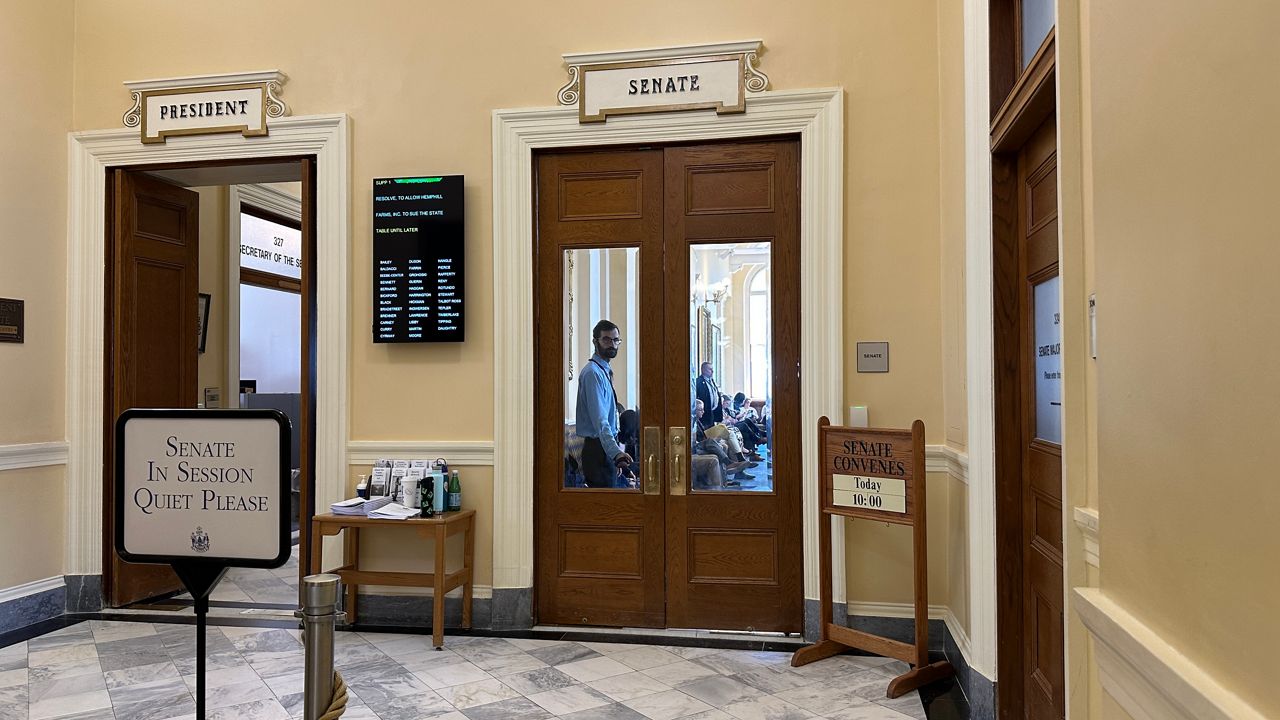
AUGUSTA — The Maine Senate on Monday rejected three bills that sought to prevent transgender girls from participating in female sports, likely ending this year’s legislative debate over the issue.
Seven of eight bills related to the issue are now officially dead for the year. One bill — LD 233, which seeks to prohibit schools that receive state funding from allowing transgender girls to play sports — is still technically alive although the Senate vote of 21-13 in opposition makes it unlikely to make it to the governor’s desk.
Last week, the Maine House voted 73-70 in favor of the bill, with four Democrats joining Republicans in support.
The Senate spent little time Monday debating the issue, having spent time last week on other bills that proposed to ban transgender girls from girls’ sports teams.
Ultimately, all Senate Democrats opposed all the bills, with one Republican — Sen. Rick Bennett (R-Oxford) — also voting in opposition.
After the vote, Bre Danvers-Kidman of executive co-director of Maine TransNet, described the votes as “a great relief.”
“It’s been a long battle on all of these issues, and it’s been I think really emotional for our community to watch their rights be debated like this,” they said.
One of the bills sought to require schools to designate restrooms and changing rooms as limited to either females or males.
“I know parents are very nervous about their daughters,” said Sen. Scott Cyrway (R-Albion). “This has turned into a political mess and I don’t think it needed to. I think this is just common sense.”
Sen. Anne Carney (D-Cape Elizabeth) said transgender Mainers testified during the public hearing on the bill that they often don’t feel safe in restrooms.
“That’s where these children and adults face the greatest risk of being beaten up by intolerant classmates,” she said.
The Senate defeated the bill 21-13 and voted the same way on a third bill that sought to amend the Maine Human Rights Act.
With adjournment just days away, the debate over the issue is now likely over at the State House. But it will still play out in the courts with Maine facing a lawsuit from the federal government over its policy of allowing transgender girls to compete on girls’ sports teams.
That policy landed the state in the national spotlight in February following a highly publicized exchange between President Donald Trump and Gov. Janet Mills.
The exchange in which Trump told Mills he would withhold all federal funds if she did not comply with his executive order banning transgender sports participation ended with Mills saying she would see him in court.
Mills has said the issue is not about transgender sports’ participation, but about whether the president has the power to interpret federal law and punish those he deems to be out of compliance with it.
The issue stayed in the news following a vote in the Maine House to censure Rep. Laurel Libby (R-Auburn) for a social media post in which she used two photos of a transgender high school athlete who won a state sports championship to highlight her opposition to allowing transgender girls to compete.
Libby declined an opportunity to apologize for the post and had not been allowed to vote in the chamber since February. But last month, the U.S. Supreme Court ordered the Maine House to allow Libby to vote while the full case is pending.
Then in mid-April, the U.S. Department of Justice sued the Maine Department of Education, claiming that the state’s policy on transgender sports participation violates the federal Title IX law which prohibits discrimination based on sex.
A hearing in that matter is set for April 2026.
For Danvers-Kidman, the fight over transgender rights now pivots to the federal level following the Trump administration declaration that there are only two recognized genders.
“For all the time that we spent on sports this session, most of the people I work with still can’t get their passport,” they said. “My hope is that Maine will continue to be a stronghold for trans people, and for all people in this country who value their civil liberties.”