




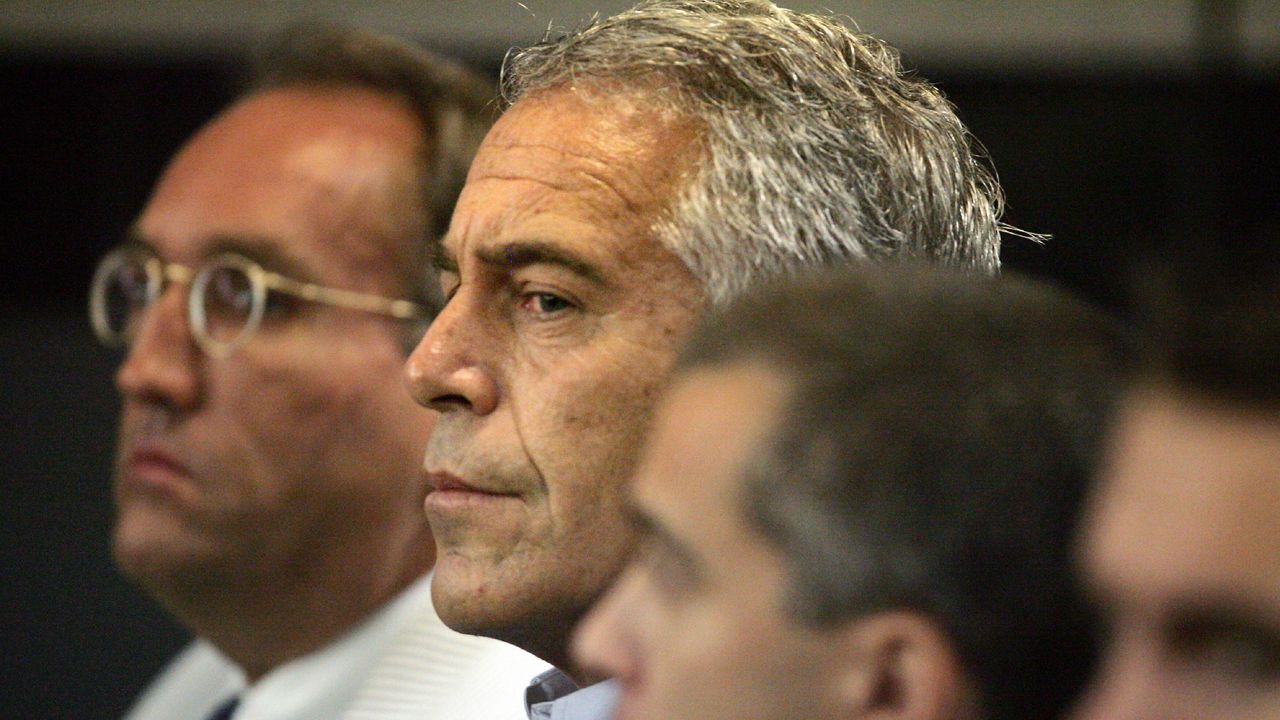
WASHINGTON — The deadline for the Justice Department to release records in its investigation into notorious convicted sex offender Jeffrey Epstein is just days away.
By Friday, Attorney General Pam Bondi must make the files publicly available “in a searchable and downloadable format," per the Epstein Transparency Act signed into law by President Donald Trump last month.
But it is unclear when exactly the records will be released and if the files will be shared at once.
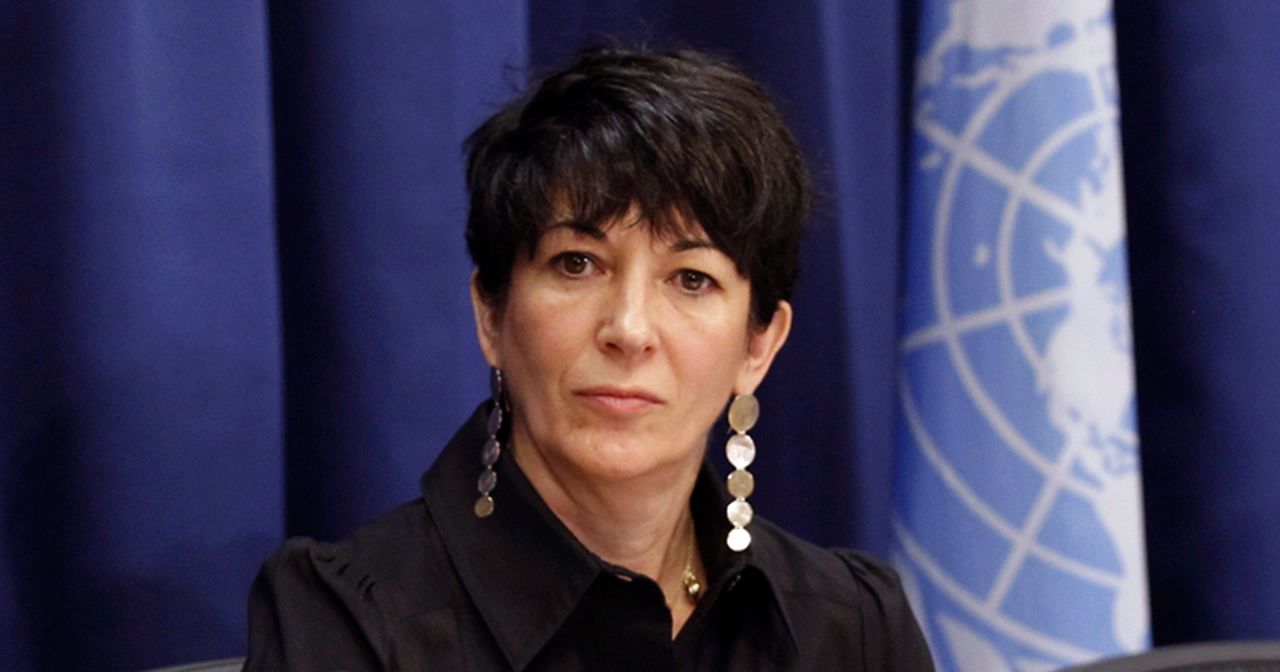
Included in the scope of what must be made public are documents relating to Epstein’s longtime confidant and former girlfriend, Ghislaine Maxwell, who is currently serving a 20-year prison sentence for luring girls to be abused by Epstein over the course of a decade. Maxwell was transferred from a federal prison in Florida to a prison camp in Texas in August.
Epstein, who himself pled guilty in 2008 to one count of soliciting prostitution and one count of soliciting prostitution from someone under the age of 18, died by suicide in a New York City jail cell while awaiting trial on sex trafficking charges.
Ahead of the release, here’s a look back at what led up to the Epstein Transparency Act and what may be included in the release:
A small group of bipartisan lawmakers — including Democratic Rep. Ro Khanna of California as well as Republican Reps. Thomas Massie of Kentucky and Marjorie Taylor Greene of Georgia — led a monthslong push for the release of the files.
Their effort to compel the House to vote on making Justice Department files public secured the final lawmaker signature needed once Rep. Adelita Grijalva, D-Ariz., was sworn into office last month — seven weeks after she won a special election for her House seat
In the days leading up to subsequent votes in the House and Senate — both of which were overwhelmingly in favor of forcing the files' release — Trump seemed to reverse course on his previous opposition to the measure and signed the bill into law the same day it arrived on his desk
The law explicitly notes that records cannot be delayed, withheld or redacted on “the basis of embarrassment, reputational harm, or political sensitivity” but does allow for carve-outs for Bondi to prevent information “in the interest of national defense or foreign policy” as well as materials that “would jeopardize an active federal investigation or ongoing prosecution” from being made public.
One investigation that may be considered “active” or “ongoing” is the probe Bondi announced in November into some of Trump’s political foes, including former President Bill Clinton, former Treasury Secretary Larry Summers and LinkedIn co-founder Reid Hoffman. A request made by Spectrum News to the Justice Department about the status of the investigation was not immediately returned.
Records that contain "personally identifiable information" about survivors of Epstein's abuse may also be withheld or redacted.
During a news conference Tuesday, Senate Minority Leader Chuck Schumer warned of “serious legal and political consequences” if members of the Trump administration “dodge, delay or partially release these files.”
Democrats in the upper chamber said they would know if materials were missing based on feedback from women who have accused Epstein of abuse.

A Justice Department and FBI memo from July confirmed that authorities believe Epstein abused more than 1,000 girls and women.
Several of his accusers joined lawmakers earlier this year on Capitol Hill, where some, including Marina Lacerda, said they were publicly sharing what happened for the first time.
Lacerda, who identified herself as “Minor-Victim 1” in federal court filings, said that she had to drop out of ninth grade because she spent so much time with Epstein.
“From 14 to 17 years old, I went and worked for Jeffrey instead of receiving an education,” she said.
Three separate federal judges earlier this month ordered that grand jury transcripts and records related to Epstein be unsealed, with each saying the recently passed law overrode the usual rules about grand jury secrecy.
The records pertain to the abandoned federal investigation into Epstein in the 2000s, materials and other nonpublic evidence from Maxwell's criminal case, as well as files from the 2019 sex trafficking case against Epstein.
“It’s a good sign that the DOJ went back and asked for that grand jury material,” Massie said last week, when asked about the looming deadline. But he added, “What we want to see are the facts and the evidence that the FBI and DOJ have never given to a grand jury.”
In January, a separate batch of court documents from Epstein accuser Virginia Giuffre’s lawsuit against Maxwell were also unsealed — sparking renewed public interest in the investigation.
The House Oversight Committee launched its own investigation into Epstein over the summer, and issued a flurry of subpoenas to high-profile Democrats, including Clinton and former Secretary of State Hillary Clinton, Epstein’s estate and most recently two banks that lawmakers said had dealings with the notorious financier.
The Republican-led committee has shared several rounds of documents to date, including some 33,000 in September and another 20,000 in November. Many of the documents were already public.
Meanwhile, the top Democrat on the committee — Rep. Robert Garcia of California — last week released 19 undated photos, including ones with Trump, Clinton and the former Prince Andrew, as well as several other high-profile men in politics and business. The images, which did not depict any clear criminal conduct, were among some 95,0000 provided by Epstein’s estate, Garcia said.
Each of the men shown has previously denied wrongdoing. Clinton said in a statement after Epstein’s 2019 arrest on federal sex trafficking charges that he knew “nothing of the terrible crimes” that the disgraced financier was accused of, and Andrew has continued to “vigorously deny” accusations of sexual misconduct.
The White House accused Democrats of “releasing cherry-picked photos with random redactions to try and create a false narrative.”
When asked about the photographs during an unrelated event at the White House on Friday, Trump said that Epstein was “all over Palm Beach” and that "there are hundreds and hundreds of people that have photos with him."
Earlier this month, Garcia also shared images and videos of Epstein’s private property in the U.S. Virgin Islands.
Epstein accuser Liz Stein, who now works as an advocate against human trafficking nationwide, described seeing the newly released images in an interview with CNN.
“When we are seeing these photos, things that might seem like they won’t matter to the general public can really be meaningful to us,” Stein said. “I was talking to a survivor earlier who said, ‘To the rest of the world that just looks like a room, but to me that’s the phone that I picked up to call for help.’”
Stein added that the release of materials “can be really incredibly triggering for us, but at the same time, (we) realize how important it is for this all to come out.”

Public and political pressure had already been rising earlier this year when Bondi suggested during a Fox News interview in February that Epstein’s client list was “sitting on my desk." Her comments came ahead of an event with conservative influencers at the White House, where she shared binders of information — most of which already was public.
Then in July, the Justice Department and FBI contended that Epstein did not maintain an incriminating “client list” and “no further disclosure would be appropriate or warranted,” drawing criticism even from some in the Make America Great Again movement.
White House chief of staff Susie Wiles offered her assessment to a Vanity Fair journalist, saying in a piece published Tuesday that she thought Bondi “completely whiffed on appreciating that that was the very targeted group that cared about this.”
When asked for comment about Wiles remarks, a Justice Department spokesperson pointed to Bondi’s post on X. The attorney general had written in part, “Any attempt to divide this administration will fail.”