




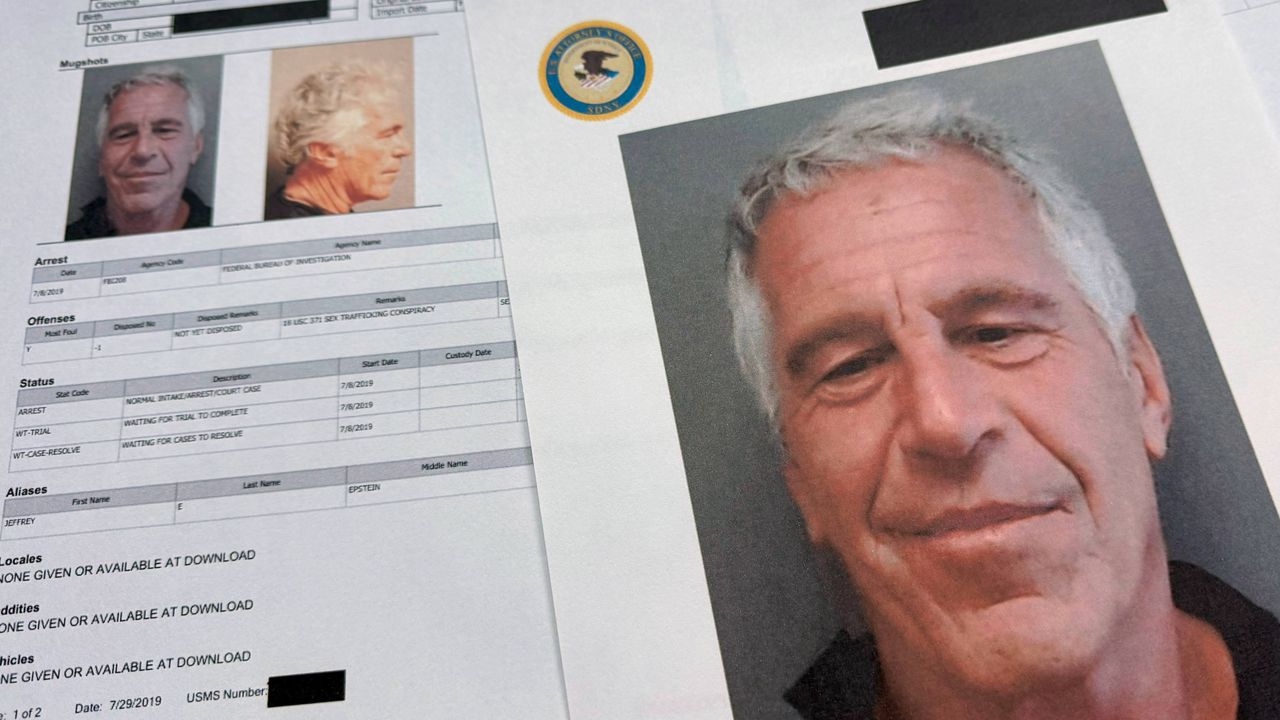
The Justice Department on Friday said it was releasing the final trove of files related to its investigation into convicted sex offenders Jeffrey Epstein and Ghislaine Maxwell, as required under the Epstein Files Transparency Act.
During a news conference, Deputy Attorney General Todd Blanche said more than 3 million pages, 2,000 videos and 180,000 images would be part of the latest disclosure.
“Today's release marks the end of a very comprehensive document identification and review process to ensure transparency to the American people and compliance with the Act,” Blanche said.
The files were posted to the Justice Department’s website in three new batches Friday.
Epstein died by suicide in his New York City jail cell in 2019 while awaiting trial on sex trafficking charges, and Maxwell, his longtime confidant and former girlfriend, is currently serving a 20-year prison sentence for conspiring with Epstein to sexually abuse minors.
A Justice Department and FBI memo from July said that authorities believe Epstein abused more than 1,000 girls and women.
“Victims of Mr. Epstein have gone through unspeakable pain, and there's nobody that should say anything differently,” Blanche said Friday. “To the extent that there's frustration, I understand where that comes from.”
A 2019 email made public in a previous release that appeared to be from an FBI investigator had seemed to indicate the Justice Department was previously investigating 10 unnamed “co-conspirators” of Maxwell.
“I don't know whether there are men out there that abused these women,” Blanche said, when asked if others had been involved in the abuse. “If we learn about information and evidence that allows us to prosecute them, you better believe we will, but I don't think that the public or you all are going to uncover men within the Epstein files that abuse women.”
In a message posted on X Friday, Senate Minority Leader Chuck Schumer wrote several questions he had for Attorney General Pam Bondi following the latest disclosure, including one in which he asked, “Has all the relevant information been released on each of the 10 alleged Epstein co-conspirators?”
The huge cache of documents released Friday included email correspondence between prosecutors, emails that Epstein sent or received, news clippings and reports written by FBI agents summarizing interviews with witnesses and Epstein’s accusers.
On Friday, Blanche said materials about and showing men, including President Donald Trump, were being shared unredacted in the disclosures. However, files involving women were redacted, with the exception of Maxwell.
Much like previous disclosures, a substantial portion of the material was blacked out. One video that was included was approximately one second long and showed only a black screen with the word “Redacted.”
The documents also included a spreadsheet of tips that prosecutors had received from people alleging sexual abuse by Epstein and Maxwell as well as famous and powerful people. Corresponding notes in the margins appeared to indicate that allegations had not been substantiated.
Others listed in the file included Trump and former President Bill Clinton, who have both denied any wrongdoing. Some of the claims date back more than 40 years.
When asked about issues accessing the spreadsheet Friday afternoon, a Justice Department spokesperson said that the "document was down due to overload and is back online."
The spokesperson also referred to a press release about Friday's disclosure, which stated, “Some of the documents contain untrue and sensationalist claims against President Trump that were submitted to the FBI right before the 2020 election. To be clear, the claims are unfounded and false, and if they have a shred of credibility, they certainly would have been weaponized against President Trump already.”
Trump signed the Epstein Files Transparency Act into law in November, after it was passed overwhelmingly by Congress. The measure stipulated that all of the files be made public in a downloadable format by Dec. 19, 2025.
House members who introduced the bill –– Republican Rep. Thomas Massie of Kentucky and Democratic Rep. Ro Khanna of California –– have previously contended that prosecutors were not in compliance with the Act since all of the files had yet to be made public.
On Friday, Khanna said in an interview that he was reviewing the newly released materials.
“It’s not the quantity of documents, and no one is asking him to name exactly who all is in the files. We are just asking him to release the survivor witness interviews,” Khanna said.
When asked about criticism of the timeline of the records’ release, Blanche described the volume of materials prosecutors needed to review before they were made public.
“The Act had multiple requirements: Get it done in 30 days, and you better not release any victim information,” he said, adding, “We obviously are not violating the 30-day requirement by taking our time to comply with the Act.”
Earlier in the news conference, Blanche said the Justice Department would make arrangements for members of Congress to review “any portions of the responsive production in any unredacted form” if requested.