





U.S. President Donald Trump arrived in Beijing on Wednesday for his hotly anticipated talks with Chinese President Xi Jinping on the Iran war, trade and U.S. arms sales to Taiwan.
The meat of the summit doesn't start until Thursday, when the leaders hold bilateral talks, visit the Temple of Heaven, where Chinese emperors once prayed for bumper crops, and take part in a formal banquet. But the Chinese offered Trump a pomp-filled welcome, literally rolling out the red carpet for him after Air Force One landed in the Chinese capital.
The president was greeted by Chinese Vice President Han Zheng; Xie Feng, China's ambassador to Washington; Ma Zhaoxu, executive vice minister of foreign affairs; and the U.S. envoy to Beijing, David Perdue. The welcoming ceremony included a military honor guard, a military band and some 300 Chinese youths waving Chinese and American flags and chanting, "Welcome, welcome! Warm welcome!" as Trump made his way to his waiting limousine.
—The Associated Press
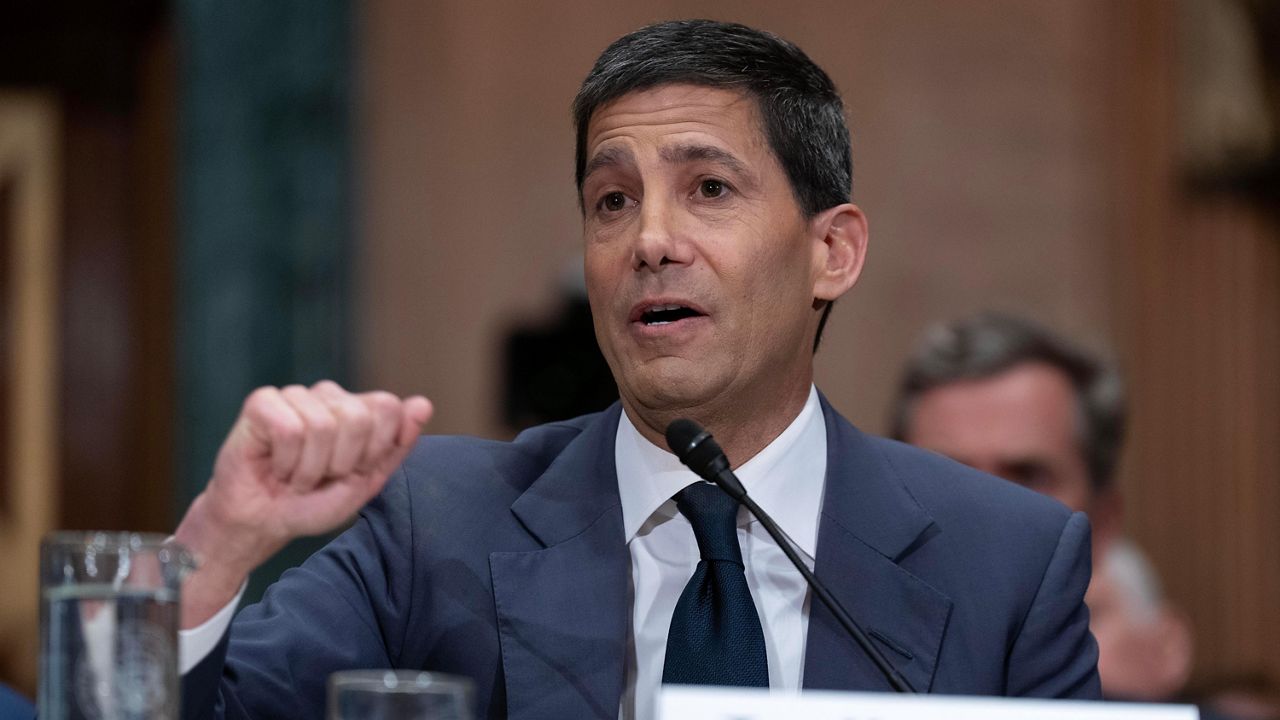
The Senate confirmed President Donald Trump's nominee to lead the Federal Reserve, Kevin Warsh, bringing new leadership to the world's most powerful central bank at a fraught moment for the global economy.
Warsh, 56, a former top Fed official, was confirmed Wednesday in a largely party-line 54-45 vote and will replace Jerome Powell as chair at an unusually difficult time for the independent agency.
Inflation has topped the Fed's 2% target for five years and is now rising faster because of spiking gas prices. The Fed's interest rate-setting committee is divided and saw the most dissenting votes in more than three decades last month. And Powell, after years of personal attacks from Trump and an unprecedented Justice Department investigation, plans to remain on the Fed's board even after his term as chair ends, potentially creating a competing power center.
—The Associated Press
As Democrats seize upon President Donald Trump’s comment that he is not thinking about the toll the Iran war is taking on Americans' finances, Republican House Speaker Mike Johnson attempted to play down the remark Wednesday.
“I can tell you the president thinks about Americans’ financial situations,” Johnson said at a news conference Wednesday morning. “I talk to him on average twice a day, sometimes three or four times a day, and we talk about it constantly.”
Trump set off a firestorm of Democratic criticism Tuesday when he answered a reporter’s question about whether Americans’ financial situations were motivating him to make a deal with Iran.
“Not even a little bit,” he answered. “The only thing that matters when I’m talking about Iran — they can’t have a nuclear weapon. I don’t think about Americans’ financial situation.
—Spectrum News' Susan Carpenter
Senate Republicans on Wednesday again blocked Democratic legislation that would halt President Donald Trump's war with Iran, but the number of GOP senators voting against the war grew.
Republican Sen. Lisa Murkowski of Alaska voted against the war for the first time since it began at the end of February. Two other Republicans, Sens. Susan Collins of Maine and Rand Paul of Kentucky, also voted against the war, as they had done previously.
The war powers legislation ultimately failed to advance 49-50, with Sen. John Fetterman of Pennsylvania the only Democrat to oppose it, yet the close tally reflected growing unease with Trump's war. Several other Republican senators have signaled they want Congress to weigh in on the direction of the conflict.
—The Associated Press
About a month after President Donald Trump named him “fraud czar,” Vice President JD Vance announced Wednesday several efforts aimed at eliminating fraudulent activity in the nation’s Medicare and Medicaid programs.
The Trump administration will launch an audit of all 50 states’ federally funded fraud control units to determine if their Medicaid programs are in compliance. The U.S. Centers for Medicare & Medicaid Services has also imposed a six-month moratorium on new hospice and home health agency enrollments in Medicare nationwide.
About 140 million Americans receive healthcare through the two federal programs, according to the CMS. Healthcare is the largest area of federal spending, according to the Committee for a Responsible Budget, which estimates Medicare spending alone will exceed $1.1 trillion in 2026.
—Spectrum News' Susan Carpenter
• Republican senators say they need more detail on $1B White House security request
• Foreigners with World Cup tickets won't have to pay bonds to enter U.S., Trump administration says