




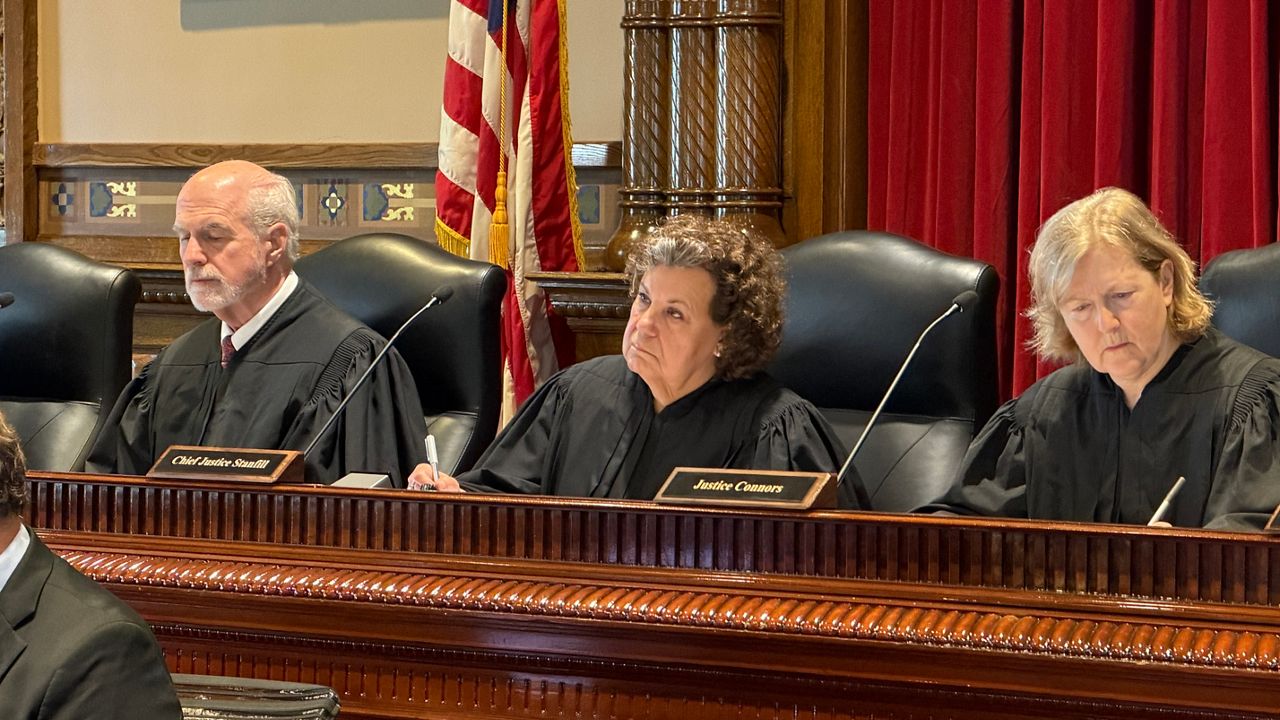
AUGUSTA — The state’s highest court is now considering whether a potential fall ballot question seeking to keep transgender girls from playing on girls’ sports teams can move forward.
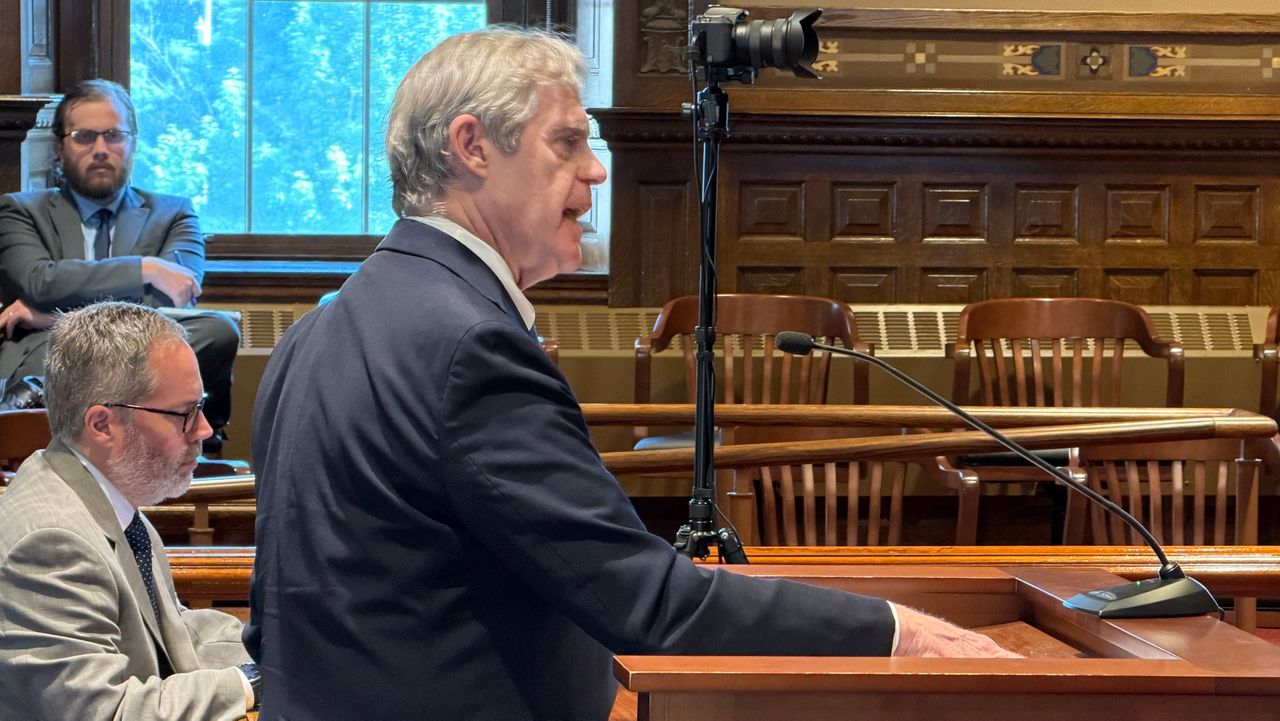
Timothy Woodcock, representing Protect Girls Sports in Maine, told the Maine Supreme Judicial Court Wednesday that Secretary of State Shenna Bellows exceeded her authority by throwing out some signatures gathered by out of state circulators.
“The people of Maine who have constitutional authority have been cut out of this process,” Woodcock said. “I do think it’s important for this court to keep the secretary within her lane.”
Earlier this year, Protect Girls Sports turned in thousands of signatures to try to meet the threshold of 67,682 required to get a question on the November ballot.
The debate Wednesday focused on Bellows’ obligation to balance the U.S. Constitution, the Maine Constitution and a 2022 federal consent order requiring Maine to allow nonresidents to circulate petitions.
The arguments before the state’s highest court came one day after the U.S. Supreme Court ruled that states can bar transgender girls from playing on girls’ sports teams.
Across the country, 27 states have passed laws putting those restrictions in place. Maine is currently being sued by the U.S. Department of Justice for allowing transgender girls to play on teams consistent with their gender identity.
Last fall in Maine, Protect Girls Sports began gathering signatures to get a citizen initiative on the ballot that would prohibit transgender girls from playing on girls’ sports teams.
The proposed initiative requires schools to designate all sports teams as male, female or co-ed. It defines sex as a person’s status at birth. It requires public schools to maintain separate restrooms, locker rooms and shower rooms for girls and boys.
In March, Bellows, a Democrat, ruled that the group met the signature requirement. But three Mainers challenged that decision and after a hearing, Bellows’ reversed course and ruled they missed the mark by 532 signatures.
Several people who testified at that hearing said they saw signature collectors leave their petitions unattended on Election Day last fall, calling into question their validity.
Bellows also found that four out-of-state collectors failed to follow guidelines she put in place following a 2022 federal consent order. That decision is what was at issue in court on Wednesday.
Christopher Dodge, an attorney for the three Mainers who challenged Bellows’ original decision to certify the signatures, said Protect Girls Sports used 120 out of state circulators.
Of those, 116 filled out forms correctly so they could gather signatures. But he said four did not and that left Bellows with no option but to dismiss the signatures.
“We are here today because PGS has essentially reached to the bottom of the barrel for its last few arguments to try to dislodge the secretary’s well-reasoned and well supported finding,” he said.
Woodcock said he believes Bellows took an extraordinary step in discounting signatures because four circulators didn’t comply with state rules.
“If this is upheld it is essentially, an initiative has been pulled off the ballot with 1,520 otherwise valid signatures on the strength of a federal court order,” he said. “That is a remarkable result under these circumstances.”
A decision by the state supreme court will be issued in the coming weeks. An attorney for Bellows said she has an Aug. 25 deadline to finalize the Nov. 3 ballot.
Even if the court upholds Bellows’ decision, the initiative could still come before voters at a future election.
When she announced her decision in late May, Bellows confirmed to reporters that Protect Girls Sports could continue to gather signatures to meet the requirement.
It would be too late to make the ballot for this fall, so the question could be placed before voters sometime in the future.