




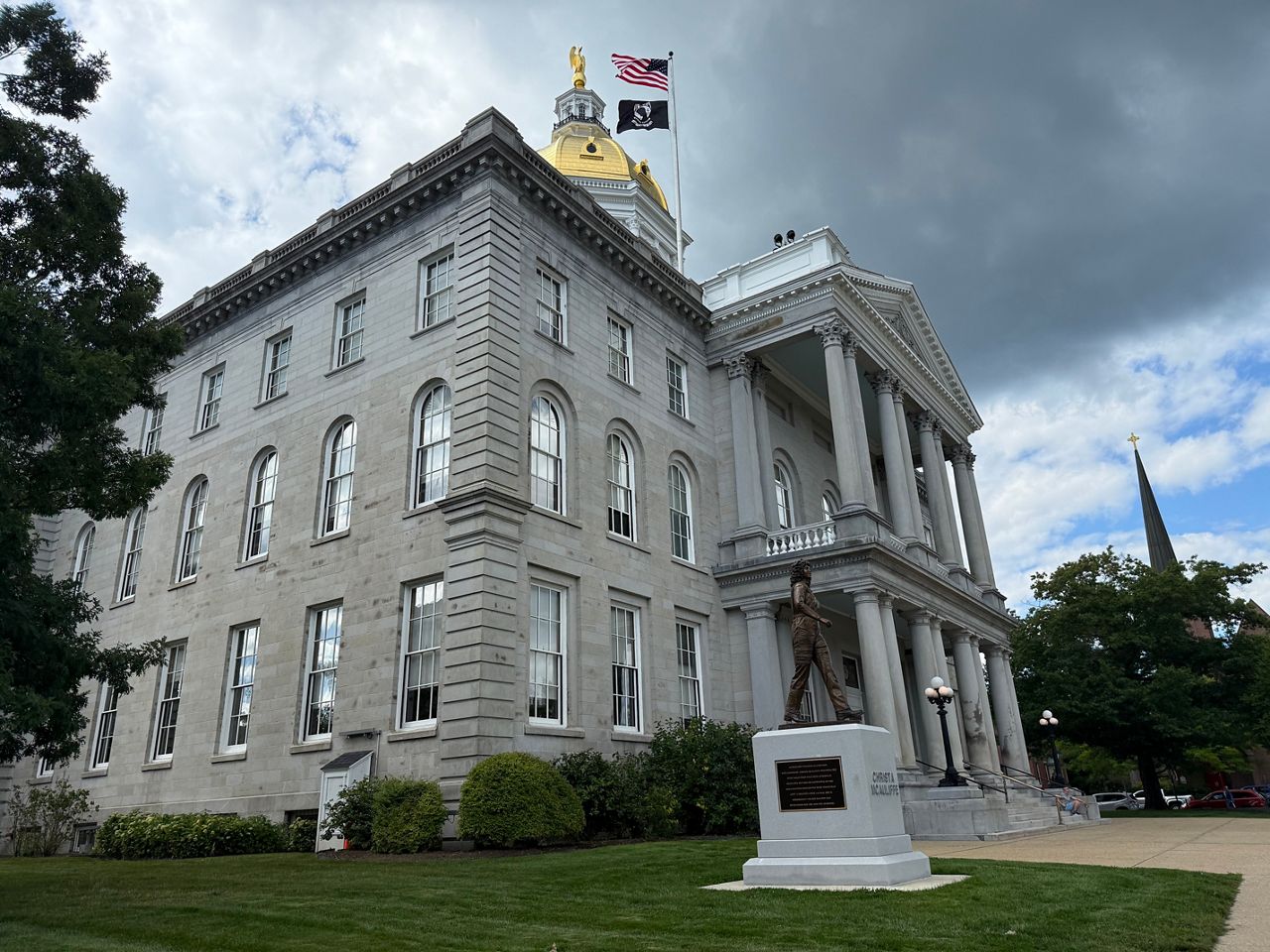
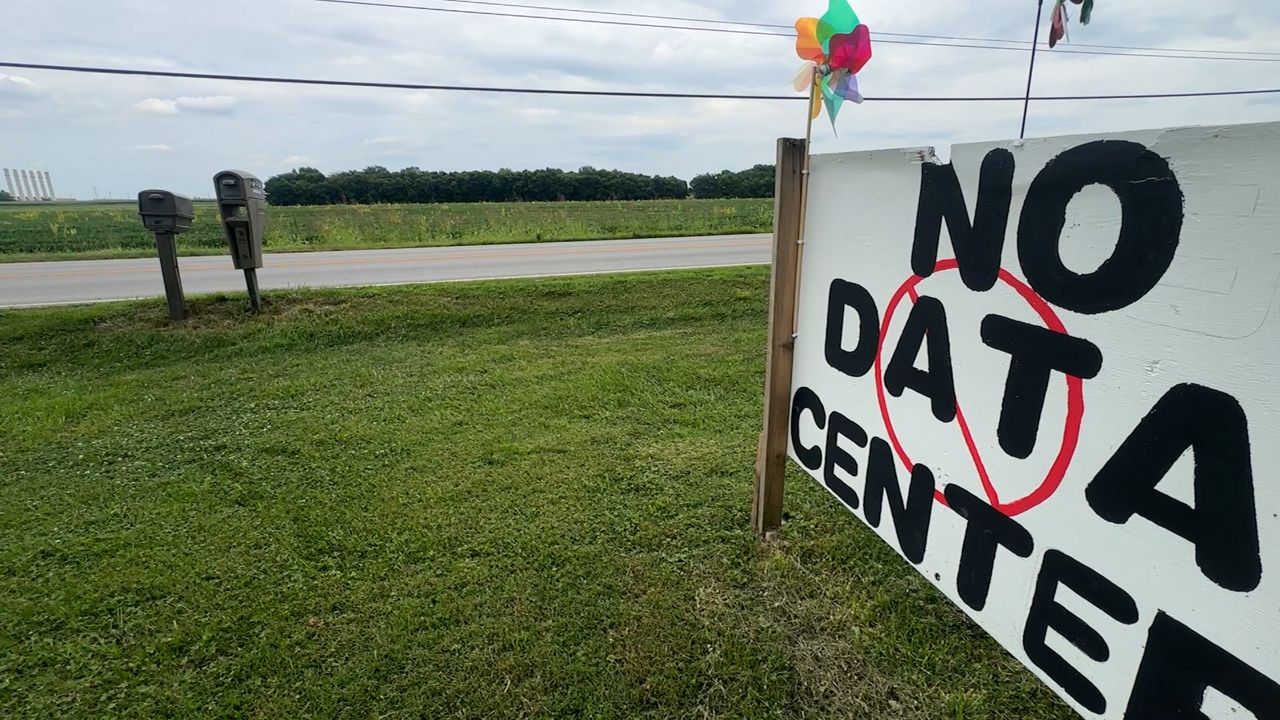
MANCHESTER, N.H. — A recently publicized plan to build an AI data center in Bow, New Hampshire, has thrown a new issue into focus in the lead-up to Tuesday’s statewide primaries. Only, unlike almost every other policy debate, this one has Democrats and Republicans sending the same message: shut it down.
“I feel very strongly we need a moratorium,” Stefany Shaheen, a Democrat running for the open congressional seat in New Hampshire’s 1st District, said. “Our municipalities are not yet prepared to handle the complexity of what these kinds of projects could mean for their communities.”
Across the political divide, Republican Gov. Kelly Ayotte, who is seeking another two-year term in Concord, feels the same. This week, she announced a proposal for the next budget: a multiyear pause on new data centers.
“Right now, they do not make sense at all in terms of energy, environment or location,” she said earlier this summer when asked about the issue (the New Hampshire Democratic Party, in a statement, criticized Ayotte for opposing data centers as “political desperation").
Over in the highly consequential U.S. Senate contest — whose result could determine control of the chamber — Democratic front-runner Rep. Chris Pappas struck a similarly hostile tone toward these massive campuses of hardware and power.
“New Hampshire is not the right place for AI data centers and Granite Staters should not be asked to foot the bill for large, out-of-state corporations who might seek to develop these centers,” he told Spectrum News.
Data centers are gargantuan and often loud. They conceal a technology that feels both incomprehensible and, to some voters, acutely threatening.
Backlash to these facilities has been consistent and powerful — with communities across the country raising concerns over noise, aesthetics and higher electricity prices that flow from utility companies building infrastructure to support new power demands.
Resistance has rolled into action. More than 350 data center moratorium efforts have sprung up since 2023, according to an interactive tool from Interconnected Capital, a hedge fund.
The rush by Democrats and Republicans in New Hampshire to join the rebellion is happening as new polling from NBC News shows 69% of respondents oppose AI data centers in their communities. So powerful is the opposition that GOP candidates are even breaking ranks with President Trump, who is avowedly pro-data center.
“The only reason that communities throughout the U.S.A. should not want Data Centers is if they want to end up being backwards and poor,” Trump wrote in a Truth Social post last month.
Still, while many candidates in New Hampshire race to assure voters that a hyperscale project will not come here and not come now, the view is not uniform.
In the wide-open Republican primary for the 1st Congressional District, a seat that Pappas is leaving to run for Senate, state Rep. Brian Cole is offering a more nuanced view of the infrastructure supporting AI than many in his party do.
“If you do it in the right fashion, it’ll be good for New Hampshire,” Cole said, adding that data centers have the potential to create jobs and lower energy prices by creating excess power that could go back into the grid.
Cole also believes the U.S. dominating the race to build artificial intelligence — and beating out China — is a matter of national security.
“Technology advances on an exponential scale daily,” he said. “If we fall behind the curve, it’s not going to be good for the United States.” The sentiment closely matches that of Democratic Sen. John Fetterman of Pennsylvania — who has been known to buck his party— as well as Energy Secretary Chris Wright, who warned that Beijing stands to gain if the U.S. “drags our feet on data centers.”
Chinese AI models are indeed getting closer in complexity to their American counterparts, and for a fraction of the cost, according to reporting from the Brookings Institution.

When asked about this technological arms race overseas, Shaheen instead highlighted the local voices.
“I say that communities should be the ones in control of these decisions because there are substantial impacts of these kinds of projects,” she said.
Even Cole agrees with this home-rule approach to data center construction. “Leave it up to the municipality. I’m not going to force something down someone’s throat.”
Ultimately, the rush by Democrats and Republicans in New Hampshire to claim the same side of the data center debate might well be canceling out the issue as a decisive factor for some voters.
“I don’t see a specific data center election issue,” Jim Allen, a New Hampshire resident, said during a walk with his dogs near the state Capitol in Concord. “I’m already voting in [one] way.”