




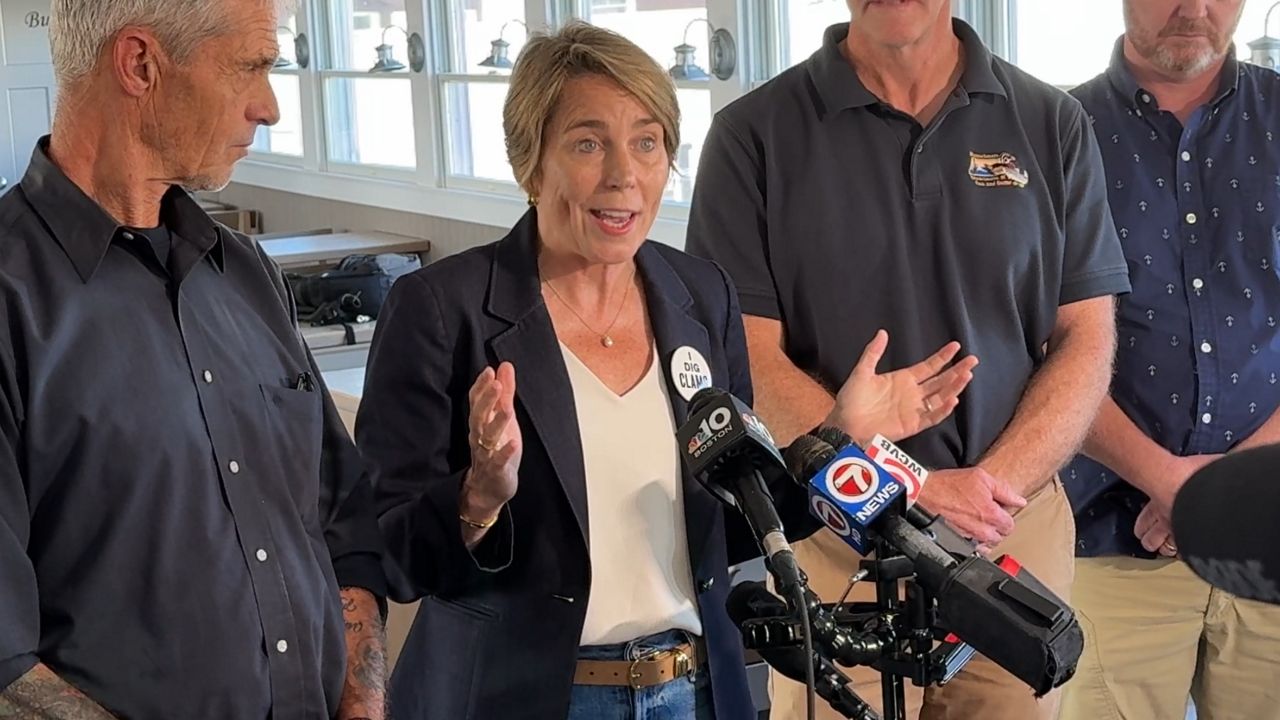
ESSEX, Mass. — Massachusetts Gov. Maura Healey on Monday called for swift federal action to regulate artificial intelligence, but offered few details on specific policies she would support.
"When it comes to AI, we need strong guardrails," Healey told reporters. "We need to be able to protect people from AI, and adverse consequences of AI. We also need federal intervention."
The remarks follow a historic weekend for the rapidly advancing technology. Dario Amodei, the CEO of AI giant Anthropic, published an essay Saturday calling for a slowdown in the development of artificial intelligence. He also encouraged additional oversight from the private sector and governments around the world.
Amodei wrote that he was concerned AI models, which have been "advancing drastically faster," are at risk of growing beyond human understanding and control. Sam Altman and Elon Musk, who helm two other major AI companies, OpenAI and SpaceXAI, also joined in calling for a slowdown.
The view of the AI leaders and Healey stands in stark contrast to President Donald Trump, who in a post on Truth Social Monday said the only controls over AI should be a "strong and smart" president. He blamed opposition to data centers and AI on "a sick conspiracy."
Trump and other prominent Republicans have argued that overregulating the technology will cause American companies to lose their current edge over Chinese AI models.
In Massachusetts, Mike Minogue, the Republican challenger to Healey in this year's gubernatorial election, struck a softer tone in a statement to Spectrum News.
"The key is how we choose to develop and use it," he said. "We should be careful not to let bureaucracy over-regulate innovation, but we also need safeguards that protect people."
Minogue also called for "duplicate checks on operations associated with AI decision making" and specified giuidence given directly to the models.
The governor, for her part, rejected Trump’s idea that regulation and AI dominance were incompatible.
"I'd like to think this great country of ours can do a few things at once," Healey said, arguing the White House’s strict immigration policy and rejection of renewable energy development has damaged America’s footing in competition with China.
Healey's calls for AI regulation come a week after she signed an executive order directing state permitting agencies to refuse to advance data center projects that do not have local approval.
Data centers, the land-intensive buildings that enable AI technology, have drawn the ire of communities across the country.
More than 350 data center moratorium efforts have sprung up since 2023, according to an interactive tool from Interconnected Capital, a hedge fund. Together, the governor's moves on data centers and AI regulation reflect a push to fold this new technology into the regulatory structure in place for other products, from pharmaceuticals to vehicles.
"We need strong, independent oversight and clear rules of the road that allow innovation to continue while protecting people, our economy and our national security,” Healey said.