




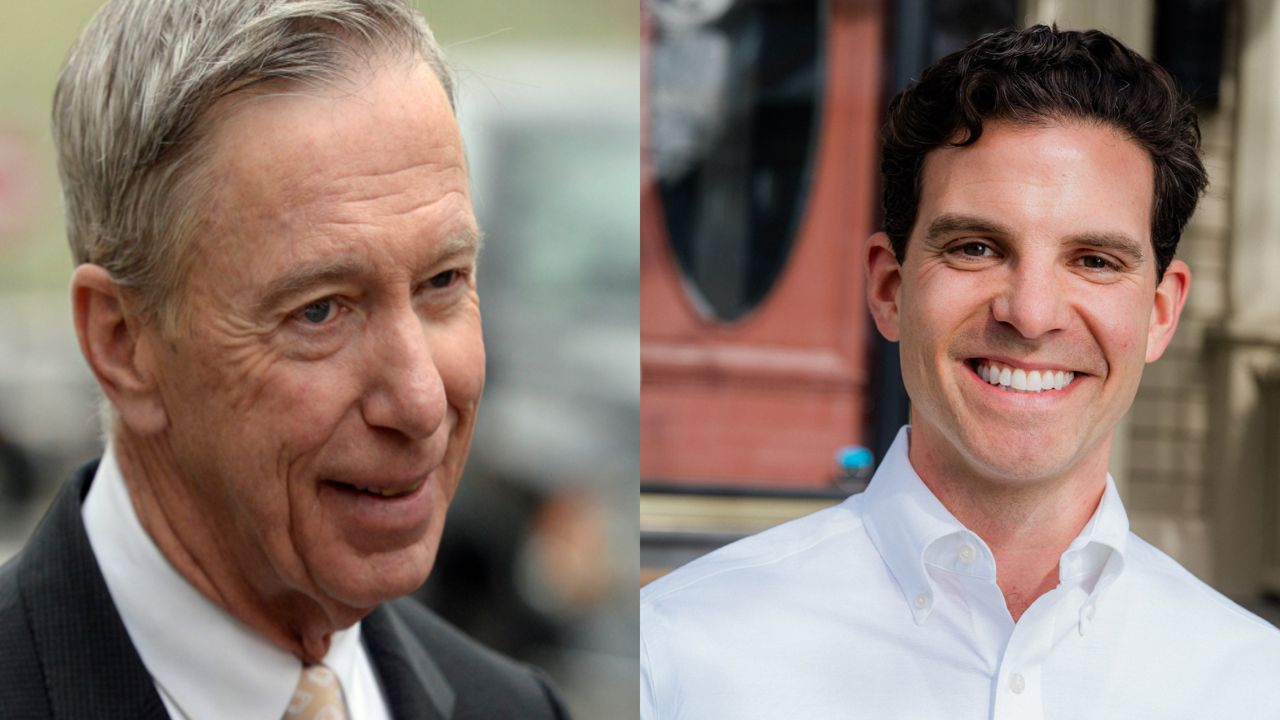
BOSTON — As Democrats across the country duel over youthful left-wingers and veteran moderates, a congressional primary in Massachusetts is complicating the fight — asking voters to choose between progressive politics and blue-collar bona fides.
Democratic Rep. Stephen Lynch, a union ironworker turned lawyer and labor leader, has served in the House for a quarter-century. His reelection campaigns have rarely been competitive. Not this year.
Progressive challenger Patrick Roath, a corporate lawyer and former aide to former Massachusetts Gov. Deval Patrick, has shaken up the race in a district whose borders snake through much of Boston’s urban core toward cities and towns to the south and west.
“People are tuning into this race,” Roath said in an interview with Spectrum News. “They’re ready to go.”
The 39-year-old is mounting a campaign firmly to the left of Lynch, calling for universal health care, term limits for members of Congress and the abolition of ICE, an agency which he calls “the most dangerous threat to our Constitution.”
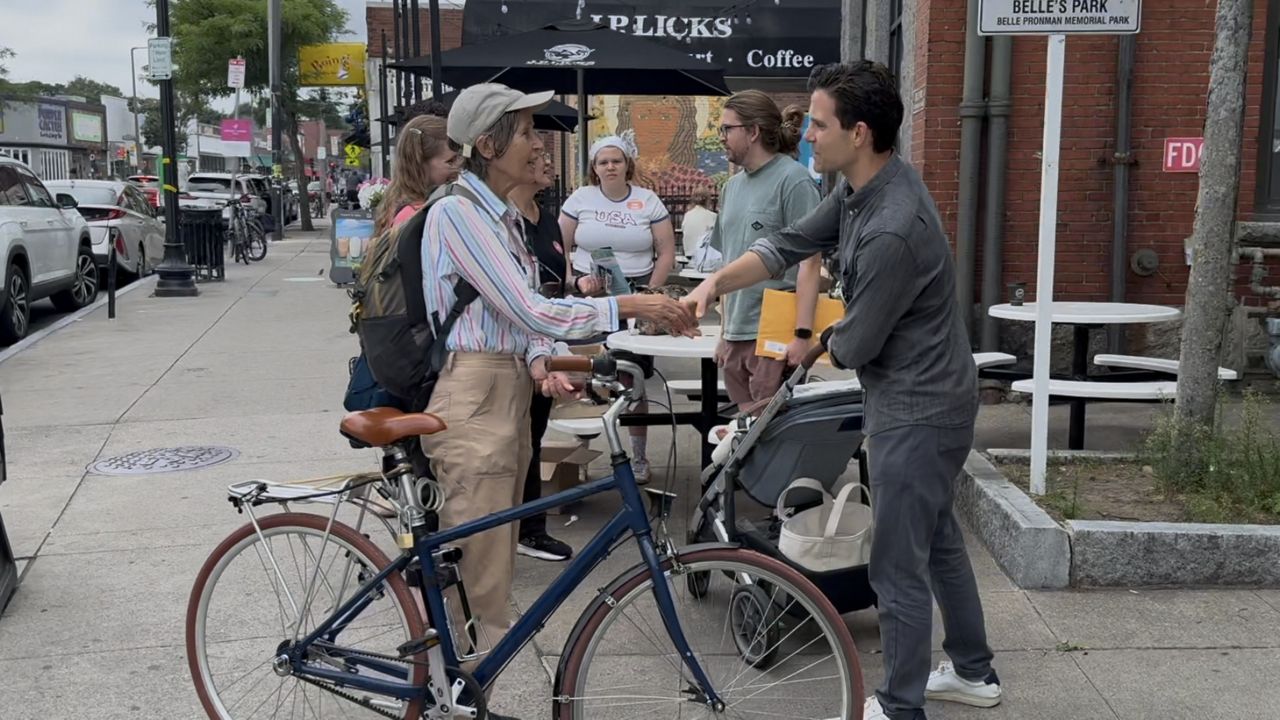
Attention has been growing. Walking with supporters in Jamaica Plain on Saturday, Roath pushed his young daughter in a stroller with a newspaper stashed below the seat. “We’re in The Boston Globe yesterday on the front page,” he said, correcting himself. “Actually, printed today. It says this race is a toss-up.” Less than a week later, he received the endorsement of the paper’s separate editorial board.
Much of the young challenger’s message centers on criticism of Lynch’s moderate voting record in Congress. Notably, Lynch voted against the Affordable Care Act and in favor of the Trump-backed Laken Riley Act, which instructs the Department of Homeland Security to detain undocumented immigrants accused of some violent crimes before a conviction.
“This is a Republican messaging bill designed to put Democrats in a tough spot,” Roath said, calling Lynch’s vote “a terrible mistake.”
“To have a safe blue Democrat for no reason sign up on that legislation was deeply naïve about what the Trump administration was about to do in our communities,” Roath said.
Count Lynch unimpressed by the jab. Across town at the Ironworkers Local 7 union hall in South Boston, the incumbent spent Saturday morning with adoring ironworkers and nurses, among others. “I’ve cast 47,000 votes probably in Congress, so yeah, you can cherry pick one or two,” he said. A GOP scorecard from the right-leaning Institute for Legislative Advocacy put Lynch’s lifetime Republican-aligned voting at roughly 15%.

The 71-year-old, wearing khakis and Brooks running shoes, explained that his support for the Laken Riley Act was rooted in a responsibility to “keep people safe,” a position that, in his view, Democrats should adopt more often.
“That’s why Trump is in the White House, because we didn’t give people a sense that we cared about them and wanted to keep them safe, especially the southern states along the border,” Lynch added.
Facing a new and competitive primary challenger, Lynch has oscillated between paternal amusement and aggressive criticism of Roath’s candidacy.
While Roath presents himself as part of a new wave of energetic progressives sweeping across the country, Lynch remembers the tactics he’s now up against.
“It’s the same argument I used when I first ran. Give a young guy a chance,” Lynch said. “I get that, but there’s also the idea of actually knowing the experience of the people that you represent.”
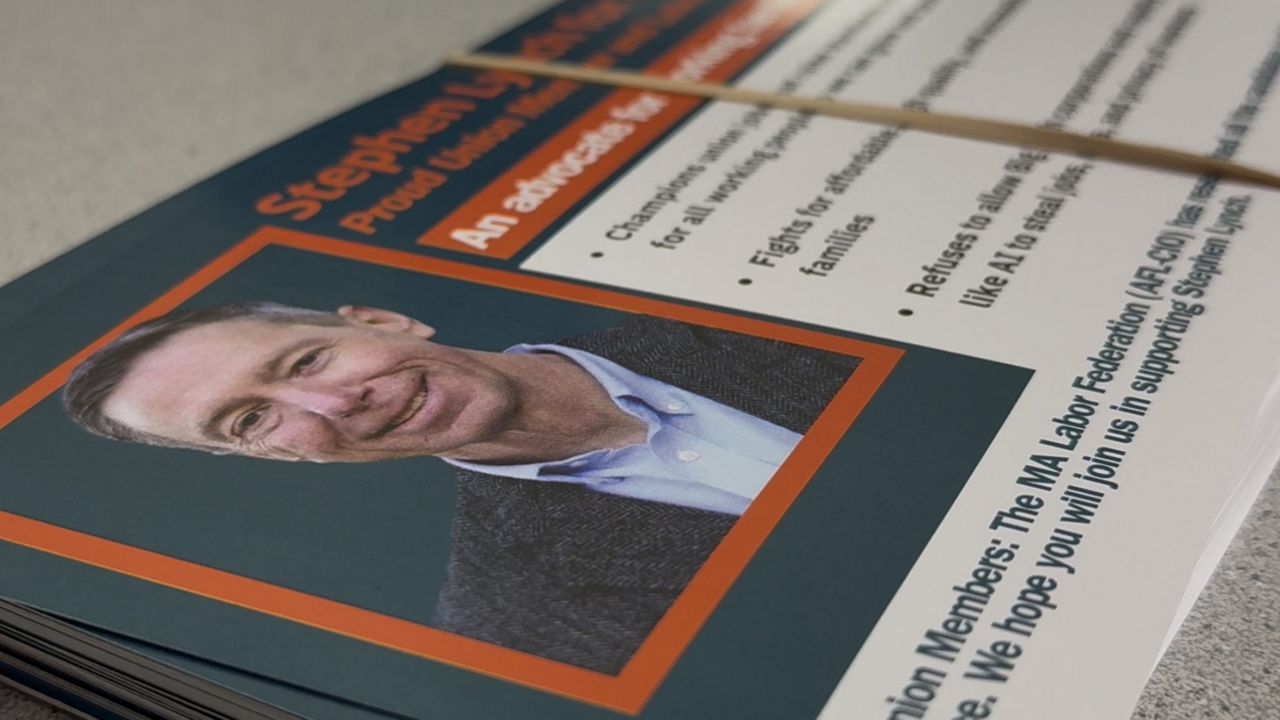
His most searing attacks on Roath are rooted in the same provincial Boston loyalty that has kept Lynch in power for so long. The congressman often points to Roath’s roots in Connecticut — presenting him as out of touch with the Boston workers Lynch prides himself on representing.
“The people that are supporting me are the ironworkers, the nurses, you know, the laborers, the carpenters, the firefighters,” he said. “I'm talking about being able to understand and experience the same thing as your constituents.”
When pressed on the out-of-state childhoods of prominent Massachusetts leaders like Sen. Elizabeth Warren and Boston Mayor Michelle Wu, Lynch specified that background counts more than birthplace.
“I think you have to share their experience,” Lynch explained of representing his constituents. “I think that Elizabeth Warren may have had that same experience where she grew up.”
Roath, a longtime Boston resident whose mother is from Massachusetts, dismissed the concern over his background. “I did grow up in Connecticut, my god I’m so sorry,” he joked, calling Lynch’s attack “an insult to all the people who grew up in other parts of the country and world or state and have moved into this district.”
As for criticisms flowing from his time in corporate law, he pointed to his prior service in government and pro bono representation. “I’ve also been in the private sector,” he said. “I don’t think that’s such a bad thing.”
Organized labor in the area has largely lined up behind the incumbent. Lynch has earned the endorsements of major unions including the Massachusetts Building Trades Unions, the Teamsters Local 25, IBEW Local 2222, Ironworkers Local 7, and the Massachusetts AFL-CIO. Roath, however, has earned the support of the Boston Teachers Union, the American Federation of Teachers and the Massachusetts Teachers Association.
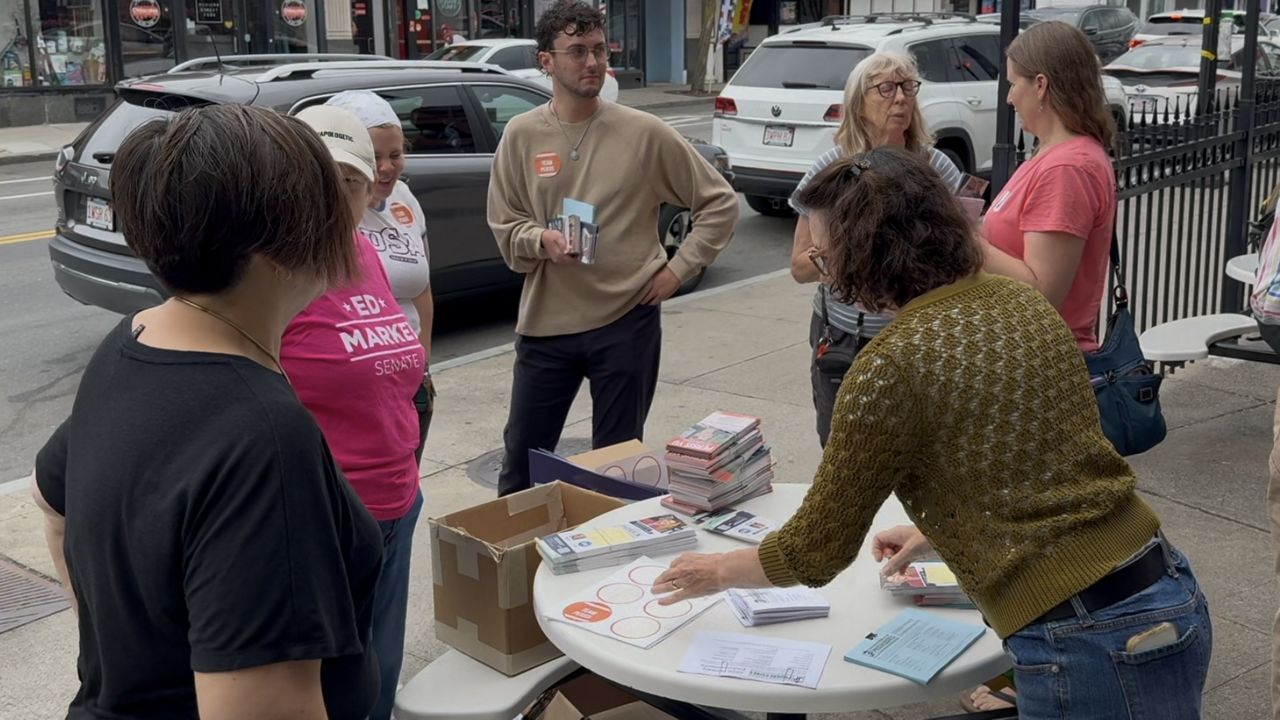
“I’m really proud of the inroads we’ve actually made with organized labor, despite him having a lot of that support,” Roath said of the endorsement.
The newcomer has also maintained a financial edge, having raised $1.2 million from May of 2025 to this August compared to $910,000 for Lynch during the same period.
BUCKING THE TREND
In many ways, the Lynch-Roath contest is yet another example of the kind of midterm challenge that has defined the Democratic Party’s primary season in 2026.
Here, a young progressive is presenting an incumbent moderate as unable to meet the moment in a deep-blue district seething at the Trump administration.
But the strong working-class bona fides of Lynch, and Roath’s most recent job as an associate at the high-powered law firm Ropes & Gray, forces Democratic voters to make a stark choice in background between a representative of the union working class (albeit one who is a lawyer), and a young progressive hailing from the city’s white-collar professional band.
In other contests across the nation, voters haven’t had to distinguish the two flavors of Democrat. Up the road in Maine, for example, Democratic Senate nominee Troy Jackson is both a Bernie Sanders-style progressive and a logger.
Boston, though, has always been different. Andrew Smith, a political science professor at the University of New Hampshire, points out that these competing factions have long existed. “The Democratic Party in Massachusetts has always been, frankly, two parties,” Smith explained. “You had the union hall party and the faculty club party.”
In the 8th District, Smith puts plainly, “Lynch may be one of the last holdovers of that old union hall wing of the Democratic Party in Massachusetts.”