




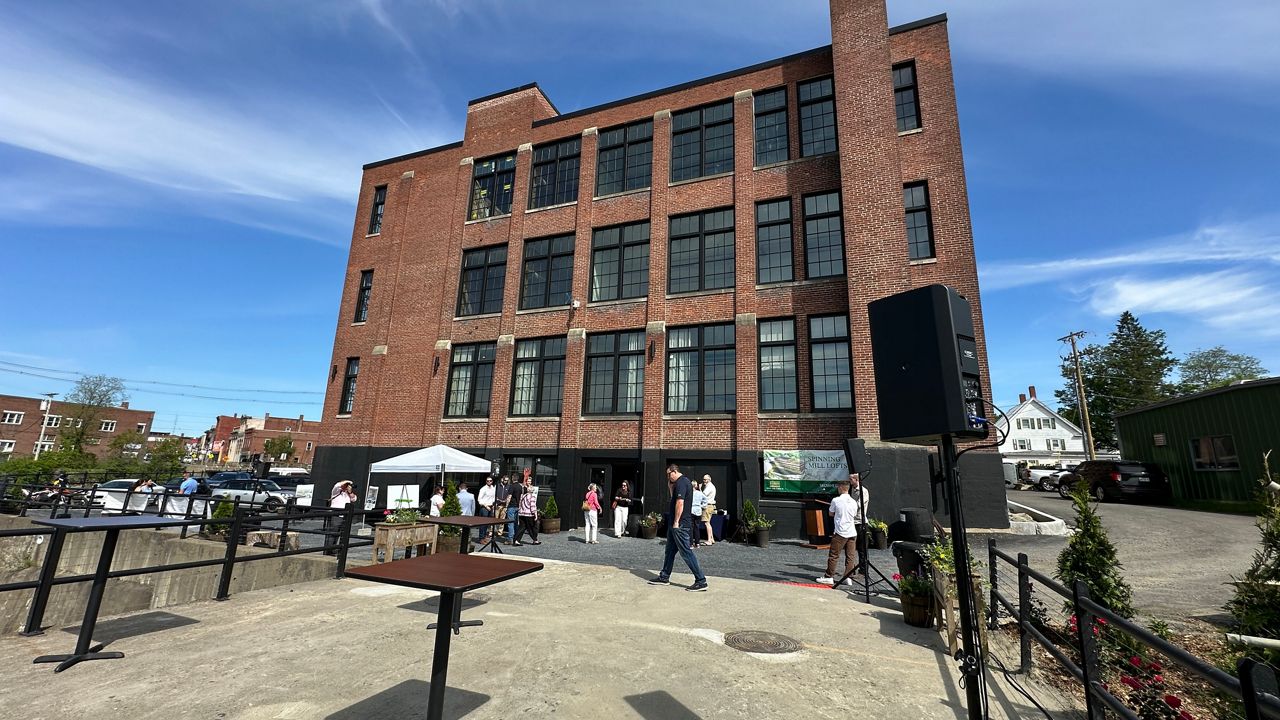
SKOWHEGAN — Eighteen months after a devastating flood caused severe damage to a renovation project at the historic Spinning Mill, town leaders and Gov. Janet Mills celebrated the project on Tuesday.
With some work still to be done, the old mill will offer 40 units of workforce housing, 20 hotel rooms, a rooftop deck and German-inspired beer garden.
Following the December 2023 storm that flooded riverside and inland communities, the general contractor working at the Skowhegan mill described the five feet of water in the basement, ruined electrical wiring and new yet-to-be-installed windows that sustained major damage.
Like many buildings along the Kennebec River, the mill took the body blows from gusty winds and heavy rain that knocked out power to more than 400,000 people across Maine and prompted an emergency declaration for 14 of the state’s 16 counties.
In Skowhegan, they vowed the project would move forward with some delays.
And on Tuesday, they welcomed the governor back for a celebration with cake, a giant pair of scissors for the ribbon cutting and a healthy dose of optimism.
Kristina Cannon, CEO of Main Street Skowhegan, said the developers at High Tide Capital could see the momentum built by town leaders over several years.
“This project is without a doubt one of the most important private investments Skowhegan has seen in recent memory,” she said.
The ribbon cutting coincided with the start of the Build Maine Conference, where state, municipal and private sector leaders are gathering to talk about planning, development, transportation and housing policy.
“Skowhegan has become a national model for rural revitalization,” Cannon said. “Every initiative from this remarkable mill restoration to the future river park and the growing local food economy shows that this town is not only worth investing in it’s already delivering returns.”
Max Patinkin, a principal at High Tide, said he and his partners fell in love with the building when they first saw it three years ago. In addition to millions in private funds, they’ve tapped into the Finance Authority of Maine for $2 million in financing and got $100,000 in state storm relief funds to keep the project moving forward, he said.
“When this mill was built, it was state of the art in textile manufacturing,” he said, noting that it once put out thousands of pounds of yarn each year.
But since 2005, the mill sat vacant as “a stubborn reminder of where we were,” said former Department of Economic and Community Development Commissioner Heather Johnson.
Shortly before cutting the ribbon, Mills recalled the very cold day in December 2023 when she toured the “millions of dollars’ worth of damage” at the mill. On Tuesday, she celebrated the comeback.
“Your hard work will draw tourists to Skowhegan, providing housing for local workers and their families and support the long-term success of this whole community,” she said.