




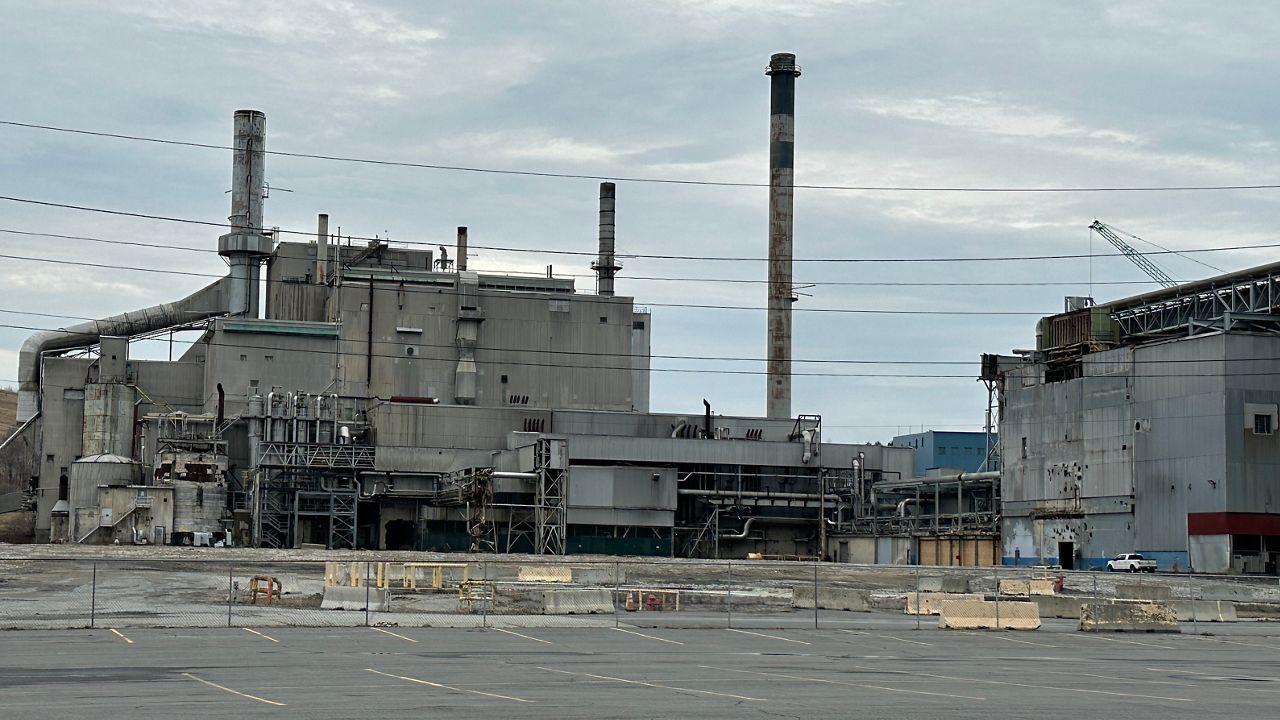
AUGUSTA — With final votes pending on a bill to temporarily ban data centers, Gov. Janet Mills emphasized on Friday that she wants to see an exemption for the western Maine town of Jay.
“I have said before and I’ll say it again, there needs to be a carveout for Jay,” she said. “The people of Jay need those jobs, with appropriate guardrails on preserving water resources, electricity resources, local generation and all those things.”
The legislation seeks to put an 18-month moratorium on future data center development to give a task force time to study risks and benefits.
Last month, bill sponsor Rep. Melanie Sachs (D-Freeport) said other states that once wooed data centers are now rethinking their approach.
“Many states who had invited data centers in with incentives are now trying to roll them back,” she said March 19. “As we learn more about the grid impacts, the environmental impacts and the community impacts as well, all three of those things are really, really important.”
Across the country, data centers — which are large buildings that house computer systems — have been criticized for their water use and the potential to increase electricity prices. A report by the Lawrence Berkeley National Laboratory shows that in 2023, data centers accounted for about 4.4% of electricity consumption in the U.S.
That number could double or triple by 2028, the report found.
On March 23, the Jay Board of Selectpersons wrote to Mills to encourage her to veto the bill in its current form or ensure that there’s an exemption for their town.
“The closure of the Pixelle paper mill has had a profound and lasting negative impact on our community,” they wrote. “The loss of this facility eliminated a major source of employment and resulted in a substantial reduction in property tax revenues that once supported essential municipal services.”
The current data center proposal for Jay is described as a “small scale” project that will use the existing electrical grid and will tap into less than 1% of the water that had been used by the mill.
The $550 million investment is projected to generate 800 to 1,000 jobs during construction and 125-150 “high paying jobs” once it’s up and running.
“Additionally, the project includes the elimination of air emissions through demolition of the existing gas-fired turbine plant and replacement with renewable energy sources, including solar and on-site hydroelectric generation,” the select board wrote.
In December, following public opposition, the Lewiston City Council rejected a proposed artificial intelligence data center that would have repurposed one of the old Bates Mill buildings.
In Sanford, a Texas company is looking to build a data center, prompting state Sen. Matt Harrington (R-Sanford) to propose a different version of Sachs’ bill that would allow some projects to move forward if they meet state and local guidelines.
Mills too seems to back a balanced approach, saying the state can’t turn a blind eye to the artificial intelligence boom and the need to support increased use of technology.
“It’s a popular subject all across the country,” she said. “I think there are mixed feelings about data centers, but look, we all use those cellphones, we all use AI in some form or another everyday so let’s be realistic as well.”
She went on to say she wants to be sure any new project would protect the environment and not drive-up electricity costs.
“We want data centers that will reduce electricity rates, if at all possible,” she said.