




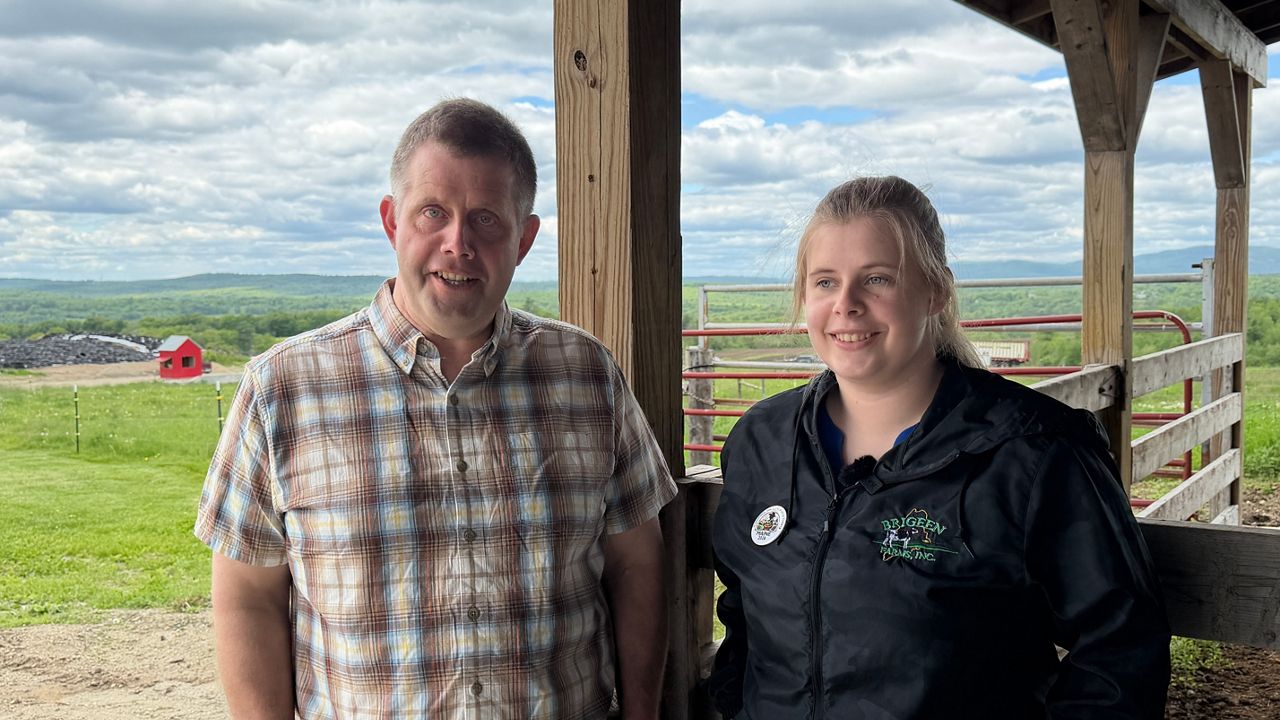
TURNER — Dairy farmer Bill Bullard and his daughter Sydney say they are hopeful after a long cold winter and high prices relief is on the way soon.
After all, their farm — Brigeen Farms, which has been around since 1777 — has made it through hard times before.
Diesel, fertilizer and grain all cost more right now.
“Like most things in Maine we’re kind of on the end of nowhere,” Bill Bullard said. “So everything coming in has a fuel cost associated with it. Our grain coming in is costing more because of diesel. Our milk leaving the farm is costing more because trucking the milk out is diesel.”
Fertilizer costs are high now too.
“We’re hoping it comes back down soon,” he said. “It’s made for some challenging months in the last two or three months. It was kind of an unexpected bump in the road.”
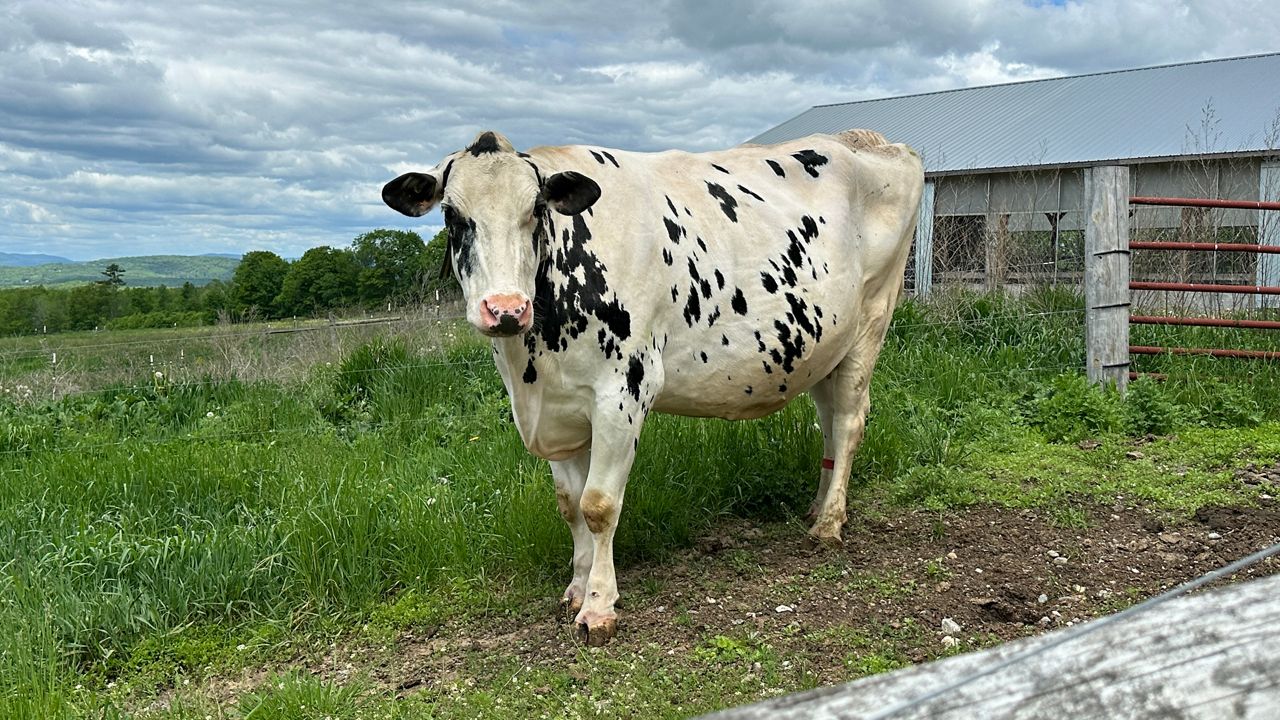
Brigeen Farms — one of 131 dairy farms left in Maine — covers 1,200 acres and milks about 600 registered Holstein cows.
The Bullards, who run the farm with several members of the Briggs family, hosted Gov. Janet Mills and others on Thursday to preview Maine Dairy Month.
They urged Mainers to head to a farm on June 14 for Open Creamery Day and reminded milk drinkers to ensure they are buying local milk at the store by looking for the “23” stamped on the jug.
Nancy McBrady, deputy commissioner of the Maine Department of Agriculture, Conservation and Forestry, described the dairy sector as “an iconic and critical component of Maine’s agricultural landscape, its history and its future.”
Julie-Marie Bickford, head of the Maine Milk Commission, said while the number of dairy farms in Maine has dropped from 600 to 131 over the last 30 years, farmers are still producing the same amount of milk as they did 15-20 years ago.
And they are diversifying.
“We have a lot of artisan craft production in cheese and yogurt and ice cream and things like that and that shows a vibrancy to our dairy sector that is very positive,” she said.
Maine dairy farmers also benefit from a state-funded program to help them make up for the losses they often sustain because the price of milk is set at the federal level and doesn’t cover all costs, she said.
“It’s not meant to get you to profitability, it’s meant to get the farm so that they’re not creating a big black hole of debt that they can never get out of,” she said.
And like a lot of heritage industries, dairy farmers are concerned about whether the younger generation will want to carry on the family legacy.
“What we’re seeing is it’s a challenge to get the next generation to want to take on the farm,” Bickford said. “They’re looking and they’re saying I see how my parents and grandparents, how hard they have had to work to eke out a living.”
That’s not an issue for Sydney Bullard, who is enrolled at Cornell University in hopes of working the family farm someday. She’s studying technologies that will make things easier for farmers in the future.
“I think there’s opportunity with the technologies we have to continue to take what we have and do it more efficiently,” she said.