




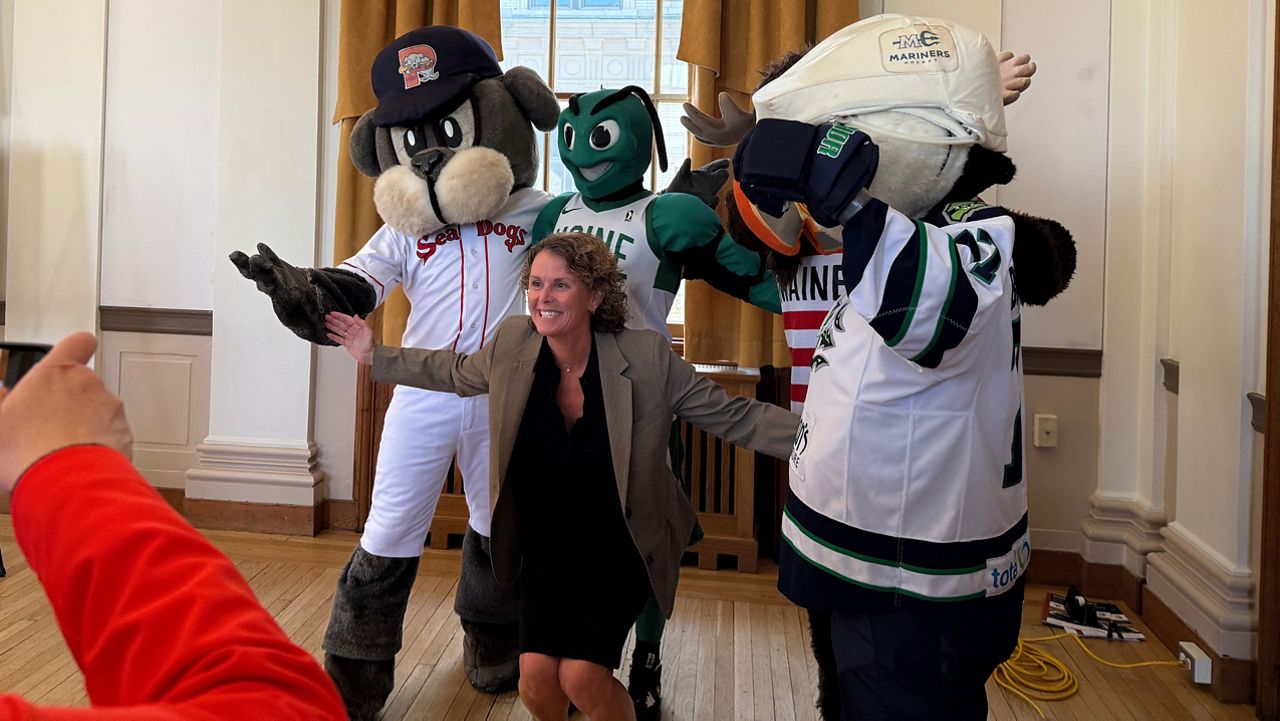
PORTLAND — The city released the results of a study on Wednesday that shows Portland’s minor league sports teams bring in $110 million annually, which Mayor Mark Dion says makes an argument for investing in the country’s oldest operating arena.
The arena, called the James A. Banks Sr. Portland Exposition Building, was built in 1915 and is the oldest operating municipal arena in the country, according to city officials. The building hosts the Maine Celtics basketball team, festivals and other events. It’s in extreme need of repair or replacement, and the city is currently waiting for the completion of an engineering study before making any decisions, Dion said.
According to a 2024 assessment, renovation of the Expo could cost more than $24 million.
The study, which was prepared by the University of Southern Maine, looks into the economic impact of Portland’s four minor league sports teams — the Portland Sea Dogs baseball team, the Maine Mariners hockey team, the Maine Celtics and the Portland Hearts of Pine soccer team. The study considers team operations, spending by visiting fans and travel-related expenditures by visiting teams.
The study claims the teams create 917 total jobs on top of the $110 million they bring to the state per year.
Dion said this study could help the city encourage investment into the Expo.
“That was one of the reasons this study occurred,” Dion said. “’Cause I think we can make a better argument to the public, to investors and to ourselves as councilors whether or not a continued, intentional investment in facilities makes sense, and what the return on that investment is.”
The only minor league team that plays in the Expo, though, is the Maine Celtics. According to the study, the Celtics bring in the least amount of economic impact out of the four teams at $9.9 million per year.
Dion didn’t make this distinction when congratulating the teams on their contributions to the city.
“The most important thing you [the teams] create in this city and this region is a sense of community,” Dion said. “People identify with their teams, and by extension, they identify with each other.”