




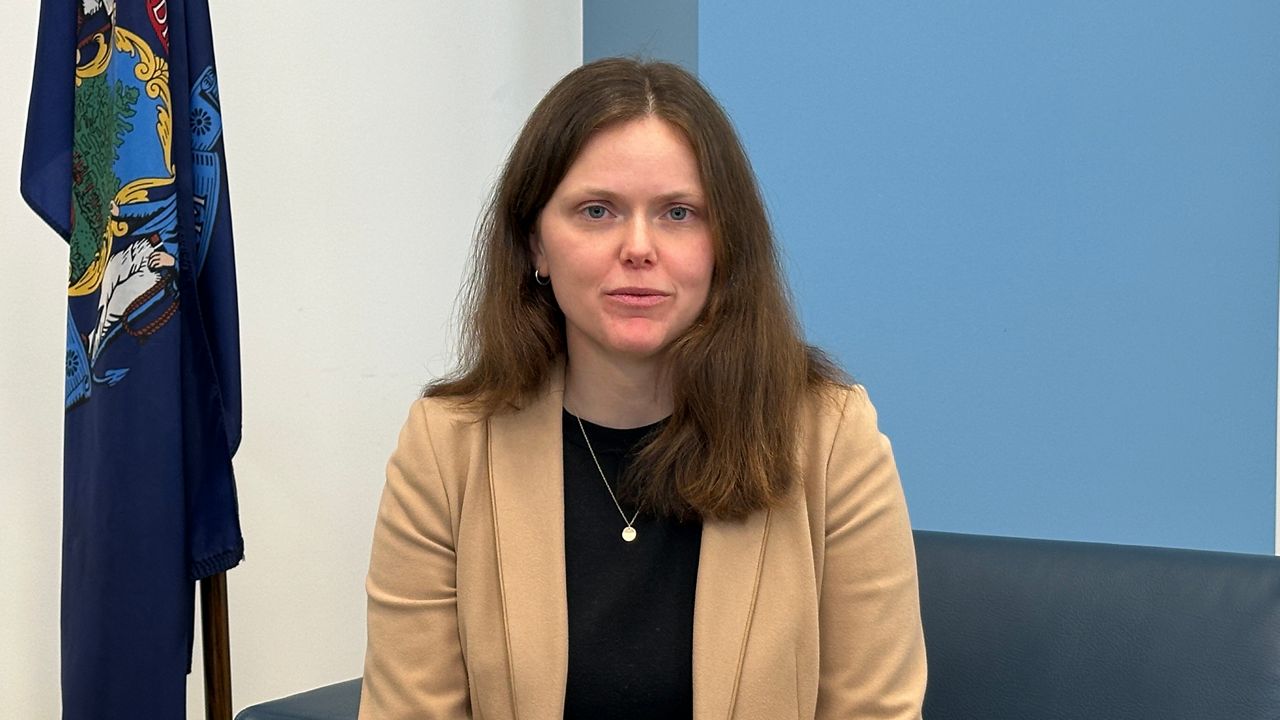
AUGUSTA — The state recently released a five-year plan to improve child wellbeing that focuses on a community approach to helping families.
The idea is to give families the support they need before intervention by the Maine Department of Health and Human Services becomes necessary.
Decades of research shows what’s most effective in preventing child abuse and neglect, said Melissa Hackett, a coordinator for the Maine Child Welfare Action Network, which worked with DHHS to develop the plan.
“Kids live in families and for kids to be doing well their families need to have what they need to be supported and safe and that means a wide variety of things,” she said.
The list includes housing, healthcare, food, childcare and sometimes help with mental health needs, substance use disorder or domestic violence, Hackett said.
In early 2023, Gov. Janet Mills announced that DHHS would work with the child welfare network to come up with a plan to improve child safety. The announcement followed months of scrutiny by lawmakers and others who were concerned about instances in which children died at the hands of their parents even after the family received help from the state.
Members of the Legislature’s Government Oversight Committee closely examined four child death cases that occurred in the summer of 2021. They also heard from state child welfare workers who said they were carrying heavy caseloads and didn’t feel adequately supported by supervisors.
In November 2023, the director of the Office of Child and Family Services resigned and was replaced by his top deputy.
The plan released Feb. 11 follows a framework released in May 2023 that sought to find ways for state agencies and communities to work more closely together to keep children safe.
Mariette Aborn, special projects manager for child and family wellbeing at DHHS, said the plan relies on a public health approach, which means not only services provided by DHHS, but also other state agencies including the Department of Education, Department of Labor and Department of Corrections.
Closer to home, community action agencies, houses of worship and even neighbors can play a role, Aborn said.
“One of the things we want everyone to know about this plan is that they all have a role to play in supporting families,” she said. “At the individual level, it can look like reaching out to a parent who looks like they might be having a hard time, offering a source of support or connect them to support.”
One recent effort is called Be There for ME, which gives parents a chance to talk about the kind of help they need, Hackett said.
“That means lots of simple things, like when you see a family struggling in the grocery store going over and saying, ‘hey I’ve been there, it’s hard, how can I help?’” she said. “Just that message of support is something that parents have shared with us they really don’t universally feel, and they really need.”
Parents say they feel “judged and isolated” something that began before the 2020 COVID-19 pandemic and has since gotten worse, Hackett said.
The saying “it takes a village” is a promise that’s continued to go unfulfilled, she said, noting that something as simple as a casserole might help a struggling family.
Aborn said the five-year plan focuses heavily on prevention and partnerships with community agencies.
“We hope together with our many partners to continue to inspire some more of this collaboration to again move upstream to ensure that every single family in every single community feels like they have the support they need, when they need it,” she said.
Hackett described it as a “call to action.”
“It’s establishing a shared responsibility for child safety and family wellbeing,” Hackett said. “We really hope community members see themselves in the plan and identify the opportunities they have in their community to step up and step forward for families.”