




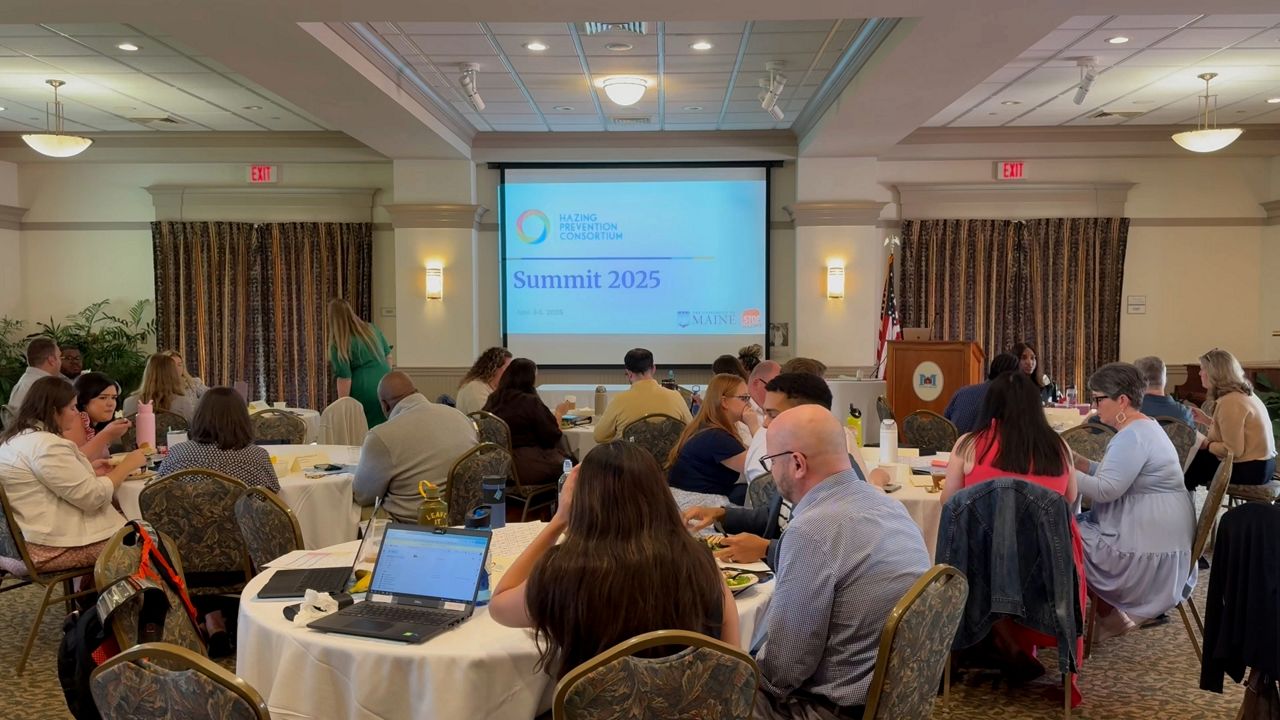
ORONO — Representatives from more than a dozen colleges and universities across the country came together at the University of Maine this week for the annual Hazing Prevention Consortium Summit.
Hazing can include dangerous, humiliating or abusive acts that take place as part of joining a group.
According to the research group StopHazing, 55% of college students nationwide who are involved in clubs, teams and organizations experience hazing, while 47% of students have experienced hazing before attending college.
“We found that hazing extended far beyond fraternities and sororities and athletics,” said Elizabeth Allan, professor of Higher education at UMaine and Principal of StopHazing. “We found that students were reporting experiencing hazing in intramural sports, club sports, performing arts organizations like marching bands, acapella groups, theater groups, even honors societies.”
Allan said there have been over 100 hazing deaths in the U.S. since the year 2000.
“Hazing can be lethal,” said Allan. “However, there’s a full spectrum of kinds of behaviors and consequences. It can include humiliation and abuse and maybe have some psychological and emotional consequences and harm, and also there are other forms of physical harm where people may be assaulted or physically hurt in other ways, and sometimes it’s a combination of the two. There’s a whole range of outcomes that are a result of abusive behavior of hazing.”
StopHazing has facilitated the Hazing Prevention Consortium since 2013.
Allan, who also leads the Hazing Prevention Research lab at UMaine, said the annual event helps campuses develop and implement strategies for preventing hazing.
“This consortium is a research-to-practice initiative,” said Allan. “So what we’re doing is really building on the research to implement evidence-informed or research-informed and research-based implementation — so strategies on campuses — and then we’re collecting data about them to analyze ‘are they working, do they need to be refined, how can we improve them, how can we make things better?’ And then getting that information out there to the public.”
Top of mind this year is the federal Stop Campus Hazing Act, which was signed into law last year. It requires institutions of higher education that participate in federal student aid programs to report hazing incidents annually, outline how they are investigated and more.
To learn more about how you can prevent hazing, visit stophazing.org.
“What is really important is focusing on the behavior we want to see,” said Allan. “We’re implementing trainings and some of the folks here are talking about how they’re testing trainings about promoting healthy groups — so not just talking about the behaviors we don’t want to see but helping to build skills for positive and healthy leadership and group dynamics.”