
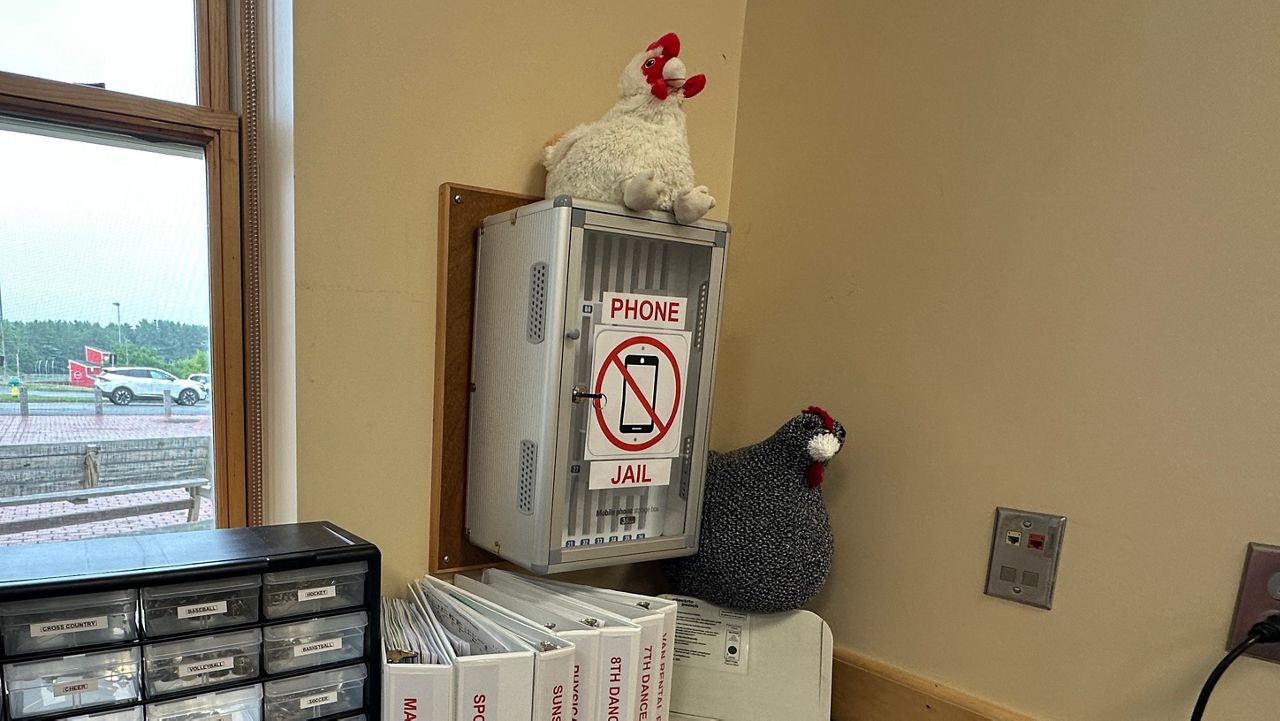
AUGUSTA — When cellphones become a problem at Cony High School, there’s a place for them to go.
It’s called “phone jail.”
The “jail” is a box mounted on the wall inside the main office. It’s about the size of a first-aid kit and it has 36 slots. A tiny key turns the lock.
A few years ago, shortly after the pandemic, the school instituted new rules around cellphone use after teachers complained they were becoming a classroom distraction.
The rules required students to put their phones away during class but allowed them to sneak a peek during non-academic times such as lunch, Superintendent Mike Tracy said.
It’s worked well. But a new state law institutes a “bell to bell” ban on all electronic devices, including cellphones, smartwatches and tablets. That means all devices must be powered off before school starts and remain off for the entire day.
Tracy applauds the increased focus on instruction time. But he also wonders if in a year or so, the state might want to give a little more freedom to local districts to design their own policies.
“We’re about educating students and I’m not sure if the ban is the best thing we should be doing, truthfully,” he said. “I think it’s important we teach kids how to use these devices appropriately.”
Across the country, 22 states and Washington D.C. have “bell to bell” bans, while another 19 states allow districts to institute bans but don’t mandate it, according to the Harvard Kennedy School.
In Maine, several districts have developed their own polices over the last few years.
Portland schools instituted their cellphone policy last fall, getting ahead of the statewide ban. The policy states that cellphones, tablets, laptops, smartwatches and gaming devices not issued by the school “shall not be available or accessible to students for the duration of the school day.”
In Bangor, the school system put a partial phone ban in place last school year and new guidelines for high school students require phones to be powered down and in a cellphone box by 7:55 a.m. each day.
Jennifer Chace, assistant director of the Center for Education Policy, Applied Research and Evaluation at the University of Southern Maine, said the blanket statewide policy is an opportunity to engage students and teachers in the implementation process.
“The governor has given districts a gift,” Chace said. “Now that we have this law, how can we do this?”
Chace said research shows that school cellphone bans often mean fewer students leave during the school day. If parents need to reach their child, they will have to call the office. And if a child wants to reach a parent, they too will have to go ask for help rather than sending a quick text, she said.
She said students tell her they are worried about connecting with friends throughout the school day without cellphones. And they say, just like adults, they often scroll through their phones to relieve stress.
Chace said the new law gives districts a chance to talk to students about ways to meet up with friends or other techniques for dealing with stressful situations.
And for those wondering about the effectiveness of cellphone bans, Chace said there’s not yet “robust causal evidence” that taking the phones away during the school day improves test scores.
But it does help students pay attention in class and reduces the time they spend on social media.
“There is good evidence that having less access to social media does help with student mental health and wellbeing,” she said.
At Cony in Augusta, Athletic Director TJ Maines said when they first began restricting phone use it was difficult for some students.
“Some of the early comments from kids were like I’m alright with it when no one else can use it either,” he said. “Like you don’t feel the FOMO, the fear of missing out on stuff isn’t there because no one else can use it. That equity hopefully will make it OK for kids to move on and adjust to the new reality.”
Superintendent Tracy said the new school year — which starts on Aug. 31 in his district — will provide an opportunity see how well a statewide, bell to bell ban works.
“A broad brush one size fits all, it’ll be interesting to see how this works,” Tracy said. “Maybe it’ll work great. Maybe in a year or two there’ll be so much pushback that it will come back to center a little bit.”