




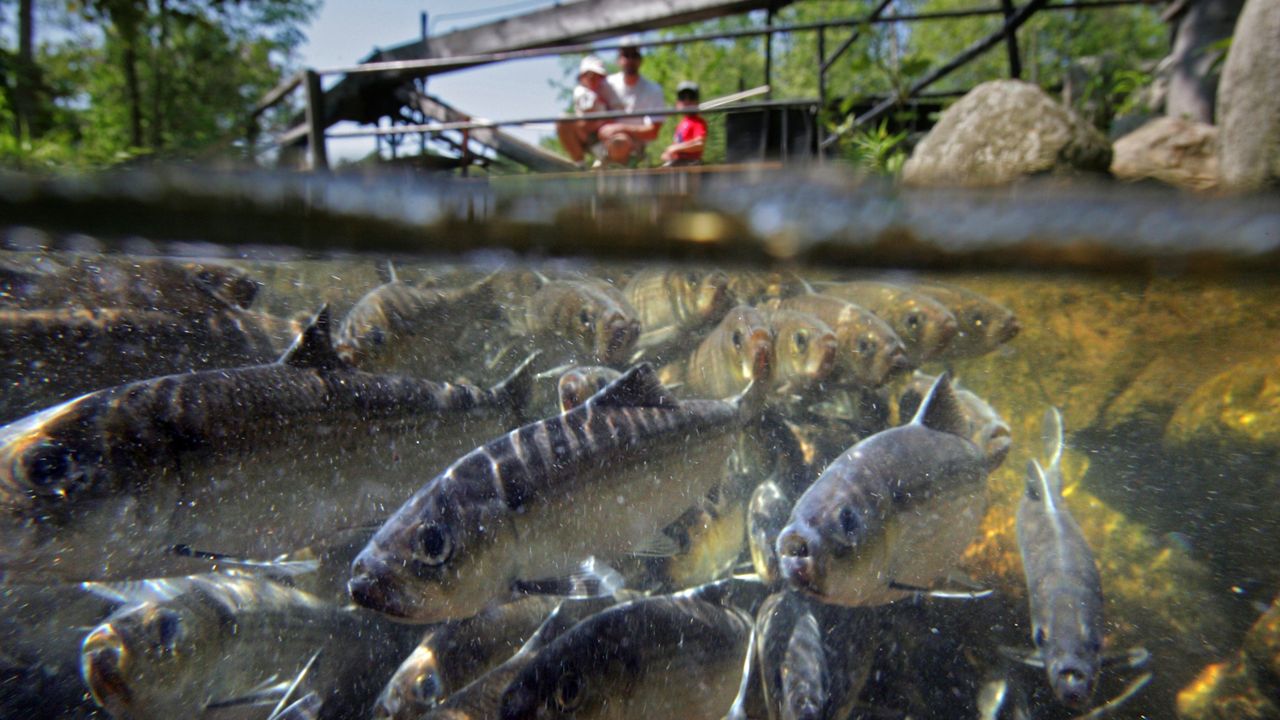
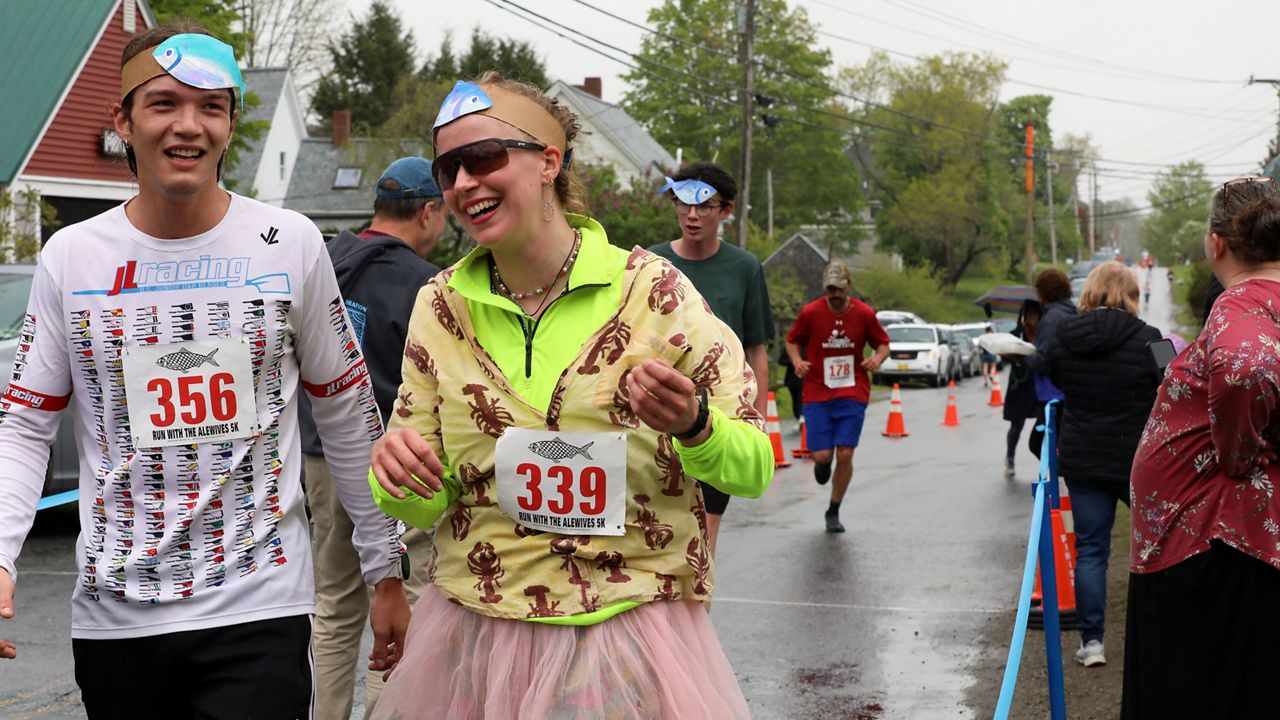
NOBLEBORO — While alewives complete their annual migration upstream to spawn, around 300 people will be running a 5K in Nobleboro to help fund the fish ladder that keeps the fish moving.
Since 2019, Bob Barkalow has been organizing the Run with the Alewives near the Damariscotta Mills Fish Ladder in Nobleboro.
“They know they want to get to the lake to reproduce,” Barkalow said. “It’s a basic, fundamental need that all organisms seem to have. And this is a great example — visual example — of how that’s so powerful.”
The conservation of alewives is a Maine ecological success story. According to Karen Wilson, a professor at the University of Southern Maine who studies alewives, said Mainers have been monitoring and helping the alewife population for centuries. Indigenous people, who depended on the runs for protein in the spring, would help the fish over beaver dams. In fact, the construction of the Damariscotta fish ladder was finished in 1807, with concerns about the alewife population’s decrease starting in the 1700s.
“For these fish, as long as things are going OK out to sea, and we keep our water quality high, and they have access to spawning habitat, you really can see great strides in restoring their population numbers, and that’s really amazing,” Wilson said.
According to a University of Maine study, alewife numbers in the St. Croix River could reach 12-58 million, historically. But in 2002, there were only 900 alewives in the river. Across the state, dams and mills have blocked the fishes’ path, preventing them from returning to freshwater lakes to spawn.
But conservation efforts, often led by Wabanaki people, have helped boost the alewife population across the state. The Maine Department of Marine Resources will sometimes stock lakes with adult alewives to help increase the population, Wilson said, and has done this regularly since around the 1950s. The UMaine study notes that in 2023, the alewife population in the St. Croix River increased to 840,000.
The Fish Ladder at Damariscotta Mills is one of those conservation efforts. A mill blocks the fishes’ access to the stream, so the towns of Nobleboro and Newcastle constructed the ladder in 1807. After 200 years, the ladder had fallen into disrepair, so the towns and conservationists conducted a major restoration project on the ladder between 2007 and 2017.
The ladder still needs maintenance, though. Barkalow said there are plans to add two more pools near the bottom of the stream. So, the 5K fundraiser brings money in for restoration. While some do smoke alewives for human consumption, they are primarily used as lobster bait, so fishermen also participate in an alewife harvest during their migration.
The proceeds from the sale of these alewives also go to the fish ladder restoration, Barkalow said.
The fish are important to the ecosystem, Barkalow added. In all stages of their life, the fish act as important food sources for many creatures, including the ospreys that bring birders to the fish ladder.
“We don't support the alewives by being prey, but we support the environment by supporting the alewives,” Barkalow said.
Registration for the race is still open at runwiththealewives.com.