




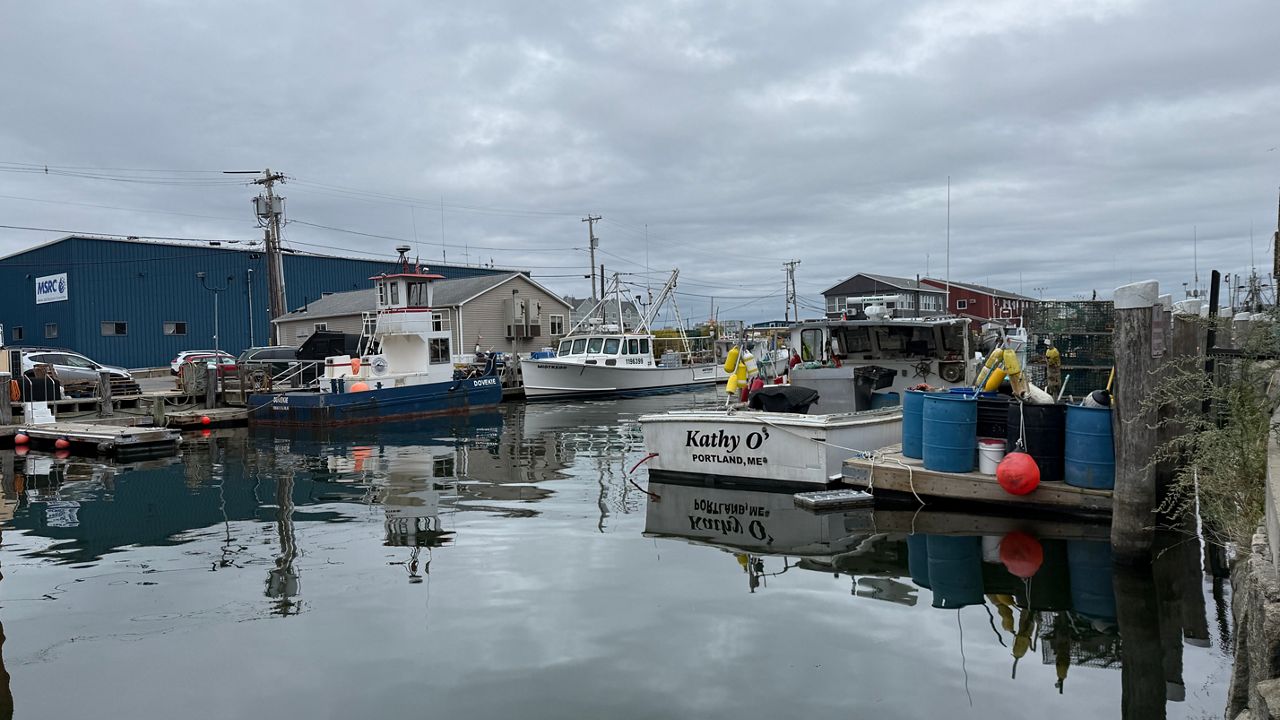
PORTLAND — An algae bloom in Casco Bay could be harming fish and shellfish.
The Maine Department of Marine Resources is monitoring the bloom of a common phytoplankton called Karenia mikimotoi. The phytoplankton are not harmful to humans, but they can produce compounds that can harm fish and shellfish.
The department was alerted to the bloom when the Portland Harbor Master and wharf owners in Portland Harbor noticed a dark brown tint to the water, according to a social media post by the Maine DMR .
The last algae bloom of Karenia to affect Casco Bay was in 2017, when the highest sample count was 44 million cells per liter and caused the deaths of lobsters and shellfish. The Maine DMR says the cell counts for the current bloom is 2 million cells per liter.
In a social media post, the Maine DMR says this bloom may already be affecting clams in Middle Bay and Maquoit Bay.
It’s not only the harmful compounds that Karenia produces that could affect marine wildlife — algae blooms suck up dissolved oxygen in the water, asphyxiating marine life.
“Many dinoflagellate cells migrate to the surface during the morning so that they can utilize light for photosynthesis, at the end of the day, they migrate to deeper waters and respire, which consumes oxygen,” the DMR said in its social media post. “Typically, oxygen is lowest around sunrise and if cells are vertically migrating, oxygen can be depleted in the bottom layers through this process.”
Dinoflagellate is a group of phytoplankton that includes Karenia.
The Maine DMR says “industry members” located in the Casco Bay region should keep an eye out for signs of low oxygen in the water, water discoloration and an odor. Officials will continue to take samples and monitor the bloom.