




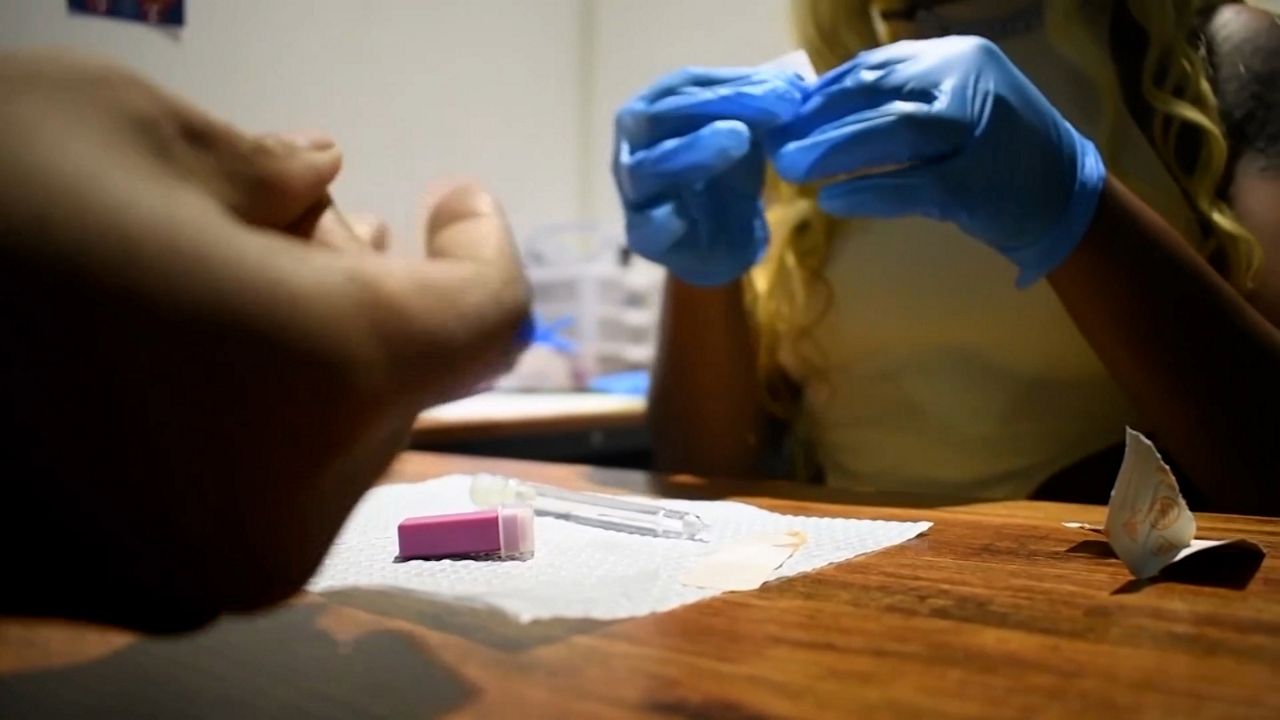
PENOBSCOT COUNTY — Two more people tested positive for HIV in Penobscot County last month, according to a recent update from the Maine Center for Disease Control and Prevention.
The new cases are the latest in a county-wide outbreak that began in October of 2023 — bringing the total number of confirmed HIV cases in Penobscot County to 26.
Normally, the county sees an average of two cases per year.
According to the Maine CDC, 96% of cases since October of 2023 have been linked to injection drug use within one year of diagnosis, and 88% have been unhoused within one year of diagnosis.
Bangor Public Health and Community Services Director Jennifer Gunderman said that makes the outbreak a multi-faceted issue.
“There’s not just one thing we can’t point to. Really, this is what we’re referring to as a syndemic. What a syndemic means is that there’s a lot of factors at play here,” said Gunderman. “We are dealing with a population who is very high risk because of daily struggles that they have, including people who struggle with addiction or people who struggle with homelessness, and so you can’t really point to one factor. But, it’s a culmination of a bunch of factors that’s creating an environment that’s putting people at risk for transmission.”
Area nonprofits like Wabanaki Public Health and Wellness and Penobscot County Cares have been connecting people with care and testing resources.
Gunderman said Bangor Public Health has expanded testing and walk-in hours to address the short-term issues of the outbreak, but they’re thinking of ways to address the long-term impacts.
“I know in public health, we’ve had to think ‘you know what, we now have to build a better system to support a population that we weren’t supporting in the way that we should have for a while,’” Said Gunderman. “We are going to have to set up the systems for addressing HIV for the long term.”
But right now, she said they’re still addressing immediate impacts.
“Right now, we’re still in crisis mode. We’re still dealing with an outbreak,” said Gunderman. “However, HIV is a chronic disease, it’s a disease that somebody lives with for a very long time, when they’re on medication. So, what we know through research and what we’ve seen is when people adhere to medication they can live long and healthy and happy lives.”
Gunderman said part of the issue with getting people tested is that the populations being affected might have more urgent priorities to address.
“What it means when someone is experiencing homelessness is they are in daily survival mode. What that means is they need to figure out where they’re going to sleep, where they’re going to get food, how they can keep themselves safe. If they have a family or a partner, they’re trying to keep those people safe, as well,” said Gunderman. “So, when that becomes your priority, making sure that you have clean needles, getting treatment, getting tested — that falls down the priority list.”
She said another issue is the fear of stigma.
“There’s a lot of stigma associated with people who are struggling with addiction, who are struggling with homelessness, and now with HIV,” said Gunderman. “That stigma is also a barrier for people to get what they need.”
According to the Maine CDC, 17 of the 26 people who tested positive for HIV in Penobscot County since October 2023 were linked to care within 30 days of their diagnosis.
You can find resources through the Bangor Public Health and Wellness page, the Needlepoint Sanctuary of Maine Facebook page, Penobscot County Cares and the Wabanaki Public Health and Wellness website.
“We want to make sure the message to everybody in the community is: You matter. We care,” said Gunderman.