




AUGUSTA — A new state law to lower the allowable amount of the forever chemicals known as PFAS in drinking water sets a 2027 deadline for local water districts to come into compliance.
Rep. Dan Shagoury, D-Hallowell, sponsored legislation to require Maine to match the federal standard of four parts per trillion of PFAS in drinking water. As it is now, state law allows up to 20 parts per trillion.
Shagoury said it’s important to have a state standard because the federal level could change. States are allowed to enforce standards more restrictive than what is set by the federal government, he said.
“It is a big jump, but the problem is it’s probably only four because that’s the lowest you can measure right now,” he said. “Nobody really knows what the safe limit is. In an ideal world, you would filter everything out.”
According to the Maine Center for Disease Control and Prevention, health effects linked to PFAS exposure include increased risk of kidney and testicular cancer, hypertension and decreased infant and fetal growth.
PFAS refers to a group of chemicals used in many common products such as carpets, fast food wrappers, paints, shampoo, cosmetics and pizza boxes, according to the U.S. Environmental Protection Agency.
The issue of PFAS contamination first came to light in Maine in 2016 when an Arundel dairy farmer found it in his cows’ milk. Earlier this year, the Maine Department of Agriculture announced more than 100 Maine farms have some level of PFAS contamination.
When it comes to drinking water, PFAS has been found in private wells across the state. For public sources, local water districts are required to test regularly.
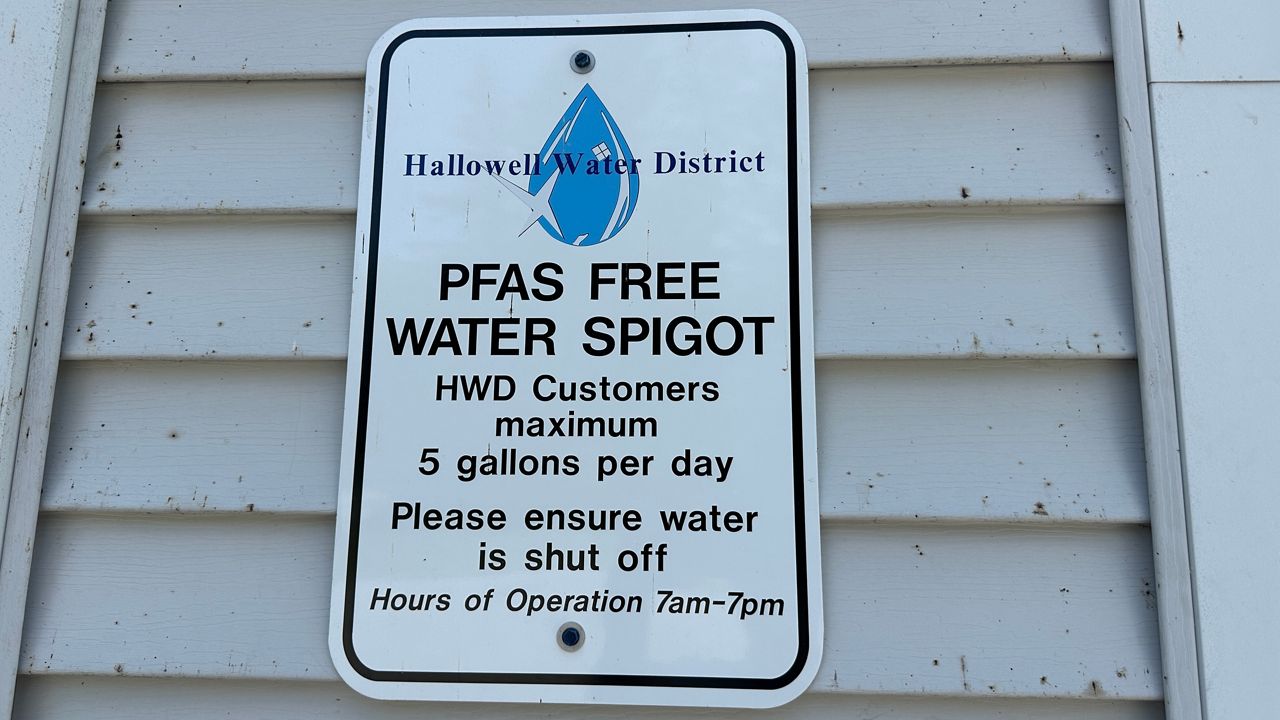
In Shagoury’s hometown of Hallowell, officials are now providing free PFAS-free water at the local water district office, while the city works to address PFAS levels above the current 20 ppt standard.
And in nearby Augusta, the Greater Augusta Utility District closed down one of its water treatment facilities last fall after water from one of its wells tested above the state standard.
Andy Begin, assistant general manager of the Augusta district, said the city is designing a new filtration system to address the issue.
“We’re trying to get it right to zero, that’s the goal,” Begin said.