




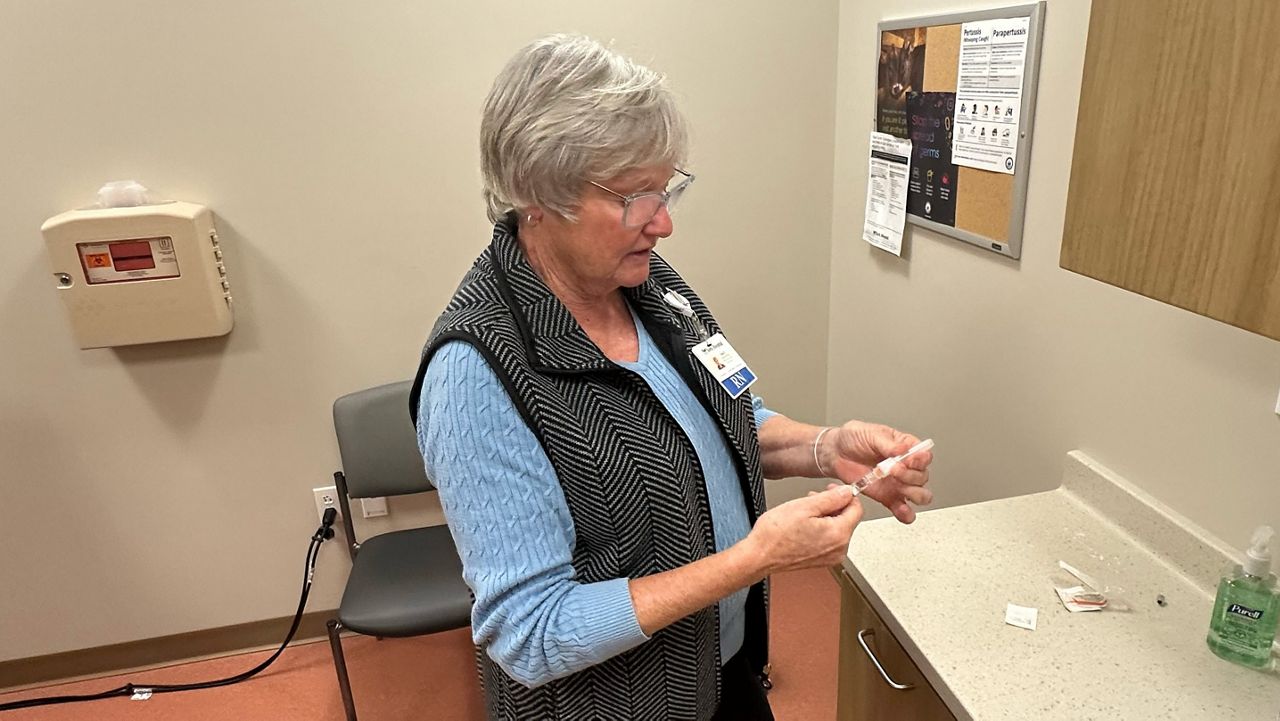
YORK –– Dr. Douglas Nilson has been an emergency room doctor for 16 years and has been running the emergency department at York Hospital for one year. He knows full well that flu season means an influx of patients with body aches, chills and sore throats.
“There’s some of that all year long, but the volumes go up this time of year and stay high into the spring,” he said.
The flu season runs roughly from October through April each year. Symptoms include fever, headache, cough, body aches, sore throat, sometimes shortness of breath and chills.
According to some early reports on the disease worldwide, Nilson and other urgent care health care providers may be in for a long winter. Dr. Dora Mills, chief health improvement officer at MaineHealth, said this week that case counts in Japan and the United Kingdom are already “moderate to severe.”
It doesn’t bode well, she said, for the U.S. and Maine.
“Although we can’t predict the flu season ahead of time, there are some warning signs that this could be somewhat of a severe season,” she said.
So far, things remain quiet. The latest weekly influenza report from the Maine Center for Disease Control and Prevention shows there were only four people hospitalized with flu-like symptoms the week of Nov. 15, with a total of eight hospitalizations for the entire season.
Maine CDC data shows that’s roughly in line with last season’s figures at this time. Other data, such as influenza-related outpatient visits, also remain low or even below last season’s figures. So far, Maine CDC has recorded only one flu-related death since the season began last month.
National data for the week ending Nov. 8 also shows low case counts, but trends for positive lab results, outpatient influenza cases and influenza hospitalizations all appear to be pointing upward.
“Even though it is at low levels right now in the U.S., it is also rapidly increasing so it’s on our doorstep,” Mills said.
Meanwhile, both Mills and Nilson offered the same good old-fashioned advice they give patients every year: Wash hands, cover mouths when coughing, stay home or consider wearing a mask in public when not feeling well.
Above all, both Mills and Nilson said, get the latest vaccine to reduce the chances of getting sick.
“It doesn’t take the chance of you getting the flu down to zero, but it reduces it significantly,” Nilson said.