




LEWISTON — This November, Lewiston voters will decide whether to restrict the city’s syringe exchange program.
Under the program, used needles are exchanged for clean needles, naloxone and other resources for those with substance use disorder, according to Laura Clark, the director of Preble Street Veterans Housing Services in Lewiston. Preble Street is a nonprofit that provides social services to people experiencing homelessness, hunger and poverty.
Proponents of the programs say they reduce the spread of HIV and other diseases by reducing needle reuse. Dr. Paul Vinsel, a recently retired addiction medicine doctor in Lewiston, said syringe service programs also help prevent overdoses and connect people to treatment and housing.
“I once had a friend, had an infection in her foot, and I treated her in the emergency department. This was due to reusing needles,” Vinsel said. “I was the last healthcare provider to see her alive. She died shortly after that from an accidental overdose. She did not have access to a syringe service program at that time. Her death was preventable.”
Under state law, any adult can receive up to 100 clean needles at a time from such a provider without having to turn any needles in.
Lewiston has been going back-and-forth on this matter for years.
Last year, the city council debated whether to require a 1:1 exchange ratio for people who want clean needles from a syringe service program. This means they would have to turn in a used needle before getting a clean one. The council eventually removed that item from its ordinance that regulates syringe service programs.
This summer, former Lewiston councilor Eryn Soule submitted a petition with enough signatures that proposes to bring back that 1:1 exchange ratio. The question has now made it onto the November municipal ballot, and would also limit the number of needles someone can get per day to 20.
The question also proposes limiting mobile syringe exchange units.
Soule has previously said that she was stuck by a needle at work one day, and thinks this measure would reduce the number of needles on the ground in Lewiston. Spectrum News has reached out to Soule for comment.
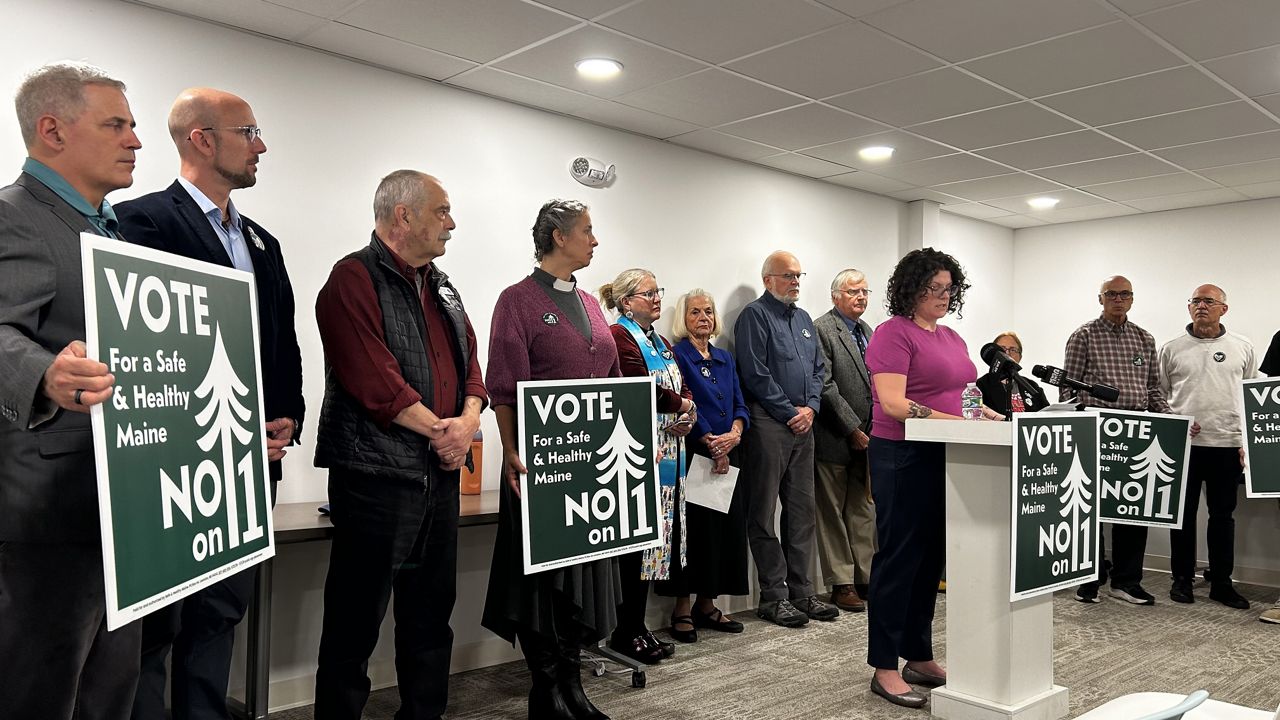
However, Safe & Healthy Maine, a campaign initiative that opposes this regulation, says this isn’t the case. The initiative launched its campaign urging Lewiston voters to vote “no” on Question 1 on Wednesday.
Last year, Spurwink in Lewiston collected 38 percent more syringes than it distributed, according to a Maine Department of Health and Human Services Report. In 2020, U.S. Surgeon General Jerome M. Adams published a report that said people with access to syringe service programs are “five times more likely to enter drug treatment and almost three times more likely to stop using drugs than persons who do not use syringe service programs."
Clark said limiting access to care such as clean needles will not save lives.
“I’ve seen how well-meaning government intervention becomes red tape to lifesaving healthcare, resulting in death and disease spreading across a community,” Clark said. “If we want our neighbors to live long enough to ask for help for their substance use disorder, then we have to provide them with the tools to prevent their untimely death.”