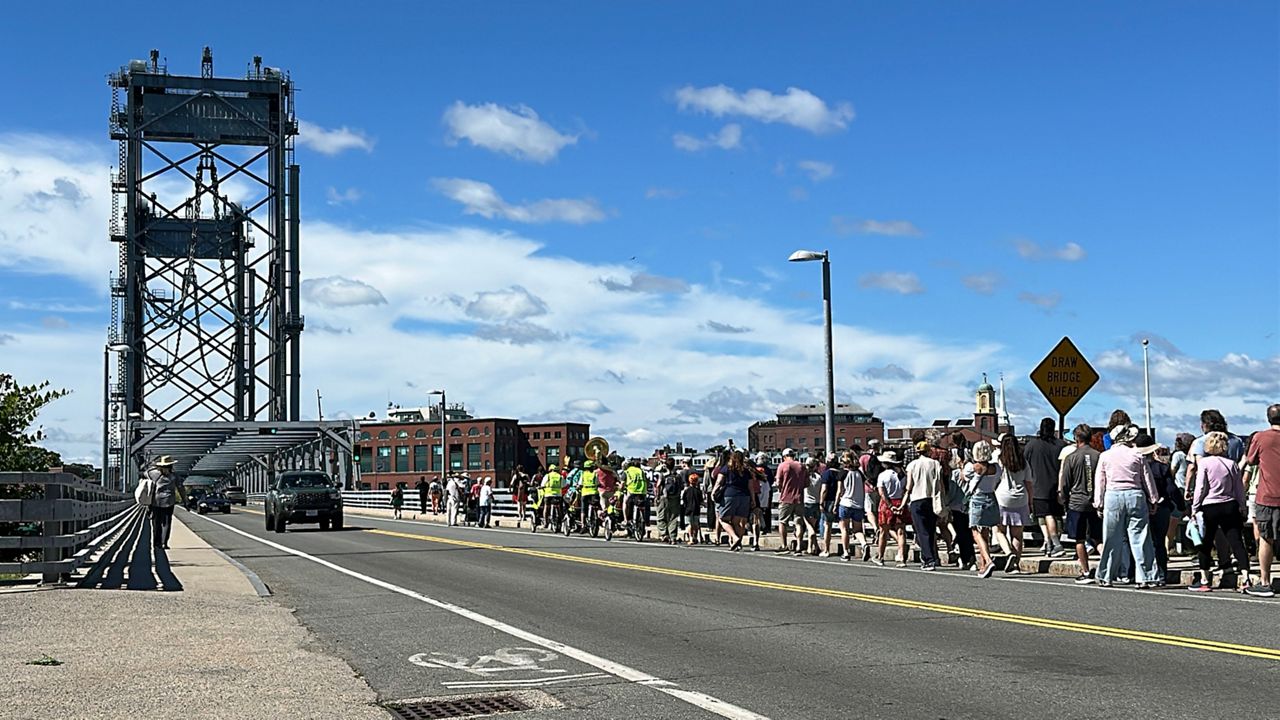
KITTERY –– Sandi Kaddy didn’t hesitate Friday morning when asked what she will feel when crossing the Memorial Bridge on Juneteenth.
“Freedom,” she said. “Plain old freedom and how we got there, what it means to me, what it means to all of us for those that are involved.”
Kaddy is president of the Seacoast African-American Cultural Center, and led dozens of participants in the Juneteenth Freedom Walk Friday.
The walk took place on the federal holiday established in 2021 to recognize June 19, 1865, when federal troops in Texas began enforcing the Emancipation Proclamation ending slavery in the United States.
Kaddy said part of the reason the walk begins in Kittery is to symbolize another milestone in Black history: The march in Selma, Alabama in 1965, when civil rights activists led by the late John Lewis crossed a bridge and were attacked by police.
“It’s basically going back to Martin Luther King, John Lewis crossing over the bridge,” she said.
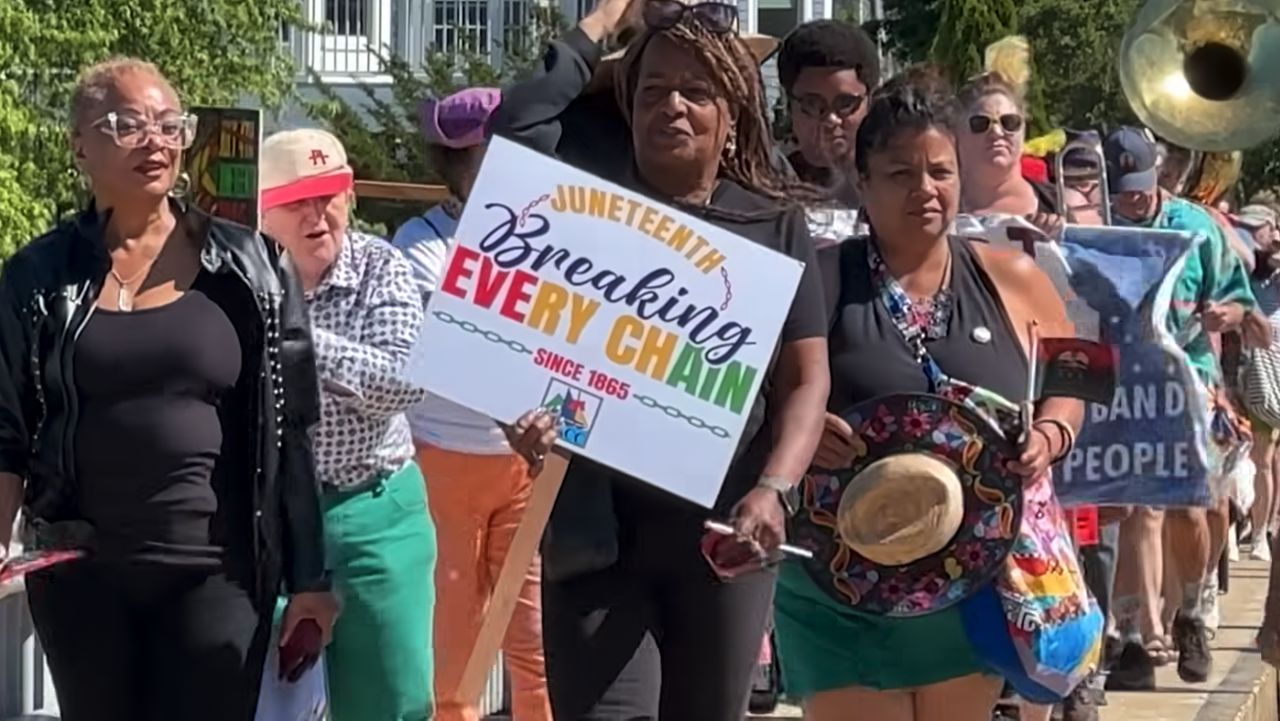
A marching band played Friday as participants marched down Route 1 across the bridge into Portsmouth. They carried signs reading “Black Lives Matter” and “Juneteenth: Breaking Every Chain Since 1865.” At times, the crowd was jubilant, dancing as much as they were walking to the music.
Mary Krempels, 75, of Kittery Point, said she thinks participating in Juneteenth helps remind her and everyone else of the lessons of slavery and the civil rights movement.
“I think the black heritage is under attack right now, and it feels more important right now than it has been for my adult life,” she said.
Carrie Portrie, 44, of South Berwick, walked with her son, Ollie, 2, in a backpack. She said she enjoyed the positive attitudes and camaraderie of the participants, and also walked in honor of the Juneteenth message.
“It felt meaningful and important,” she said.
Kaddy said this is the fifth annual walk across the bridge, both for herself and the center. After walking through the streets of downtown Portsmouth, the procession ended at the African Burying Ground Memorial on Chestnut Street.
There, musicians played in a small festival that also included a ceremony where names of those enslaved were read aloud. Kaddy said remembering America’s past helps put the present and future in perspective.
“In order for us to gain progress and be better for the future, we have to recognize where we came from, from the past,” she said.