




When the annual TD Beach to Beacon 10K was announced for Aug. 6, Ken Shapiro knew he would participate.
It wasn't just because he is a board member of the Cromwell Center for Disabilities Awareness, the Portland-based nonprofit receiving the charitable proceeds from the race this year. His participation will also represent a personal milestone.
Shapiro still experiences lingering effects of a devastating stroke he suffered in 2010 related to a brain aneurysm. Beach to Beacon's 10 kilometers will be the farthest he has gone at once under his own power in about 12 years.
“It’s definitely intimidating and a stretch for me,” Shapiro said.
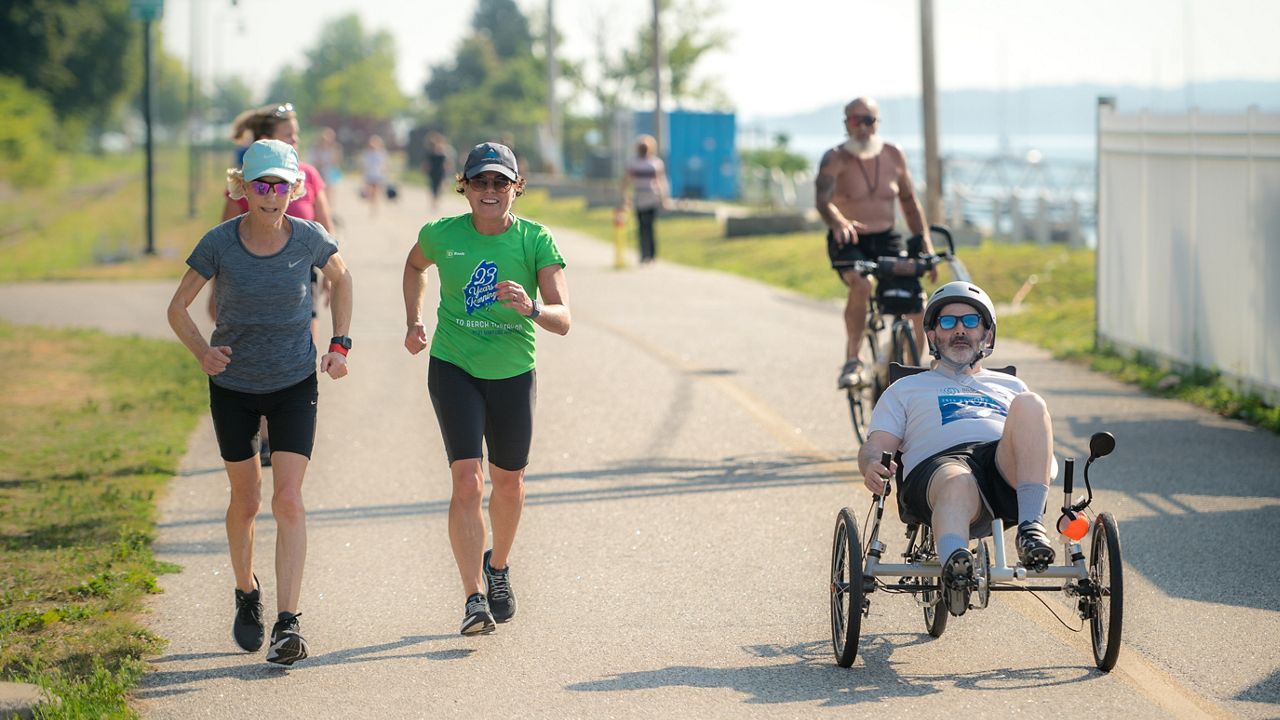
Shapiro, 52, said the stroke struck the left side of his body, robbing him of the use of his arm and hand. He can walk with the assistance of a cane but will be participating in the race on a recumbent tricycle.
“I knew that running was not an option," Shapiro said. "That’s not something I can do safely.”
Shapiro pedals the bike mostly with his right foot, he said, although his left leg "does pitch in.” Using a handle on the right side, Shapiro can steer, brake and shift between the bike’s seven gears.
Having come to grips with the fact that he would not get the use of his arm back, Shapiro has for the past eight years been using the recumbent tricycle on shorter rides.
Shapiro said riding the bike has reminded him of what he is still capable of.
“Just because I couldn’t do everything I did before with two hands, it didn’t mean I couldn’t accomplish just as much,” he said.
Marathoner and Olympian Joan Benoit Samuelson of Freeport founded the annual Beach to Beacon race in 1998. In recent years, the event draws more than 6,000 participants.
Canceled in 2020 and conducted virtually in 2021 because of COVID, the race is returning this year as an in-person event. It takes place in Cape Elizabeth, starting on Route 77 near the entrance to Crescent Beach State Park and finishing at Fort Williams Park.
Proceeds from fees every year are donated to a Maine-based nonprofit, with this year being the Cromwell Center.
The center, according to Executive Director Susan Greenwood, was founded in 2003 to fight the stigma associated with being disabled. Within a year of its founding, she said, the center found its niche in educational programs for Maine schools.
Greenwood said the activity-based programming engages students and usually spurs active participation, such as one activity that prompts kids to think about the difference between a peer who is “just kidding” and someone who is bullying.
“The kids really dive into this and there’s a whole thoughtful discussion about the meaning of someone’s words,” Greenwood said.
Greenwood said she hopes that Shapiro’s participation in Beach to Beacon will be a reminder that those with disabilities are different — nothing more, nothing less.
“He’s just participating in a different way with a different piece of equipment,” she said. “That’s what we’re trying to teach the kids early on, that there’s a different way of doing things.”
Shapiro said he trained with Samuelson on July 21. He rode for about five kilometers at Portland's Eastern Promenade while Samuelson ran beside him.
“It was an amazing opportunity just to meet her and act as her ‘pace car,’ ” he said.
Shapiro is aiming to finish the race in about two hours. He notes that he is not the first disabled person to participate. Some have navigated the course using wheelchairs for years and he remained humble about keeping up with them.
“I expect most of them will blow by me because they are true athletes,” he said.
Even before the stroke, Shapiro worked as a web developer for a disability insurance company. He has become more interested in recent years in supporting those with disabilities, joining the center’s board of directors last year. He starts a new job next month as an employment advocate for the nonprofit Disability Rights Maine.
He said he hopes his participation will inspire others.
“It really puts the emphasis on ability rather than disability,” he said.