




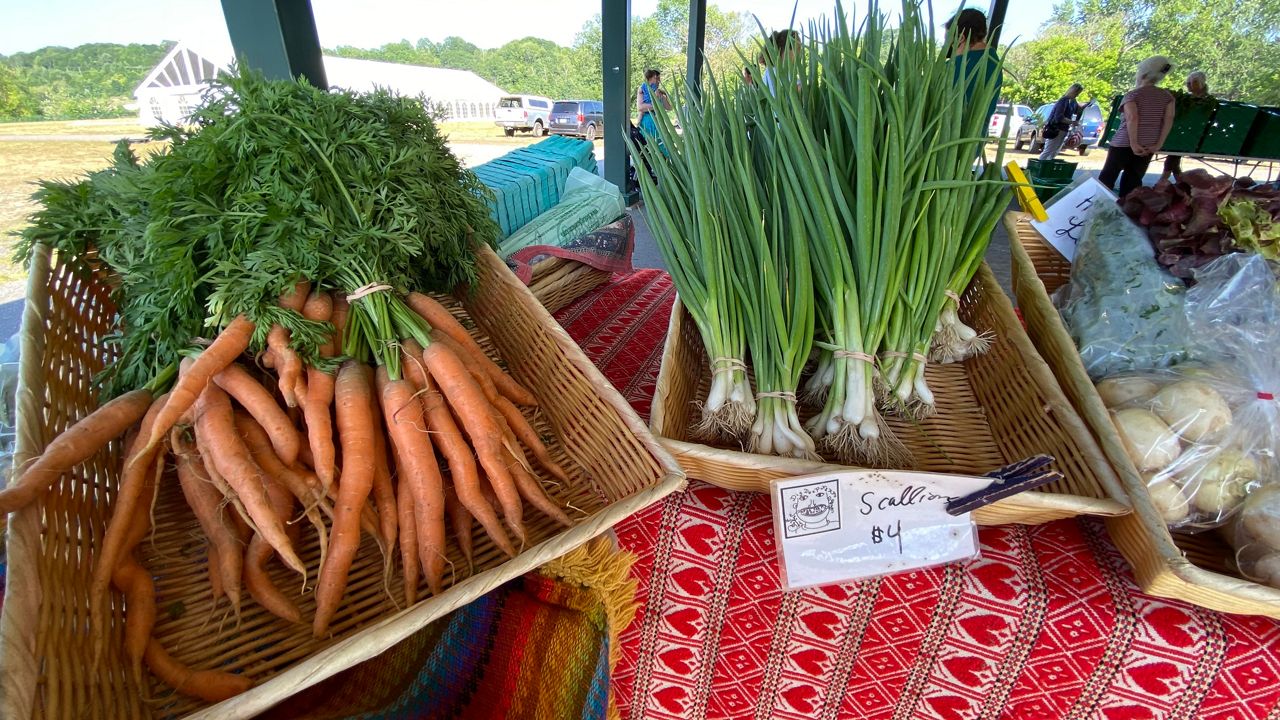
Farmers and those committed to ending hunger in Maine told lawmakers Monday that it’s essential for the state to provide steady funds to help those with low incomes buy local fruit and vegetables.
Sen. Matt Pouliot (R-Augusta) is sponsoring legislation to require the state to allocate $600,000 a year to the Fund to Address Food Insecurity and Provide Nutrition Incentives.
The bill comes as federal support for low-income food benefits is being cut and farmers markets are reporting funding gaps as well.
The fund pays for incentives that encourage those who use federal food benefits to buy local fruits and vegetables. For farmers like Erica Emery of Rustic Roots Farm in Farmington, the funds represent 19% of their annual income.
She said the Maine Harvest Bucks program ensures that all who want to buy local fruits and vegetables can afford to do so.
“The majority of people I see using this benefit are not only families trying to stretch their food dollars, but also senior citizens living on a fixed income,” she told members of the Agriculture, Conservation and Forestry Committee. “I believe there’s a lot of dignity in being able to choose between purchasing lettuce grown on the West Coast or purchasing lettuce grown by a farmer in your community and to not have to feel a financial burden to make that choice.”
Pouliot said there is funding in the proposed two-year budget for the program, but that his bill seeks to provide an ongoing $600,000 allocation.
“This appropriation is a direct investment for communities in all 16 counties as it leads to more sales for local farms and food producers,” he said. “It also turns farmers markets, farms stands and small stores into food access points where people with limited food budgets can afford to buy extra food thanks to these nutrition incentive programs.”
The money will also help draw down federal matching funds, he said.
The Good Shepherd Food Bank, which works with 600 partner agencies across the state, also runs a Farm Fresh Rewards program that uses incentives to encourage healthy food purchases.
“Families can prioritize eating local,” said Courtney Kennedy of Good Shepherd. “As a food strategy for Maine, we recognize the sustainable impact this program has on farmers, our environment and our communities.”