




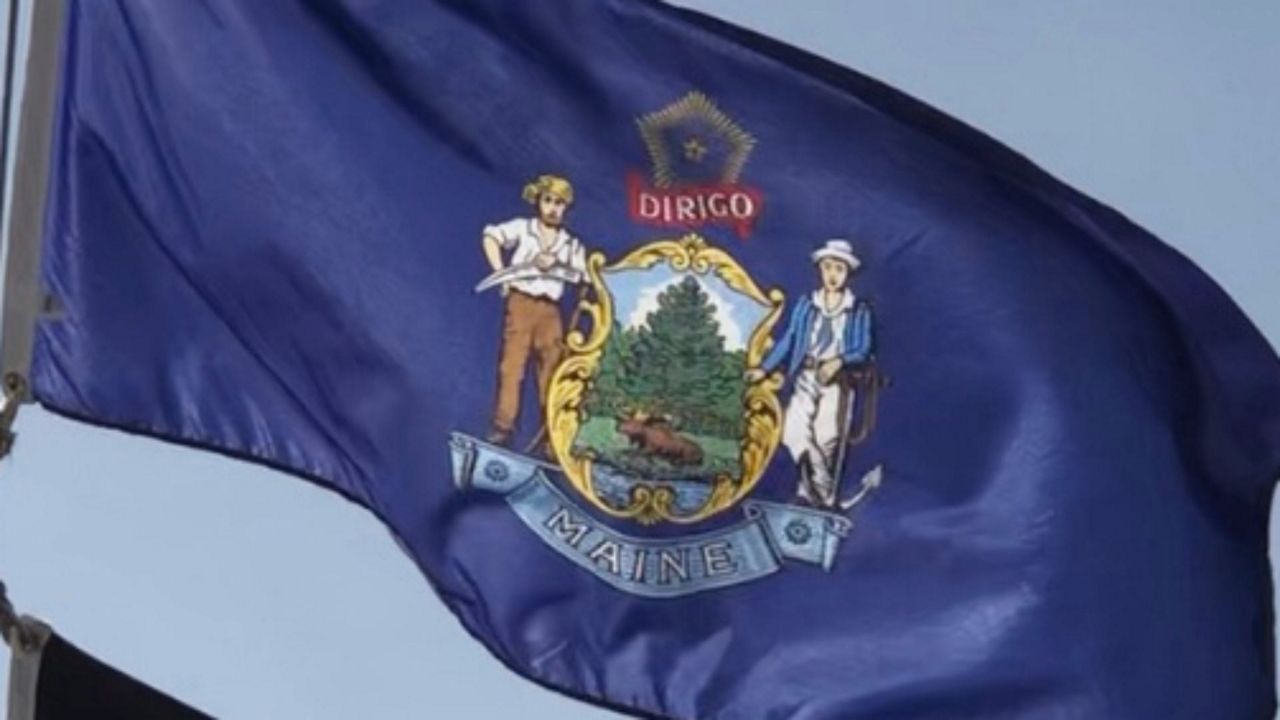
Maine will get another chance to remember its history — and its place among the United States — when the country commemorates its 250th anniversary in 2026.
Maine is the 38th state or territory to establish a new commission as part of a national effort to mark the occasion.
And because the 2020 pandemic forced the cancelation of dozens of events to celebrate Maine’s 200th year, it will be a bit of a chance for a do-over, Maine State Archivist Kate McBrien said.
“We really missed it with our state’s bicentennial so by joining America250, we can look at our history and understand Maine’s role in the founding of our country as well,” she said.
America250 is a nonpartisan initiative made up of private citizens, members of Congress and representatives of all three branches of government that will meet until July 4, 2026, according to the group.
In addition to Maine, states as diverse as Texas, Massachusetts, New Hampshire, Ohio and Arizona have signed on to help with the commemoration.
In late July, Gov. Janet Mills signed into law a bill to create the Maine Semiquincentennial Commission, which will plan events to make “sure the rich history, contributions and heritage of Mainers are spotlighted as we come together and uplift the stories of Americans far and wide,” said Rosie Rios, the chairperson of the federal commission.
Although the Maine commission has yet to be formed or begin its work, O’Brien said she hopes it will give the public many chances to participate in events to commemorate, but not always celebrate, the country’s history.
“To me a commemoration is an opportunity to look at past events and really examine, without only looking at the positive, all the sides that brought us independence from Britain,” she said.
House Minority Leader Rep. Billy Bob Faulkingham (R-Winter Harbor) is co-sponsoring the bill.
“America is the greatest country our planet has ever known,” Faulkingham, said. “That is because we are the freest the world has ever known. Our forefathers had the foresight to create a constitutional republic built on good moral values, and a free market economy.”
When the U.S. declared its independence in 1776, Maine was still part of Massachusetts, one of the original 13 states. It wasn’t until 1820 that Maine became a state as part of the Missouri Compromise, which allowed Missouri to join the union as a slave state and Maine as a free state.
McBrien said like many states, Maine has a complicated history with slavery, from those who built ships that were used in the slave trade and those who were fervent abolitionists.
“Our debate over slavery had been going on for decades before and after we became a state,” she said.
When it comes to Maine’s role in the American Revolution — which ran from 1775 to 1783 — the first naval battle of the war was fought in 1775 on the Machias River when a local seaman led a raid on the British schooner HMS Margaretta.
Maine’s Indigenous people “were hugely instrumental” in the revolution, fighting in the war and helping to guide troops toward Canada, McBrien said.
A representative of the Wabanaki Nations will have a seat on the commission, one of 15 members to be appointed after the resolve takes effect in October.
Assistant House Majority Leader Kristen Cloutier (D-Lewiston), a co-sponsor of the legislation, said one of her constituents urged her to put forward the bill and she was happy to do so.
“It’s a tough time in national and state politics right now and it’s a good opportunity to reflect on the things that bring us together and work on what divides us,” she said.