




It’s been more than 60 years since Fort McKinley has been in use as a military compound, but now the City of Portland is looking to give new life to at least one of its buildings, which is welcome news to one local historian.
“I was thrilled to hear that news,” said Ian Stevenson, an architectural historian and historic preservation professor at Boston University. A resident of Peaks Island, Stevenson is also the former director of advocacy for Greater Portland Landmarks, a nonprofit historical preservation organization.
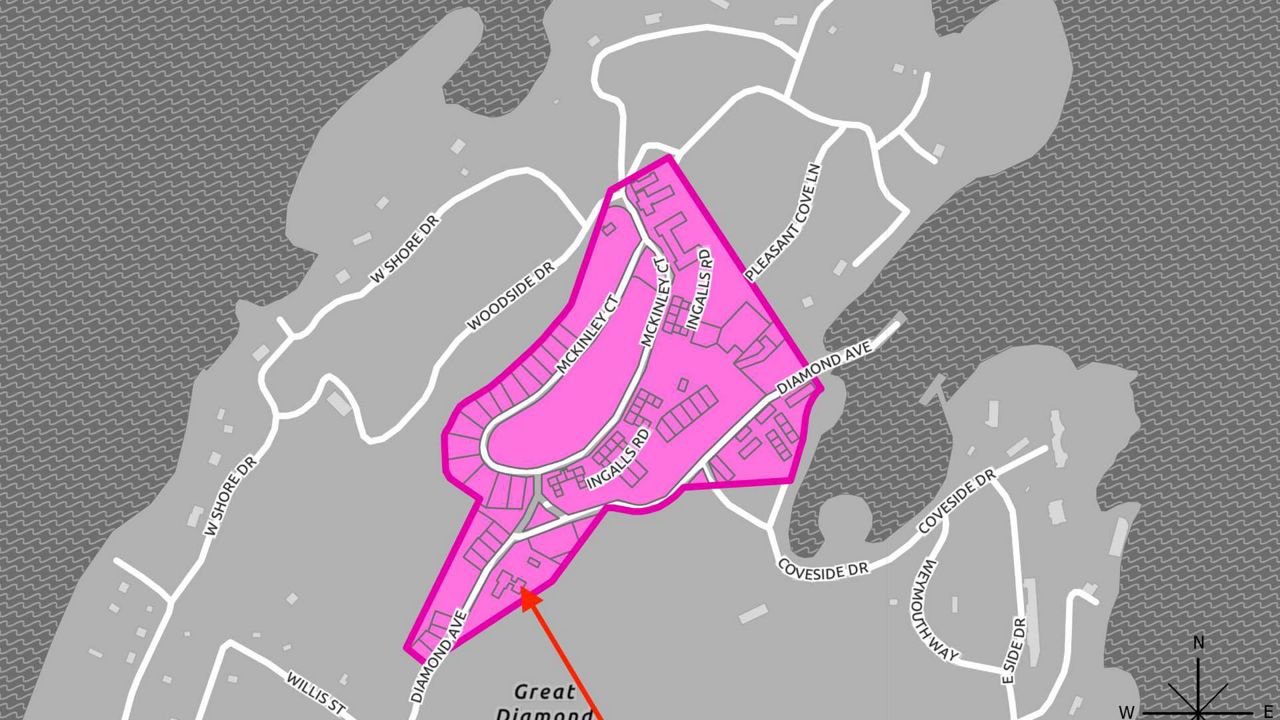
The city is accepting proposals for repurposing the building’s former hospital property on Great Diamond Island.
“The city is seeking the adaptive reuse of the property, in line with historic preservation, with a goal of proposals that include commercial, residential or mixed use of the existing buildings, compatible with Diamond Cove,” officials wrote in a March 5 statement.
The property is part of a sprawling complex that dates back to the 19th century, once part of the national coastal defense system, according to information from the Fort McKinley Museum on the island.
Stevenson said Portland itself has been a cornerstone of coastal defense for centuries, from Wabanaki tribes defending against European settlement to the bombardment of the city by the British during the American Revolutionary War.
“Portland has been a site of coastal defense for 400 years, and Fort McKinley sits right in the middle of that,” he said.
Construction first began in 1890 by the US Army’s Coastal Artillery Corps, according to the museum, as a staging point for mining the Hussey Sound entrance to Portland Harbor. Eventually, it would include a full artillery gun battery with 26 guns in total.
The fort was named for President William McKinley after his assassination in 1901. It was active, according to the museum, during the Spanish-American War in 1898, as well as World War I and World War II.
The complex was also known for housing the US Army’s 5th Infantry Regiment, a citizen’s military training camp and a naval training center. At any given time, according to the museum, the fort had as many as 800 troops, with as many as 1,400 during World War II.
Stevenson said the idea of the fort being spread out, as opposed to ensconced behind thick walls, is indicative of the changes in warfare taking place at the time.
“It just kind of reflected new military technology,” he said.
According to the museum, the fort was decommissioned following the end of World War II, became the property of the navy in 1954 and eventually was sold off to private owners in 1961. It fell into disrepair before restoration efforts began on the entire property in the 1990s. Today, the fort is listed on the National Register of Historic Places. Many of its buildings have been sold off to become private residences.
Even today, however, Stevenson said one can walk in the residential neighborhood and still see how the area had once been a military compound.
“When you walk the grounds, you really get a sense of what it was like as an active fort,” he said.
The hospital building dates back to 1903, and included in its day a full operating room, dentist’s office and kitchen. After the fort was decommissioned, the abandoned building remained in private hands until the City of Portland took possession in 2003 for nonpayment of taxes, according to city officials.
The property, in addition to being on the national register, is also officially part of Portland’s local historic district. As such, according to the city, renovations to the property are subject to city review. The building is also surrounded by property owned by the Diamond Cove Homeowners’ Association.
“Both the city and Diamond Cove Homeowners Association would like the existing Hospital Building preserved to the maximum extent possible,” city officials wrote in their announcement.
Stevenson said he looks forward to seeing the former hospital building repurposed and preserved, the way developers have for so much of the rest of the fort.
“One of the biggest threats to historic buildings is lack of attention, and so the fact that the city wants to get this reactivated is really exciting,” he said.
City officials declined further comment on the announcement, citing its ongoing request for proposals. The City of Portland is accepting proposals until Thursday, March 14, at 3:30 p.m. For proposal forms, contact the city’s purchasing office at purchasing@portlandmaine.gov, or by phone at 207-874-8654.