




BANGOR — It’s been just over three weeks since a deadly plane crash at Bangor International Airport claimed the lives of all six people on board.
As the investigation continues, first responders who were at the scene are dealing with the emotional aftermath and coming to terms with what they saw.
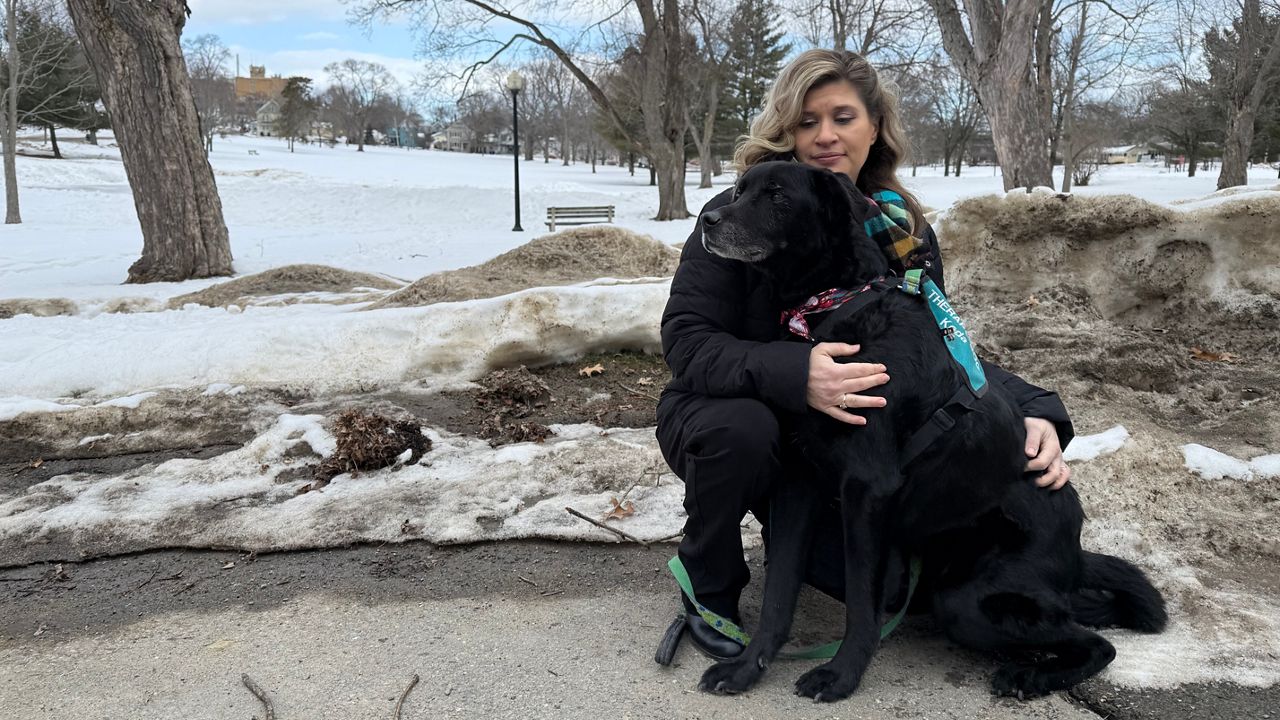
Pet Partners of Eastern Maine was quick to lend a helping hand with their therapy dogs.
“When you’re kind of reliving those kinds of things, it can be difficult to process and talk about those things out loud,” said Stacy Coventry, the community lead for the group. “But if a therapy dog is present, it kind of is a neutralizer and a connector for us all. It bridges us, but it also helps relax us so we can have those important conversations.”
Coventry said they’ve brought therapy dogs to visit with the Bangor Fire Department, the airport’s dispatch team and fire station and the Maine Army National Guard. The group will also be doing visits with the Maine Air National Guard and the state’s medical examiner’s office.
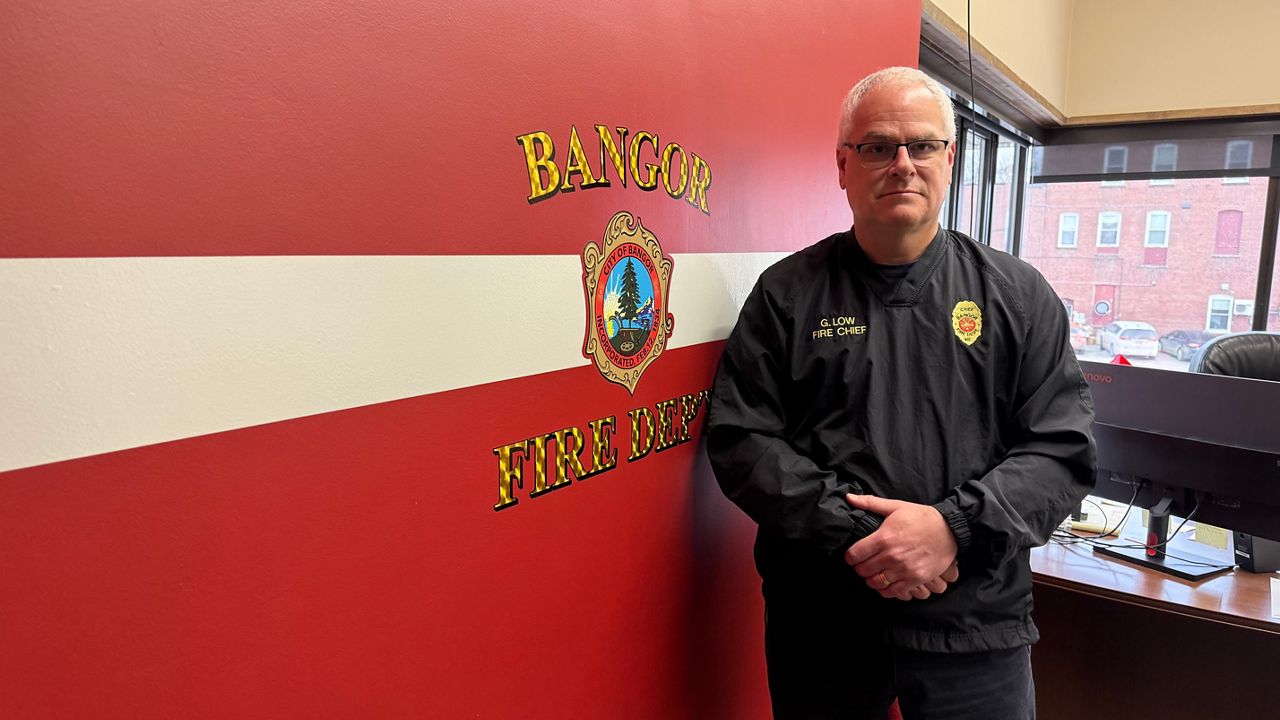
According to Bangor Fire Department Chief Geoff Low, 18 Bangor firefighters responded to the crash that night.
“It’s important that we recognize that stuff, and we acknowledge that stuff, and it’s not a weakness,” said Low. “As humans, when we see other humans in distress for whatever reason, we own a piece of that. It becomes part of us, and we carry that for a long time.”
Low said that members of the community have been stopping by the station to say thank you. And, just last week, the city of Bangor honored airport staff and first responders with an official proclamation recognizing their work.
Crews also have access to mental health and support group services.
“One of the biggest things that we try to do is support the members when they’re going through this stuff, whether it’s time off or need for conversation or whatever the case may be,” said Low. “We’re definitely in tune with that and trying to expand our capabilities in that area, as well.”
According to national studies, firefighters are at a high risk of developing post traumatic stress disorder.
“[The plane crash] was one of the more significant [incidents] in a while,” said Low. “I think what people need to understand though, especially in terms of public safety, it’s not necessarily the significant event that creates the problem, it’s the chronic exposure to the human illness or the human injury or the conditions that we find people in.”
“Over time, that builds up and it weighs on you. And a lot of people miss that when we talk about mental health,” said Low.
Bangor International Airport is also providing a variety of resources for employees, according to a spokesperson.
“Those resources were available almost immediately following the accident [and] in the days after,” said Aimee Thibodeau, Marketing and Business Development Manager for the airport. “And will continue to be available for as long as needed… we continue to check in on each other, and our human resources department has provided availability and resources.”