




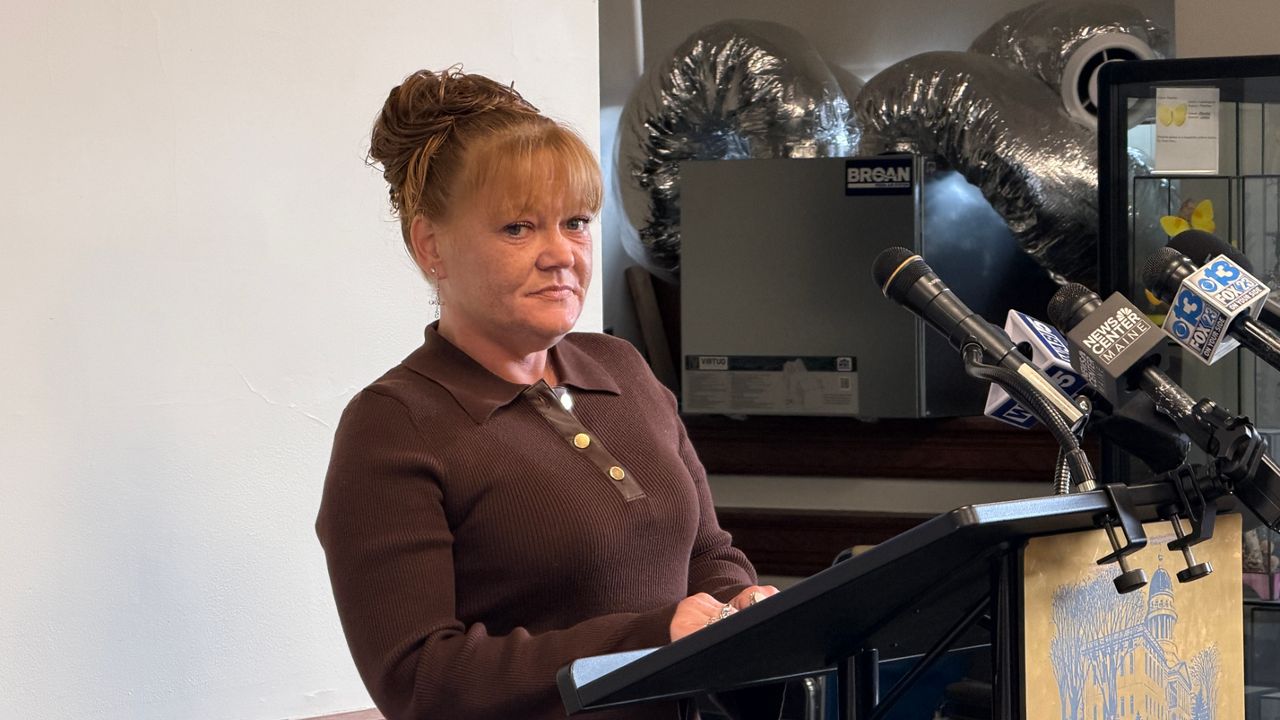
AUGUSTA — Kelli Austin spent years juggling college classes and care for her teenage daughter.
She was enrolled at Washington County Community College to earn her substance use and recovery certificate and a degree in human services.
And though she received temporary federal assistance and food stamps, she says she “was still drowning.”
“As someone who comes from generational poverty and generational addiction and is a first-generation college student, every step forward felt like I was pushing against a lifetime of barriers,” she said Wednesday at the State House.
Things began to change when she found out about Maine Equal Justice’s Build Hope program, which gave $2,000 annually to low-income parents and caregivers enrolled in postsecondary education. The flexible funds could be used for transportation, housing, utilities and other basic needs.
“For the first time I found a program that trusted me to make the choices that my family needed most with the help that I was given,” she said.
Austin and others came to the State House to tout the success of the program, which distributed $2.9 million to nearly 1,800 Maine children and their families.
They also took the opportunity to emphasize to lawmakers and others that more must be done to support those who are working to better their lives through education.
Data gathered during the program, which ran from January 2022 to December 2025, showed that transportation was the biggest barrier, with housing and utilities described as “major destabilizers.”
“In a state where a car is essential, especially in rural areas, car costs, fuel, repairs, insurance were difficult, often impossible, to cover,” said Luisa Deprez, professor emerita at the University of Southern Maine. “Public transit, for all intents and purposes, is nonexistent.”
Of those who received help, 56% were first generation students, 87% were head of households and nearly 70% were working prior to enrollment.
Although the program has now ended, Maine Equal Justice says it hopes the success of the program — and the in-depth data they gathered — will prompt lawmakers to support things like strengthening child tax credits, expanding transportation funding and improving access to affordable childcare.
Austin said she’s heading back to school this fall to finish her degree, alongside her daughter, who’s now old enough to begin work toward her career of choice.
“Programs like Build Hope don’t just change lives, they show up with trust, compassion and dignity,” she said. “And when families like mine receive real judgment free support, they don’t just survive they thrive.”