




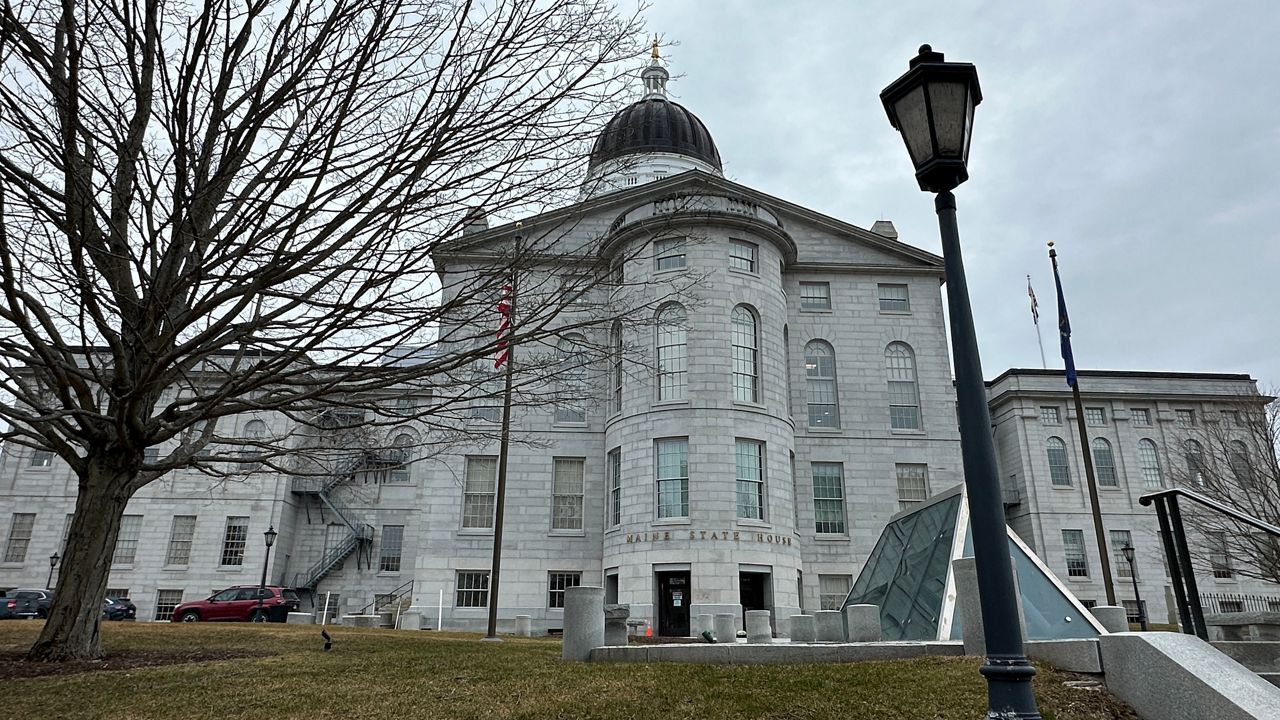
AUGUSTA — With just weeks to go in the legislative session, state lawmakers will soon consider bills related to data centers, the often-controversial large-scale developments needed to support the information economy.
One bill, sponsored by Rep. Melanie Sachs (D-Freeport), seeks to put a moratorium on future development to give a task force time to study risks and benefits.
The other, sponsored by Sen. Nicole Grohoski (D-Ellsworth) would prohibit data centers from taking advantage of tax breaks often used to entice new development to the state.
Sachs said her bill, LD 307, seeks to put a moratorium in place until November 2027.
“Many states who had invited data centers in with incentives are now trying to roll them back,” she said. “As we learn more about the grid impacts, the environmental impacts and the community impacts as well, all three of those things are really, really important.”
Across the country, data centers — which are large buildings that house computer systems — have been criticized for their water use and the potential to increase electricity prices. A report by the Lawrence Berkeley National Laboratory shows that in 2023, data centers accounted for about 4.4% of electricity consumption in the U.S.
That number could double or triple by 2028, the report found.
In December, following public opposition, the Lewiston City Council rejected a proposed artificial intelligence data center that would have repurposed one of the old Bates Mill buildings.
In Sanford, a Texas company is proposing to build a data center.
Sen. Matt Harrington (R-Sanford) said he supports a version of Sachs’ bill that would put a moratorium in place but would also allow the Public Utilities Commission to approve projects deemed appropriate.
“Obviously none of us want projects that are going to negatively affect ratepayers and water ratepayers or the environment,” he said. “But I think there can be a thoughtful approach, and Maine doesn’t have to turn a blind eye to billions of dollars in economic development to our state.”
Harrington said most of the data centers across the country are likely to be built in the next couple of years.
“The boom is now,” he said.
Grohoski’s bill, LD 713, proposes to exclude data centers from the Business Equipment Tax Exemption and Dirigo Business Incentives programs.
In testimony to the Taxation Committee, she said other states have found that data centers do not create a large number of jobs, which is often the primary reason for the incentives.
“I want to be careful here — data centers are not without value,” she said. “The digital infrastructure they provide is real, and in some locations, data center investment has generated meaningful economic activity. But the evidence is mixed, and the concern about job creation is well-documented.”
But opponents, including the conservative Maine Policy Institute, say Maine should not pick “winners and losers” by singling out one industry.
“Policies that make Maine less competitive for these types of investments risk pushing economic opportunities to neighboring states that are actively working to attract them,” Montana Towers, a policy analyst with the institute, said.
Both bills will head to the House and Senate in the coming weeks. Lawmakers are scheduled to adjourn in mid-April.