




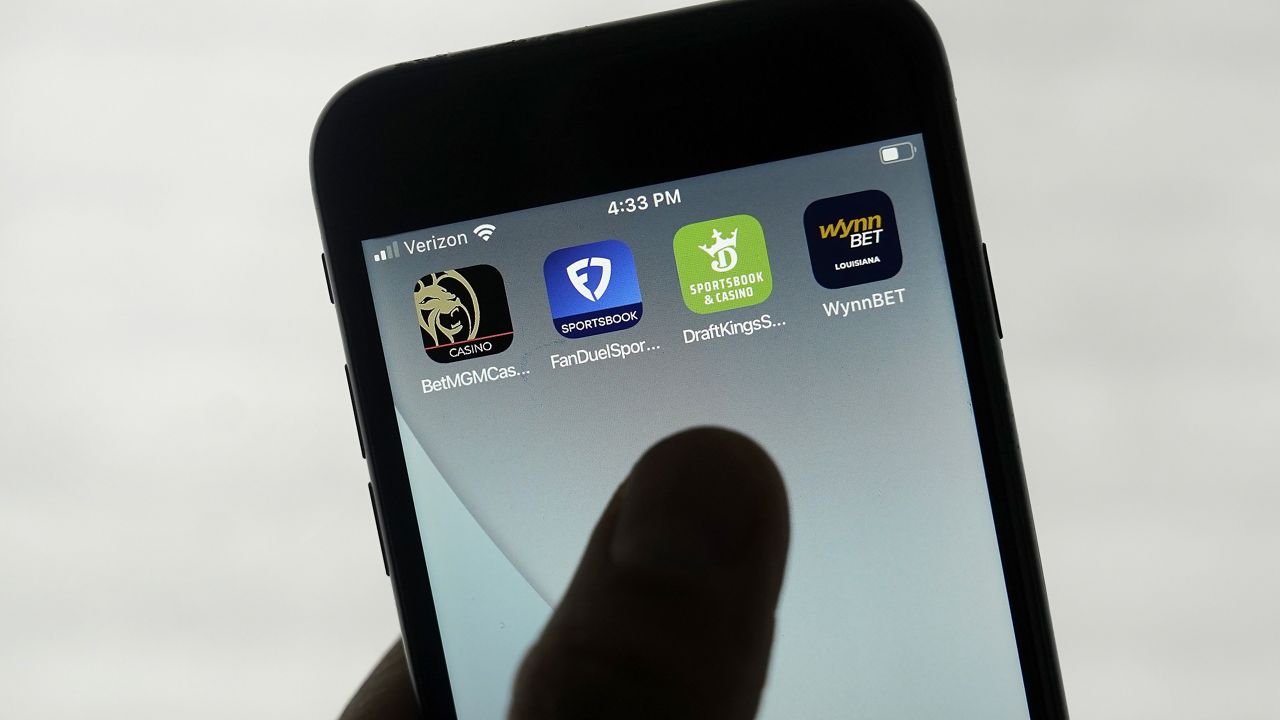
AUGUSTA –– It’s been more than two years since online sports betting came to Maine, and some data suggests that’s resulted in an increase in problem gambling.
That data is prompting at least one advocate to call for awareness of problem gambling assistance services.
Meanwhile, the operators of one leading national online betting platform say that regulated betting is ultimately safer for users.
Lori Manson is the problem gambling services coordinator at Adept Maine, a company providing corporate training and behavioral health services. She said she works closely with 211, the state’s hotline for coordinating assistance services, including issues with gambling addiction.
Manson said the convenience of gambling from a smartphone can provide more temptation to a potential problem gambler.
“There’s very, very easy access and it makes a hidden problem even more hidden,” she said. “You don’t need to sneak off to the casino or something like that. You can just be engaging with it on your phone.”
Manson said the number of problem gamblers who call 211 and eventually use services has gone up since online sports betting came to Maine in late 2023.
According to 211’s data, Manson said, in 2021 there were 85 people who called the hotline for problem gambling and wound up getting help. In 2022, there were 83 people, and in 2023 that number went up to 86.
In 2024, that number jumped to 117, a 36% increase. In 2025 it jumped up again to 144, a 23% increase.
In the Maine Integrated Youth Health Survey, a biennial survey of youths in grades 5-12, respondents were asked if gambling overall “led to financial problems or problems in your family, work, school or personal life?” In 2025, the survey recorded 3.9% of Maine high schoolers responded “yes.” That’s a 30% increase over the previous survey two years earlier.
“Online sports betting –– it’s available 24-7 in everybody’s pocket, so you can do sports betting while you’re sitting on the couch watching TV with your family. You can do it at 3 o’clock in the morning in bed next to your partner,” Manson said.
Lori Kalani is the chief responsible gaming officer at DraftKings, one of two national online sports betting platforms that went online in Maine in 2023. She said it’s easy to blame her platform or legislators who legalized online sports betting for encouraging betting but pointed out that sports betting exists regardless of regulation.
“There’s no debate that sports betting was taking place before it was legalized in every jurisdiction where we operate today, and I’d say in the jurisdictions where we don’t operate it’s also taking place,” she said.
Manson agreed, noting that national data from states where online sports betting or gambling is illegal still report problem gamblers who gamble online.
“People are still going to gamble, whether it’s legal or not,” she said.
The goal, Manson said, should not be fighting to ban online sports betting, as that won’t stop it, especially for problem gamblers.
“The thing with sports betting, or any type of gambling, you can make it so it’s not legal, people are still going to engage in it,” she said.
The real key, Manson said, is driving awareness of the risks. The Maine Council on Problem Gambling offers tips, including setting dollar and time limits, accepting ahead of time that losing is part of the game and not to feel compelled to chase after losses. The council also advised betters not to borrow money for gambling, not using gambling to cope with other problems, and not to let gambling interfere with other aspects of life such as work.
Manson also wanted to drive awareness of services including “self-exclusion.” Problem gamblers have the option to ban themselves from online gambling platforms.
And some are using that option. According to data from the Maine Department of Public Safety’s Gambling Control Unit, there were 30 new people opting to self-exclude from sports betting in 2025, representing an increase of 87.5% over the previous year.
Kalani said DraftKings offers self-exclusion as well, and said she is encouraged to see people using the self-exclusion tools if they feel they need to.
“I think that’s a good thing,” she said. “The fact that we offer it, we honor it, we take it very seriously. We don’t market to anybody who is on a self-exclusion list. That to me is somebody who’s been brave enough and strong enough to say ‘This isn’t for me.’”
Kalani said DraftKings has a responsible gaming center that offers access to helplines and works with a Colorado-based counseling provider.
Manson said users of the platforms can also use tools to set limits on the amount of money they can spend. Other tools can limit the time spent gambling, setting a “cooling off” period.
Kalani said DraftKings encourages people to use self-regulating tools if they think they might have a problem, and said having legalized gambling that is monitored and regulated helps ensure that assistance is also available for problem gamblers.
“I think it’s much safer and much better for consumers and the general public if they’re going to (gamble), to have it legal and regulated so we can offer the various resources,” she said.
Manson said 211 operators can direct callers to counseling services, including financial counseling. There are also meetings, podcasts and apps that can help, she said.
If you or someone you know may have a problem with gambling, call 211 in Maine to access the state’s hotline for services that can help.