




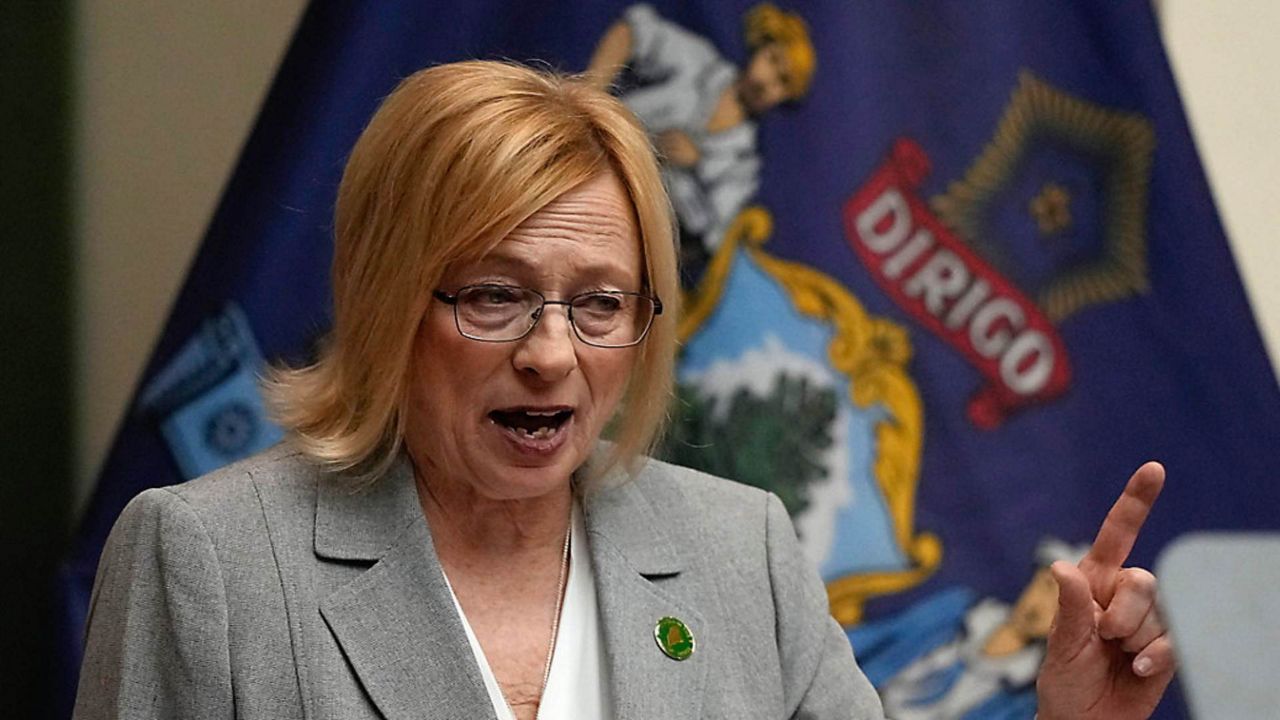
Maine Gov. Janet Mills told lawmakers the state will increase by 25% the availability of the overdose-reversing drug naloxone in order to fight the ongoing drug epidemic.
Mills spent a significant portion of her hour-long State of the Budget Address Tuesday talking about substance use disorder that led to a record 716 overdose deaths in 2022.
She said in December, the state recorded 928 overdoses and 75 deaths — “the highest number of deaths of any month on record.”
“This is a crisis,” Mills said.
She also linked the drug epidemic to recent deaths of young children who died from abuse or neglect and sometimes because they ingested a parent’s drugs.
In addition to increasing the availability of naloxone, Mills said the state will increase the number of substance-use experts who work with law enforcement and develop a new plan to make families stronger.
She is also putting clinical experts in every child welfare district in the state to help address substance use, increasing the availability of recovery coaches and expanding court programs to get more parents into recovery.
“Every death of a child in any way connected to the child welfare system should be scrutinized for ways to improve and strengthen our system while preserving the ability of the state to put behind bars anyone who caused that child’s death,” she said.
$10.3 BILLION SPENDING PLAN
In her address, Mills highlighted $400 million in spending on state transportation needs that will draw down federal funds and a new goal to require 100% of electricity to come from clean energy by 2040.
Mills said Maine is in a strong financial position, but acknowledged ongoing problems such as the housing shortage and high energy bills.
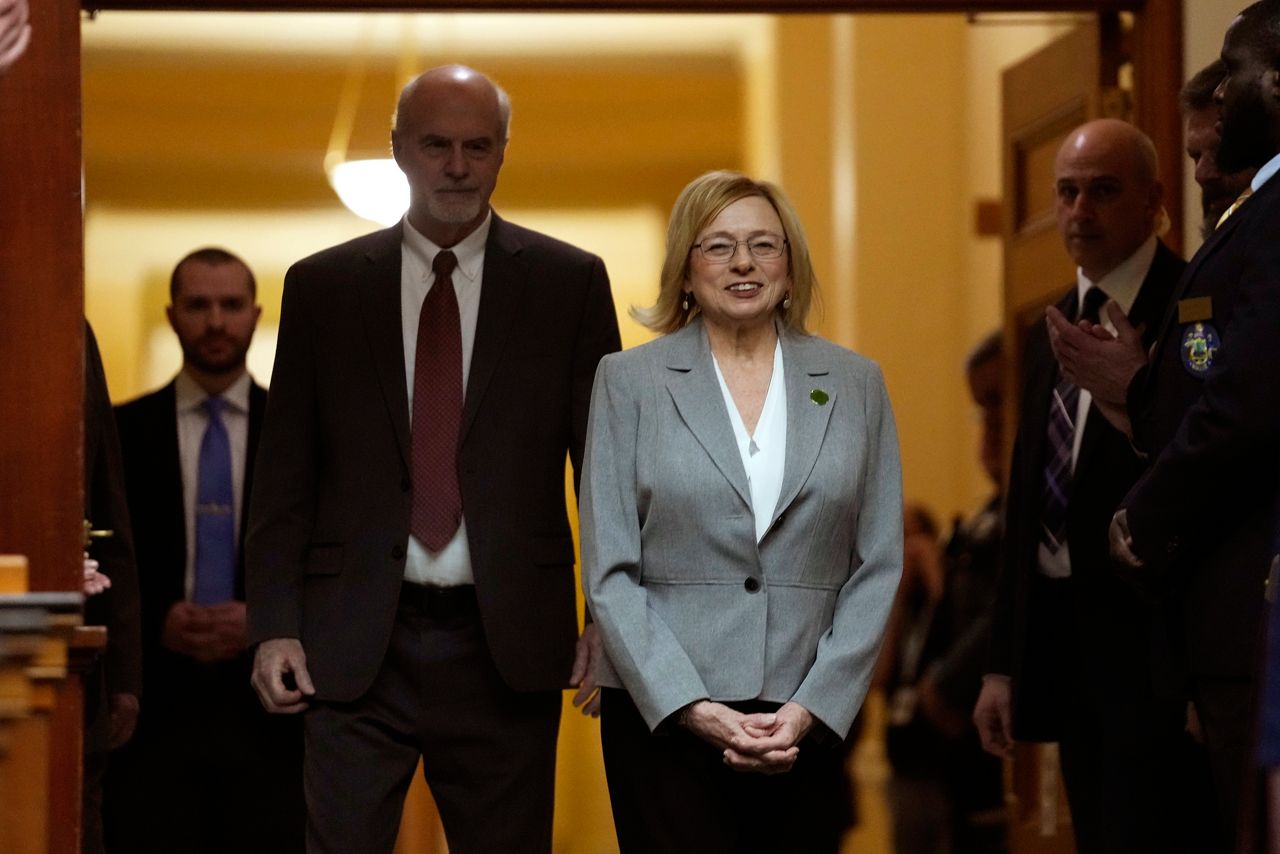
“Our state stands on a solid fiscal footing, and we are prepared to weather whatever economic challenges may come,” she said. “The state of our budget is strong.”
Last month, Mills released her proposed $10.3 billion, two-year budget that continues past initiatives such as funding local education at 55%, fully funding the municipal revenue sharing program and extending two years of free community college to more high school graduates.
The budget does not propose to use any of the state’s $900 million rainy day fund.
It also does not raise taxes, but does include additional funds to address the state’s most vexing problems — record overdose deaths driven by fentanyl, an overreliance of fossil fuels and a housing crunch that hurts many Mainers.
“When combined with higher interest rates, home affordability has soared out of reach for far too many,” she said. “The problem cuts across nearly every facet of society, contributing to homelessness and limiting our ability to expand our workforce.”
‘SPENDING GONE WILD’
Democrats and Republicans interrupted the speech several times with standing ovations to support Mills’ proposals to improve services for those with disabilities, provide more funds for legal services for the poor and fight against federal regulations on the lobster industry.
But in response to the address, Republicans said the budget proposes too much spending and fails to make an effort to cut taxes.
“The Governor’s budget is another episode of spending gone wild,” Senate Minority Leader Trey Stewart (R-Presque Isle) said in a statement. “In fact, this spending bill is what’s wrong with government. It puts the government first and the taxpayers last.”
Stewart and House Minority Leader Billy Bob Faulkingham (R-Winter Harbor) said the budget is $1 billion too high and “goes far beyond our ability to pay for it.”
Mills concluded her address by saying the state’s strong financial standing puts the state in a good position to tackle major challenges.
“We have weathered long winters, terrible storms, wars, flood, famines, recessions, and yes, pandemics,” she said. “If we provide the human infrastructure — a strong health care system, good schools, housing, roads, child care, broadband — then the people of Maine will do the rest.”