




Business and health care coalitions continued to express concerns Monday about proposed rules for the state’s new paid family and medical leave system, saying large employers will take a financial hit.
That’s because the rules call for all Maine employers and employees to pay into the system for more than a year before benefits start and regardless of whether the company plans to enroll in it.
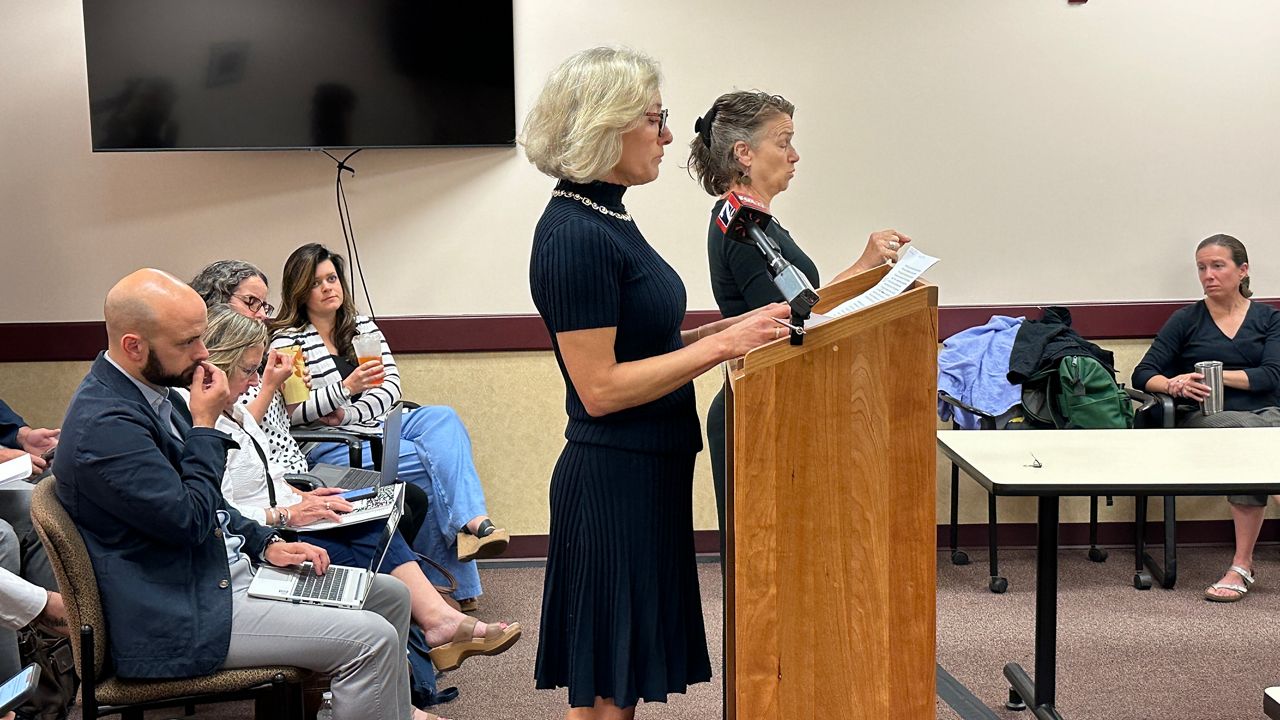
“During this time of great economic challenge, particularly for health care systems that are feeling the impact of COVID, we’re deeply concerned about the burden this program would place on our care team members as well as the impact on the system’s finances,” Katie Fullam Harris of MaineHealth said at a public hearing.
MaineHealth is the state’s largest private employer, with more than 23,000 workers. Under proposed rules, the health care system will be required to pay in about $18 million even though it already offers a paid leave benefit to employees and will apply to opt-out, Fullam Harris said.
The comments came during a public hearing at the Maine Department of Labor, where a dozen business and nonprofit leaders told a panel of administrators they have deep concerns about the proposed rules.
And while large businesses say they were caught off guard by the requirement that all businesses pay in for more than a year before they can apply for an exemption, the leader of the coalition behind the paid leave system said the seed money is necessary to build a solvent plan.
“If large employers opt out of the foundational public program, it puts all of the burden on small businesses,” said Destie Hohman Sprague, executive director of the Maine Women’s Lobby and the leader of a 45-member coalition that led the effort.
Hohman Sprague worked to get the Legislature to pass a bill calling for the creation of a system in 2023, which led to the rulemaking process now underway. She said her coalition — which includes AARP and the Maine State Breastfeeding Association — is reviewing the rules and will submit comments to the board ahead of the July 8 deadline.
From her perspective, the system is similar to Social Security, where everyone pays in to make sure the fund stays solvent.
“Like Social Security, you don’t get back the specific money you put in,” she said. “Everybody contributes to make sure the fund works, to make sure the fund is solvent.”
The new system became law in July 2023, making Maine the 13th state to establish a program.
Private and public sector workers will be eligible for 12 weeks of paid time off for family or medical reasons, which include caring for a relative or for the birth of a child, according to the labor department.
Payroll contributions to support the program will begin in January 2025, with benefits likely to begin in May 2026.
Most workers out on leave will make 90% of their regular wage, while those in higher income brackets will be paid 66% of their wages.
State law requires companies with 15 or more employees to contribute 1% of wages to the system, with half paid by the worker and half by the company. Those with fewer than 15 employees can deduct half of the amount from workers but are not required to make a company match.
During the hearing, the Maine State Chamber of Commerce, Retail Association of Maine, Maine Forest Products Council, Maine Hospital Association and others urged the department to allow large employers to opt out on Jan. 1, 2025, if they already offer a similar plan.
“This is the worst-case scenario where businesses who did not think they would be contributing to this tax are scrambling to assess the implications of a contribution on their employees and employers alike,” said Patrick Woodcock, CEO of the state chamber.
In addition, Woodcock and others also cited concerns about long-term employee absences at a time when it’s hard to attract and retain workers.
Lori Lefferts, human resources director of Skills Inc. in St. Albans, said for nonprofits already operating on a “razor thin margin” the extra expense will be unaffordable.
Her nonprofit provides support for 110 people with intellectual and developmental disabilities. They employ 137 people, but currently have 18 full-time and nine part-time open positions.
She worries that workers may leave for jobs in the for-profit sector once the payroll deductions begin. And she asked that MaineCare reimbursement rates for nonprofits like hers be updated to include coverage for the paid leave program.
And for large employers like MaineHealth, the extra cost will trickle down to those who need the services, Fullam Harris said.
“Every tax and fee that we pay only adds to the cost of healthcare in Maine,” she said. “We urge the state to identify a different method of building up the solvency of this program.”