




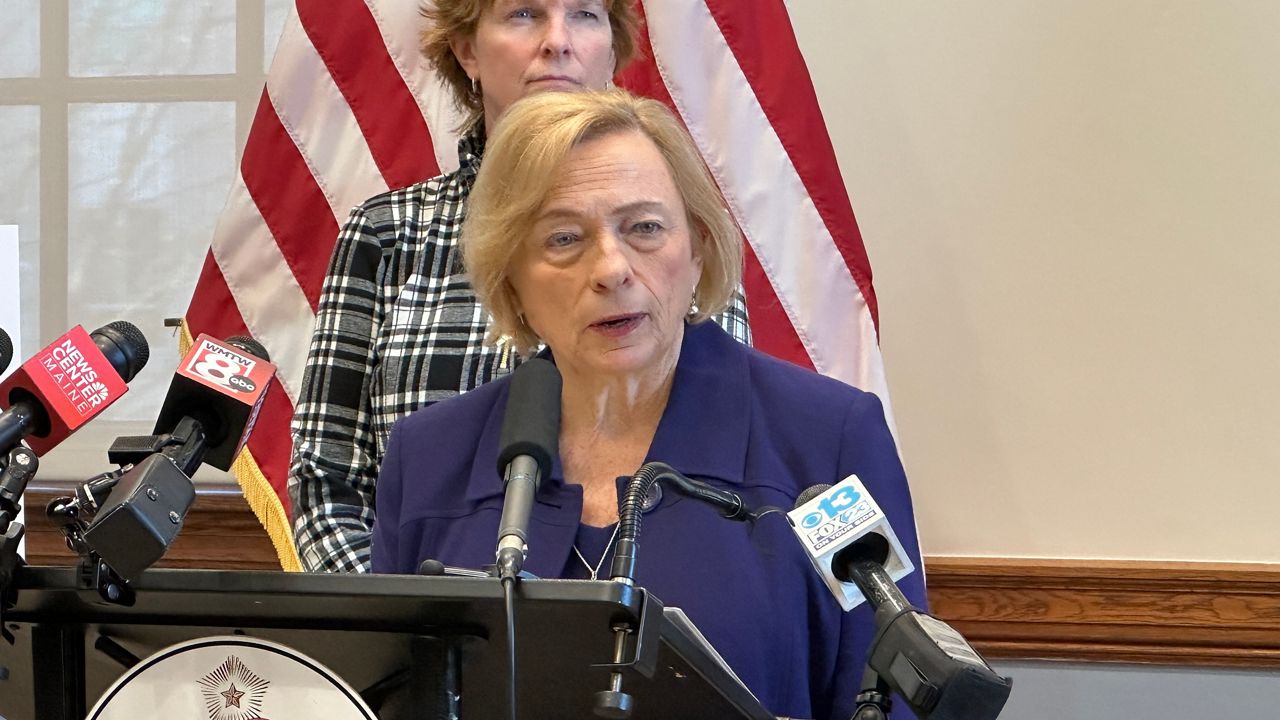
AUGUSTA — Gov. Janet Mills unveiled a two-year budget Friday that proposes a $1 per pack cigarette tax increase and cuts to social services to help close a projected shortfall.
Mills said the tax increase and cuts are necessary to close the gap between revenues and what is needed to fund core government services for the 2026-2027 budget years.
Earlier this week, Mills’ budget office warned lawmakers of the shortfall and another gap in funding in the Medicaid program. The Medicaid deficit can be filled with existing revenues, she said.
Mills’ proposal to raise the cigarette tax from $2 per pack to $3 per pack is what she described as a targeted revenue source that avoids raising taxes — such as the income or sales tax — that affect all Mainers.
But that part of the budget won’t fly with Republicans, said House Minority Leader Billy Bob Faulkingham (R-Winter Harbor).
“We’re already one of the highest taxed states in the country so we don’t really see a need to increase any taxes,” he said.
When asked what could be cut to come up with the projected $80 million a year in revenues that will be generated by the increase in the cigarette tax and taxes on other tobacco products, Faulkingham suggested cutting positions in state government.
The proposed $11.63 billion budget preserves what Mills considers core commitments, including continuing health care coverage, free school meals, funding 55% of local education, free community college and 5% revenue sharing for cities and towns.
She also urged lawmakers not to tap into the state’s rainy day fund — now up to more than $920 million — saying that those funds need to be preserved to help the state get through a future economic downturn.
In a Cabinet Room press conference, Mills talked about her reasons for signing off on a cigarette tax increase, saying Maine has high rates of adult smoking and hasn’t raised the tax in 20 years.
Higher prices often prompt more people to quit smoking, she said.
“When cigarettes are a leading cause of cancer, heart disease, stroke and when more than one-third of Maine cancer deaths each year are attributable to smoking our current policy doesn’t make sense,” she said. “It’s time to change it.”
Maine currently adds a $2 per pack tax, with Connecticut at $4.35, Massachusetts at $3.51, New Hampshire at $1.78, Rhode Island at $4.25 and Vermont at $3.08, according to the American Lung Association.
And while the budget proposes to raise some revenues with the cigarette tax increase, it also cuts services, including food stamp benefits for non-citizens, funding for proposed mental health crisis receiving centers in Kennebec and Aroostook counties, and reduced state funding for Head Start.
Those proposals are raising concerns for the Maine People’s Alliance, a left leaning advocacy organization.
“While the details remain to be seen, Mills’ proposed cuts to SNAP food assistance for non-citizens, support for childcare providers, and Head Start will hurt Mainers who are already struggling,” said Cate Blackford, public policy director for the alliance.
Another left-leaning group, the Maine Center for Economic Policy, slammed the budget, saying it “comes up short for workers and families.” They vowed to work with legislators on proposals to tax millionaires, raise the real estate transfer tax and increase the corporate income tax to bring in more revenues.
And on the other side of the aisle, the conservative Maine Policy Institute criticized Mills for proposing to raise the cigarette tax.
“Sin taxes on tobacco products are regressive and disproportionally impact low-income Mainers,” CEO Matthew Gagnon said in a statement. “Instead of raising $80 million through increased sin taxes, lawmakers should work to find an additional $80 million in waste to cut from Maine’s next budget.”
While the tobacco tax and some human service cuts are in the proposal, it also seeks to provide funding in several categories, including:
- $122 million per year for MaineCare, the state’s Medicaid program, to address increasing costs and patient needs;
- An additional $6 million to fully fund universal free meals for students in public schools;
- Making free community college a permanent program by providing $25 million in the two-year budget;
- Adding $2 million to a fund to help preserve mobile home parks;
- Spending nearly $30 million to cover funding needs in the teacher retirement system.
Mills said she’s looking forward to working with lawmakers in the coming weeks on finalizing the details in hopes of gaining bipartisan support for her budget.
Unlike the federal government, states are required to pass balanced budgets. The proposed state budget seeks to divvy up revenues into three major categories — 41% for education, 37% for DHHS and 22% for all other state agencies, debt service and the legislative and judicial branches.
“To balance the budget and to protect the long-term fiscal health of Maine, I’m proposing to make certain programmatic changes,” she said. “Those changes were not easy to make. I did not make them lightly.”