




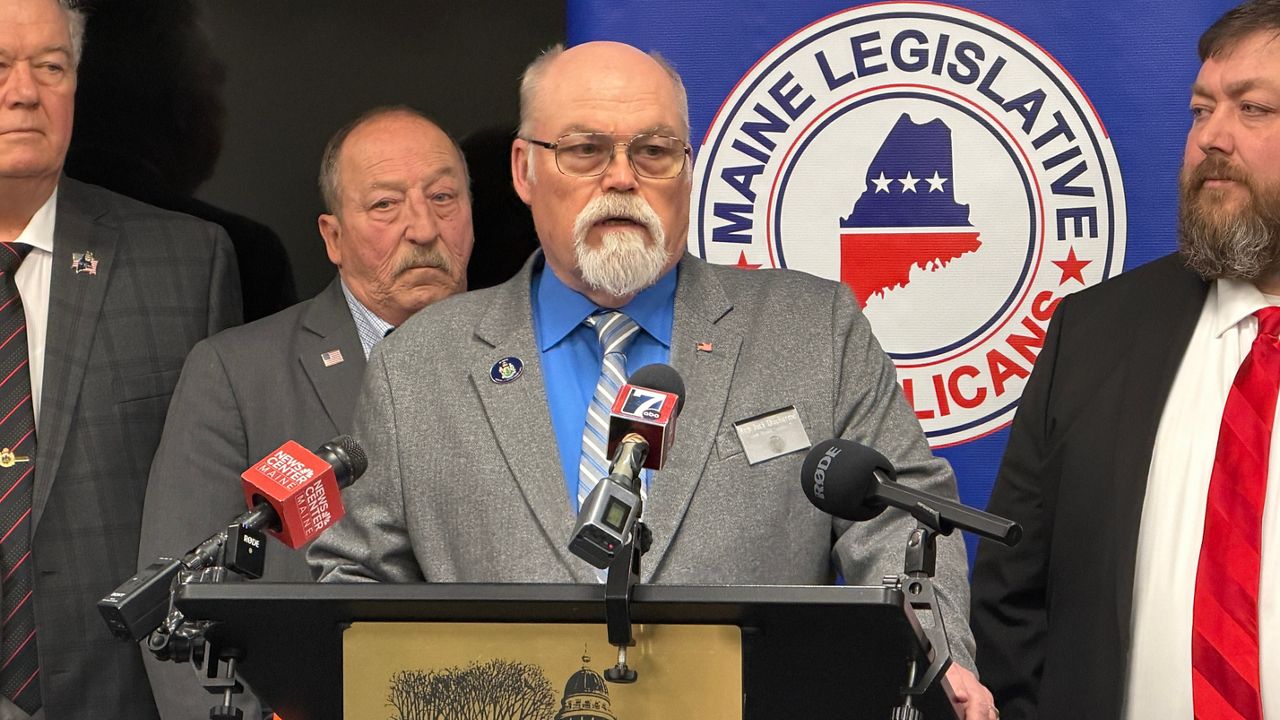
AUGUSTA — Maine Republicans on Tuesday criticized Gov. Janet Mills’ proposal to distribute $300 checks to many Mainers, saying she should instead be looking to implement tax cuts already in place at the federal level.
During their regular weekly briefing, Republicans in the Legislature said Maine can afford to forgo $137 million in tax revenues to adopt four cuts that were part of the so-called Big Beautiful Bill signed by President Donald Trump in July.
The cuts include the elimination of taxes on tips and overtime, another that reduces taxes on pensions and conforming to the federal standard deduction.
“Instead of one-time election bribes, Mainers deserve substantive tax reform that they can benefit from year after year, not just one time funding,” said Sen. Bruce Bickford (R-Auburn).
Last week in her final State of the State Address, Mills, a Democrat running for the U.S. Senate, laid out what she called her “affordability agenda.” That includes $300 checks to about 725,000 Mainers who make less than $75,000 a year.
To pay for the checks, Mills is proposing to take $218.5 million from the state’s Budget Stabilization Fund, commonly called the rainy-day fund. The fund has a balance of about $1 billion, a record high.
She’s also proposing to invest $70 million into housing, which includes $55 million for new housing production and $15 million for existing housing programs.
Another initiative is to make permanent a post-pandemic program that makes community college free for high school graduates. That will cost $2.5 million and will be part of a supplemental budget due to be released later this week.
“These three proposals — distributing relief checks, building more homes, and making free community college permanent — will provide both immediate and long-term cost relief,” Mills said in her speech.
But Republicans see it differently.
Rep. Jack Ducharme (R-Madison) warned that the state’s credit rating could drop if Mills takes nearly $300 million out of the stabilization fund.
“Most economists are looking at right now we think maybe there’s a 15 to 25% likelihood of a recession,” he said. “Let’s not tap into the rainy-day fund.”