




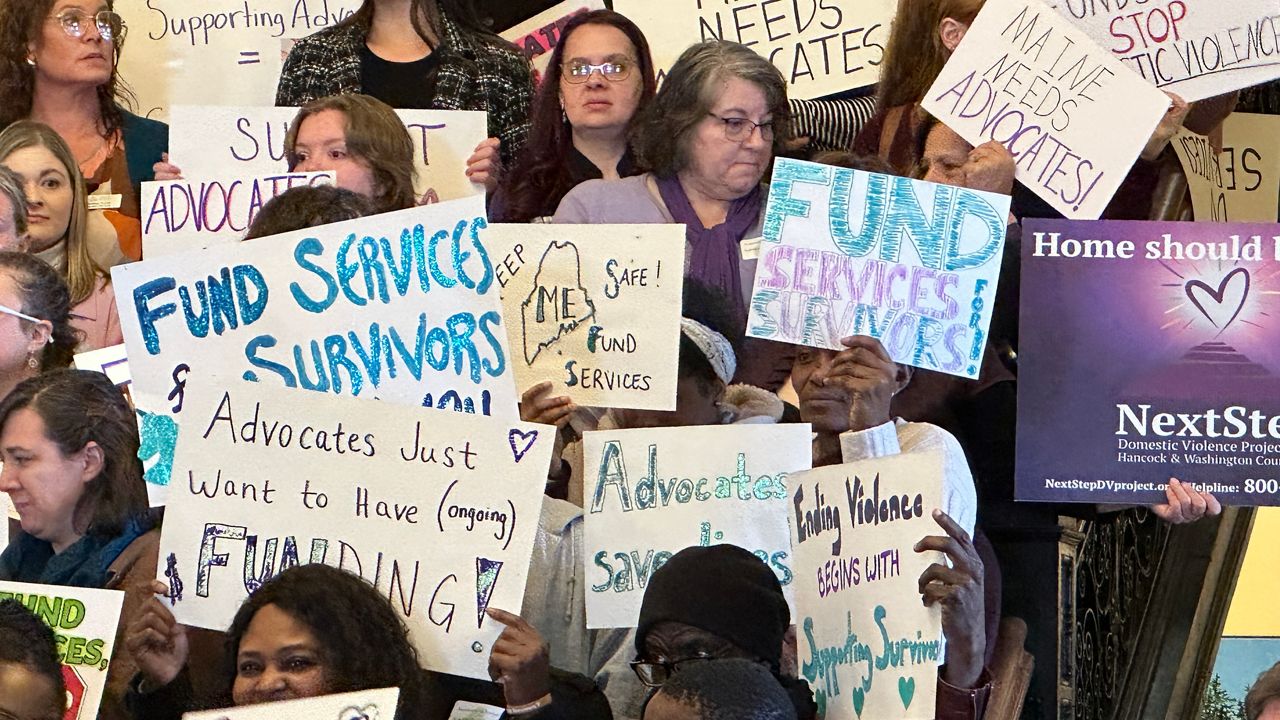
AUGUSTA — Gov. Janet Mills is proposing to make permanent a $6 million annual state investment in a program that supports victims of crime.
The funding is part of a budget adjustment that Mills, a Democrat now running for U.S. Senate, sent to lawmakers on Thursday.
The money through the Victims of Crime Act, which Mills says will help cover a federal funding shortfall, pays for domestic violence and sexual assault services, civil legal representation for victims and services for elder abuse victims.
“Throughout my career — as District Attorney, Attorney General, as Governor — and as the co-founder of the Maine Women’s Lobby — I’ve worked hard to make sure that Maine people who have experienced domestic violence and other crimes have the support they need to escape from harm and rebuild their lives,” Mills said in a statement.
The proposal is just one of several tweaks to a nearly $12 billion, two-year state budget. The recommended changes are a typical part of the state budget process, which is scheduled to wrap up by mid-April as lawmakers look to finish work for the year.
The package recognizes $8.8 million in additional General Fund revenues for this fiscal year, $8.2 million the state treasurer no longer needs to finance debt service, and $5 million from delaying conformity to one federal tax change by one year, according to the governor’s office.
Mills is also proposing to reinstate $8 million for the Business Equipment Tax Credit program.
In January, Mills announced a supplemental budget that proposes to take $218 million out of the state’s reserve fund to send $300 checks to 725,000 Mainers. To be eligible, income must be below $75,000 a year for single filers.
She’s also proposing to take an additional $70 million from reserves to address the state’s housing crisis and $2.5 million from the General Fund to make free community college permanent.
If lawmakers approve the budget as proposed, it will leave about $705 million in the state’s Budget Stabilization Fund.
In recent weeks, majority Democrats have unveiled big-ticket proposals of their own, including a $250 million plan to help make up for the loss of federal funds that paid for health insurance subsidies and an $82 million contingency fund to ensure state monies are readily available if federal food programs are cut.
The Legislature is scheduled to adjourn April 15.