




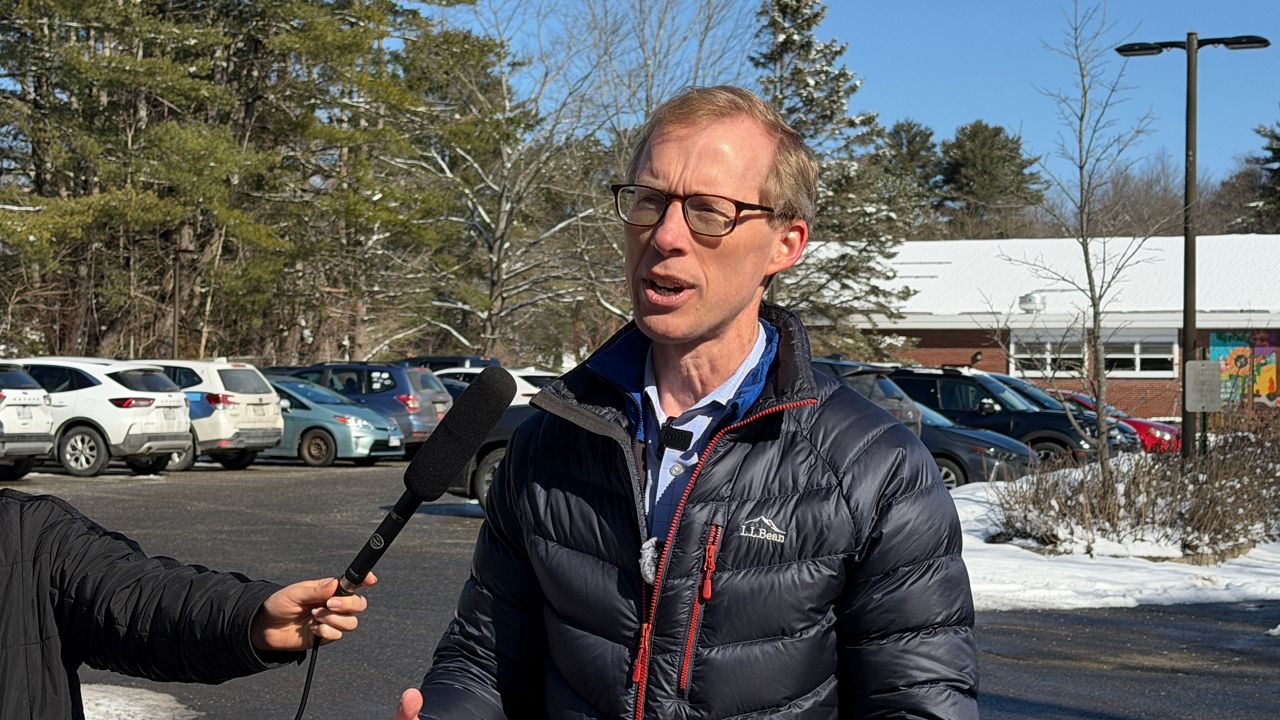
TOPSHAM — While standing outside his old elementary school, Angus King III laid out his vision for improving education in Maine on Tuesday.
King, a Democrat running for governor, said low test scores in reading and a lack of accountability has meant some Maine students aren’t getting a good education.
“Maine’s education system is in disarray and there’s a lot we can do to make it a lot better,” he told reporters outside Williams-Cone Elementary School.
King outlined three priorities:
- Improving reading in elementary school and making sure that all high school graduates have something lined up after graduation, whether it’s an apprenticeship program, job or going to college.
- Helping teachers by simplifying what it takes to be certified, rewarding high achieving teachers with better pay and giving them opportunities to further their careers.
- Holding schools accountable by giving them grades, something that was part of former Republican Gov. Paul LePage’s efforts to improve education.
“I don’t think about accountability as a blame tool, I think of it as a how do we get more information, how do people get more and more engaged in what’s happening so that we get community members, businesses, parents, teachers, superintendents, everybody involved in the solution,” he said.
King, the son of independent U.S. Sen. Angus King, is one of five Democrats who will compete in the June 9 primary for governor.
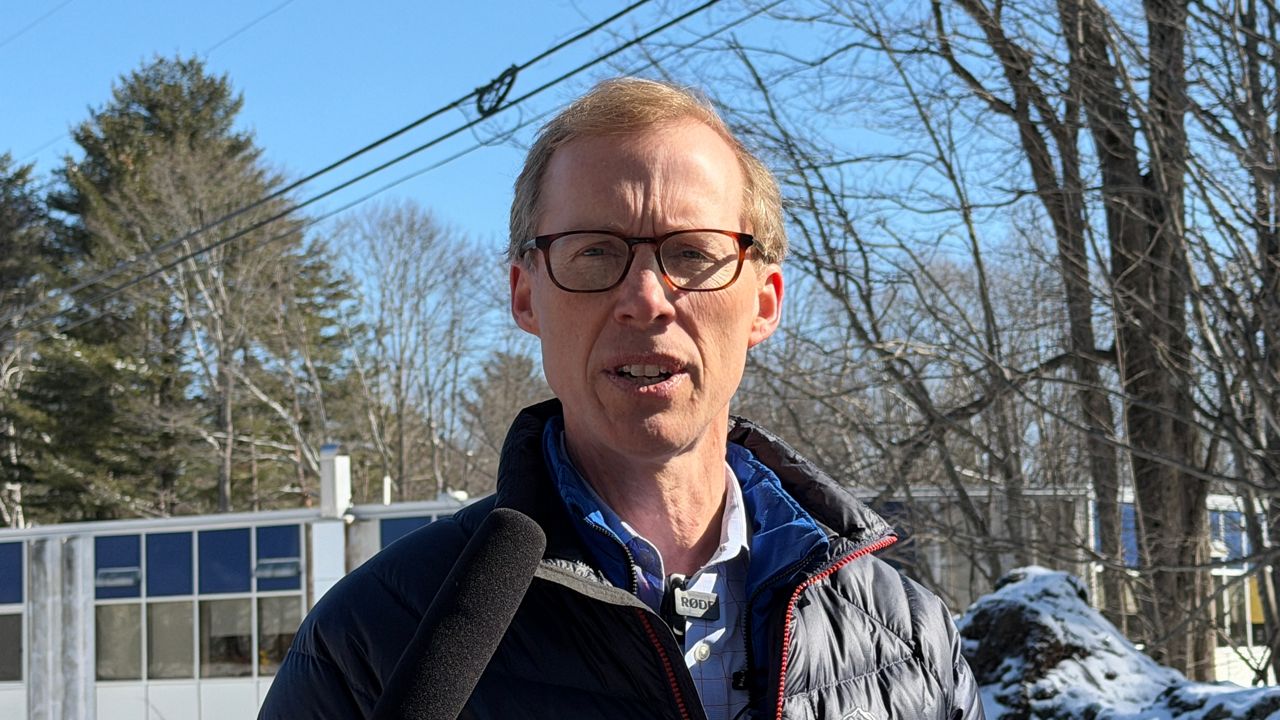
He faces Secretary of State Shenna Bellows, former Senate President Troy Jackson, former House Speaker Hannah Pingree and former Maine Center for Disease Control and Prevention Director Dr. Nirav Shah.
On the Republican side, eight men are competing: Jonathan Bush of Cape Elizabeth, Bobby Charles of Leeds, David Jones of Falmouth, state Sen. Jim Libby of Standish, Garrett Mason of Lisbon, Owen McCarthy of Gorham, Ben Midgley of Kennebunkport and Robert Wessels of Paris.
King, 56, has been an affordable housing developer and is the founder and former president of Peaks Renewables, an energy company in Clinton that helps heat thousands of homes, according to his campaign. He’s also developed wind and solar energy projects in the U.S. and abroad.
Although his plan for improvements don’t focus exclusively on test scores, King noted that over many years, students in Maine have fallen behind in math and reading.
In February 2025, the National Assessment of Educational Progress, which bills itself as the “nation’s report card,” released 2024 data that showed Maine students ranked 38th in the country.
Only 26% of Maine’s 4th and 8th graders were proficient in reading. In 4th grade math, only about 33% were proficient or advanced, according to the test results.
King said he doesn’t blame teachers and supports a bill now pending in the Legislature to raise the base pay to $50,000 a year. He said he believes the reading curriculum currently in use in Maine isn’t working and that other states have been more aggressive in updating the way they teach children to read.
“Maine schools have gone from being the best in the country to being near the bottom and that’s just unacceptable,” he said. “It’s literally what’s holding us back right now.”