




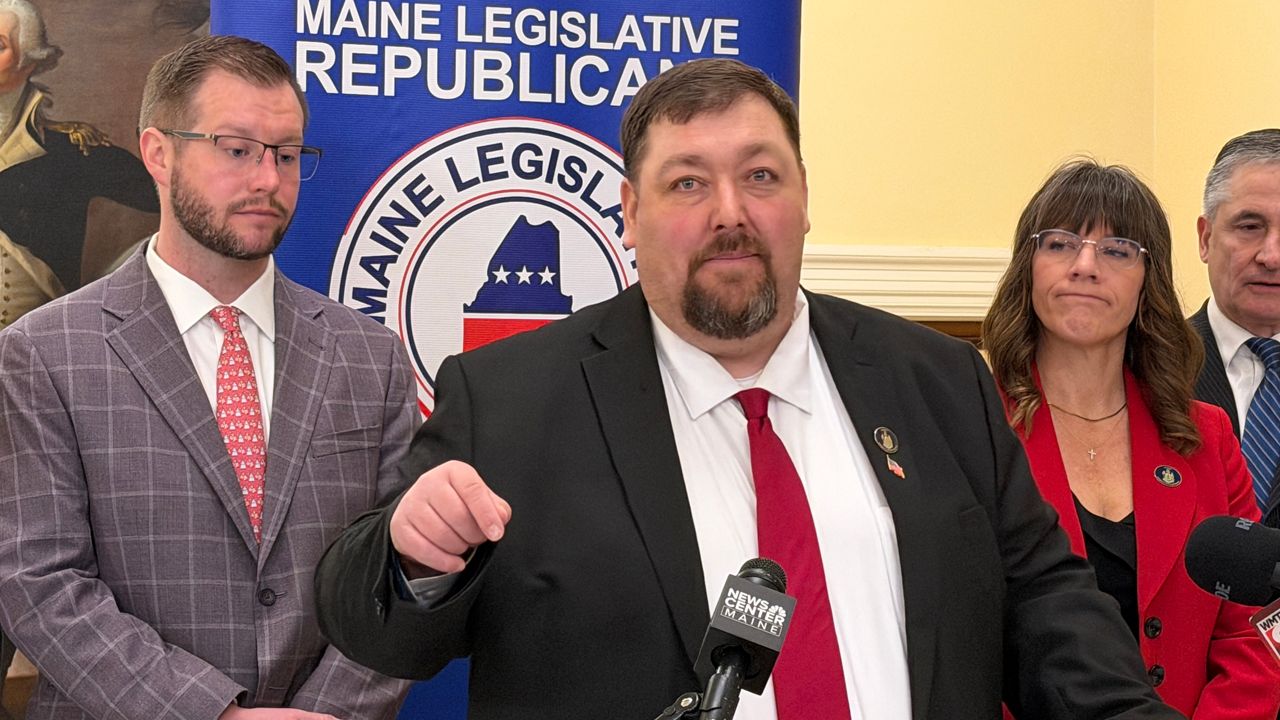
AUGUSTA — House Minority Leader Billy Bob Faulkingham is continuing to speak out about a Maine Department of Labor finding that he violated state labor law while working as a lobsterman.
“If they thought they were going to shut me up by weaponizing the Department of Labor against my life, trying to ruin my life personally, they picked the wrong guy,” he said at the start of Tuesday’s weekly Republican briefing.
Faulkingham, a Winter Harbor Republican, is facing a $3,468 fine from the state for having a 14-year-old work as a sternman on his lobster boat in 2024.
The teenager, described as a close friend of Faulkingham’s son, worked four days on the boat hauling and baiting traps and binding claws, according to a Feb. 9 decision issued by the state labor department.
Faulkingham paid the boy between $80 and $140 a day, the record shows.
The department originally cited Faulkingham for allowing a minor to work in a “hazardous occupation” and for not keeping records of the boy’s work.
However, a hearing officer determined in February that because of conflicts between state and federal rules, the labor department could not penalize Faulkingham for employing a minor in a “hazardous occupation.”
But the officer did rule that Faulkingham failed to keep appropriate records of when the boy worked and his total earnings. The decision is subject to review by the Superior Court.
Faulkingham is an outspoken critic of Gov. Janet Mills, a Democrat running for the U.S. Senate, and many of the state agencies under her control. As minority leader, he serves as one of two primary spokesmen for legislative Republicans — alongside Sen. Trey Stewart (R-Presque Isle) — who have been in the minority in Augusta for eight years.
On Tuesday, the Maine Lobstering Union came out in support of Faulkingham, saying the labor department’s decision is a “shot across the bow to all fishermen.”
The union explained that lobstering is a tradition passed down in families and throughout coastal communities.
“Maine students have historically learned the rhythms of the tide, the importance of safety, and respect for not only the ocean but the resource we harvest by spending supervised time aboard boats with experienced fishermen,” they wrote.
The union also argued that traditionally, the agriculture and fishing industries are exempt from some labor laws, “provided the work is non-hazardous and educational in nature.”
“In this case, the activity in question reflects mentorship and supervision — not exploitation,” they wrote. “There was no intent to circumvent labor protections or place a young person in unsafe conditions.”
Also Tuesday, the Maine Department of Marine Resources shared a message from the labor department seeking to clarify the government’s position.
The statement indicates that the state supports helping young people enter the lobster industry, but it recommended apprenticeship and student licensing programs.
“These structured, licensed, self-employment options allow young people to learn the trade, build skills, and carry forward this important heritage industry,” the labor department said. “These established programs exist to ensure youth have every opportunity to enter the lobster industry and carry on traditions that stretch back generations.”