




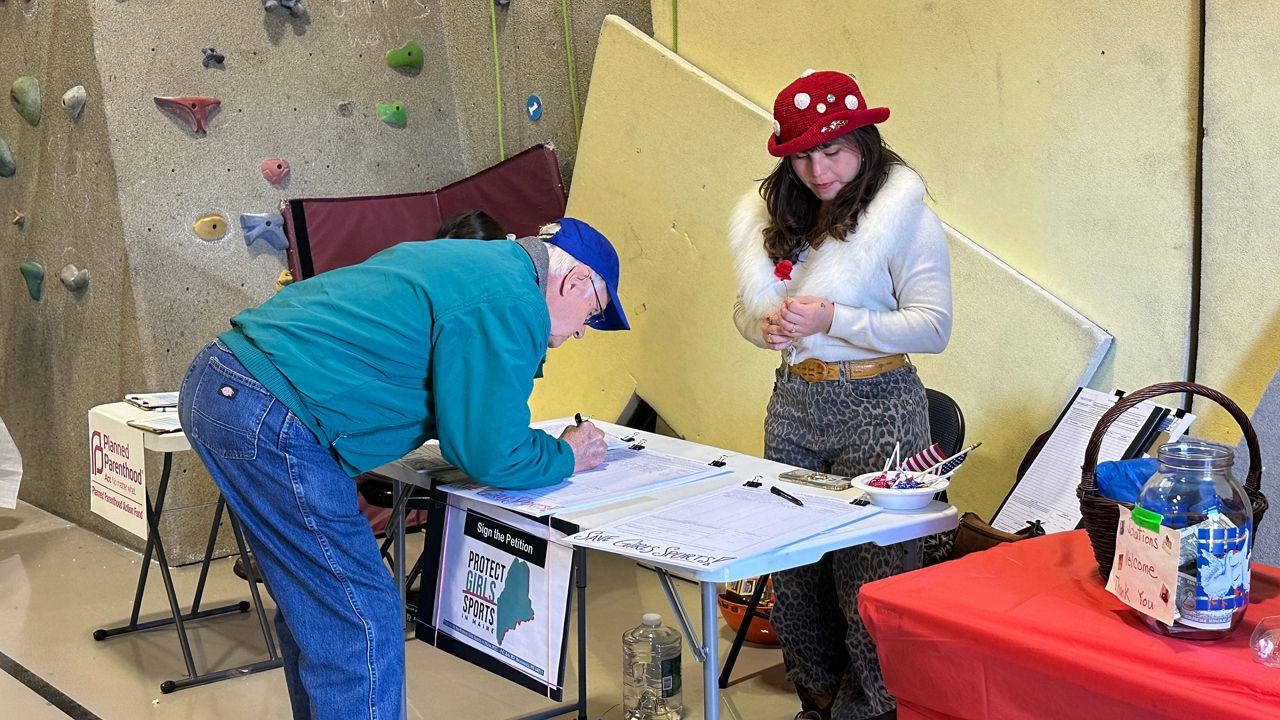
AUGUSTA — The proposed wording of a ballot question that asks voters to weigh in on transgender sports participation and bathroom access at schools fails to adequately explain the measure to voters, supporters of the initiative say.
On Tuesday, Secretary of State Shenna Bellows’ office released the wording, which begins a 30-day comment period.
The question as proposed reads: “Do you want to change civil rights and education laws to require public schools to restrict access to bathrooms and sports based on the gender on the child’s original birth certificate and allow students to sue the schools?”
Leyland Streiff, one of the leaders of Protect Girls Sports in Maine, said Thursday that he hopes Bellows’ office will reconsider the wording.
“Currently, important language and definitions from our act have been lost in the question draft, and that must be addressed,” he said in a statement.
As an alternative, the group suggested: “Do you want to change public school policies to designate private facilities (bathrooms, locker rooms, showers) and competitive sports participation by sex (male, female, co-ed) as recorded on the person’s original birth certificate?”
The ballot question criticism is the latest twist in a controversial effort that began last fall when the group began gathering signatures to call for a public vote on the issue.
Late last month, three Maine residents filed a lawsuit to challenge the certification of the signatures alleging that Bellows’ office “improperly validated” thousands of signatures.
They say if the improper signatures are thrown out, the petitioners would fall below the 67,682 signatures need to qualify for the November ballot.
According to state law, the Superior Court has until late April to issue a decision on the challenge.
Also, with less than one week before the Legislature is scheduled to adjourn for the year, it was unclear Thursday whether the Judiciary Committee will hold a public hearing on the measure.
The proposed initiative requires schools to designate all sports teams as male, female or co-ed. It defines sex as a person’s status at birth. It also requires public schools to maintain separate restrooms, locker rooms and shower rooms for girls and boys.
In addition, it allows students who are “deprived of an athletic opportunity” or injured by a transgender athlete to file a lawsuit.
Across the country, laws in 27 states ban transgender students from participating in sports consistent with their gender identity, according to the Movement Advancement Project.
Last year, Democrats at the State House defeated similar measures, prompting conservative groups to gather signatures to call for a public vote. Supporters say they want to ensure fair competition for girls by banning transgender girls from girls’ sports teams but giving them the option to play on co-ed or boys’ teams.
In March, Bellows’ office ruled the group turned in enough valid signatures, determining that 71,033 signatures were valid and 8,659 were invalid.
Opponents of the ballot measure, which includes EqualityMaine, GLAD Law and the Maine Women’s Lobby, said last month they will work together as the Campaign for Free and Fair Schools to defeat the ballot measure.
“Attacking gender identity is an attack on all women and girls — from their bodily autonomy to their right to express their gender however they see fit without fear of policing or bullying,” Destie Hohman Sprague, executive director of the Maine Women’s Lobby said. “We want all kids, regardless of their gender, to be able to participate normally in school. This ballot initiative would take that ability away.”
The group declined to comment on the wording of the ballot question. The public comment period ends May 7.