




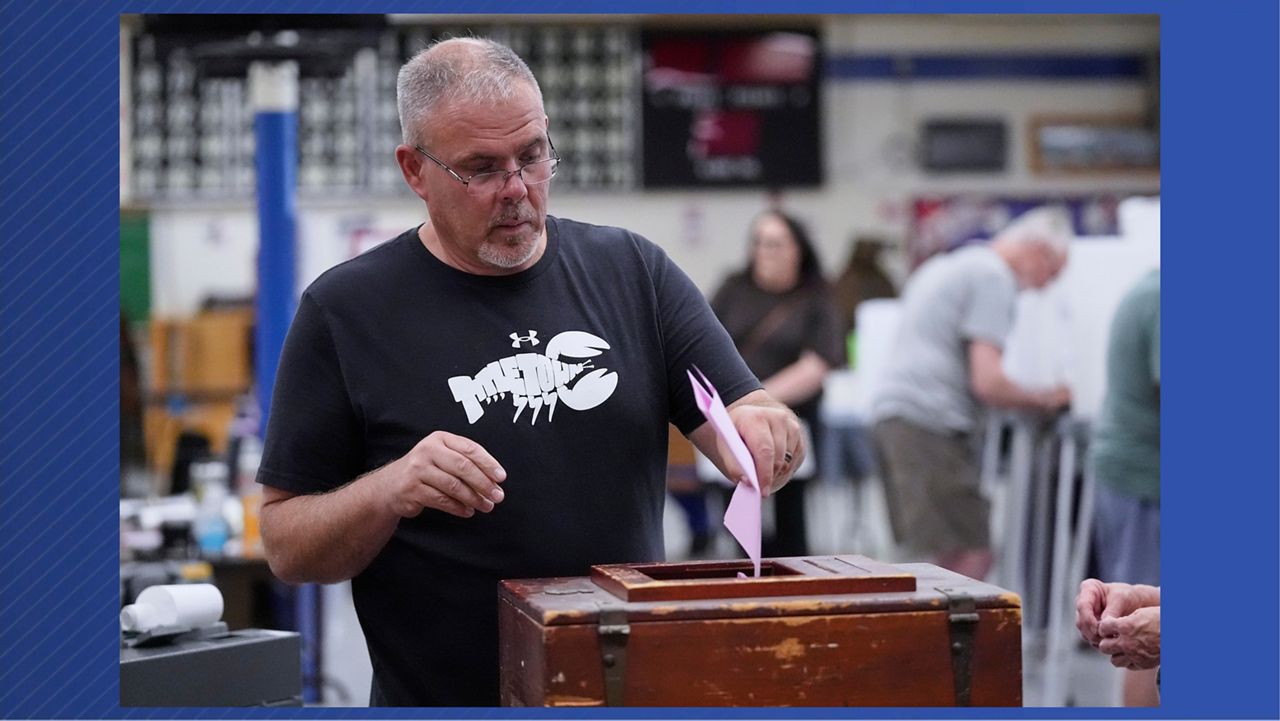
Polls have closed, marking the end of Maine’s primaries – a pivotal point in this year’s election cycle.
Mainers had been casting ballots in nominating contests for the U.S. Senate, both Congressional districts and for governor.
Nominating contests were also held for seats at the Maine State House.
Many cities and towns held local elections that include referendums on school budgets as required by state law.
In the race for U.S. Senate, neither incumbent Republican Susan Collins nor Democratic frontrunner Graham Platner had much opposition by the time primary day rolled around. Platner and Collins are all but guaranteed to face each other in November’s general election.
National Democrats have seen Maine as key to flipping the chamber in November. And while the eyes of the nation were locked firmly on Maine’s Senate race, Maine voters were also shaping many other races.
Democrat Chellie Pingree had little opposition and was poised to easily win her party’s nomination for the 1st District House seat she has held since 2009.
Former Maine Gov. Paul LePage was also largely unopposed in his campaign to be the Republican nominee for the U.S. House in Maine’s second district.
It’s a different story for 2nd District Democrats. Joe Baldacci, Matt Dunlap, Paige Loud and Jordan Wood are all vying to be their party’s nominee for the seat being vacated by fellow Democrat Jared Golden.
A dozen candidates – Republicans and Democrats – were vying for their respective party’s nomination for governor. On the Republican side sits frontrunner Bobby Charles, along with Jonathan Bush, David Jones, Garrett Mason, Owen McCarthy, Ben Midgley and Robert Wessels.
Democrats were choosing between front runners Nirav Shah, Hannah Pingree and Troy Jackson, along with Angus King III and Shenna Bellows.
As important as the primaries are to the two main political parties, many elections likely won’t be decided tonight.
With ranked-choice voting for federal offices, it could take more than a week to know the results of some races, according to Sanford City Clerk Susan Cote.
“Fingers crossed, you know, it won’t take that long, but we don’t want to rush through anything and get improper results,” Cote said, speaking this morning. “We are very sticklers for our information, if you will.”
Officials in Sanford were hoping for at least a 30% turnout.
In left-leaning Portland, Maine’s most populous city, things appeared quiet.
Carol Morrissette, the warden at the Merrill Auditorium polling location, said voting was slow and steady.
By 5:30 p.m., 810 people had voted. Morrissette said it feels lighter than the last few primaries she's worked, but primaries don't see the big turnout like November elections.
"Primaries are never all that exciting," Morrissette said.
This is a developing story.