




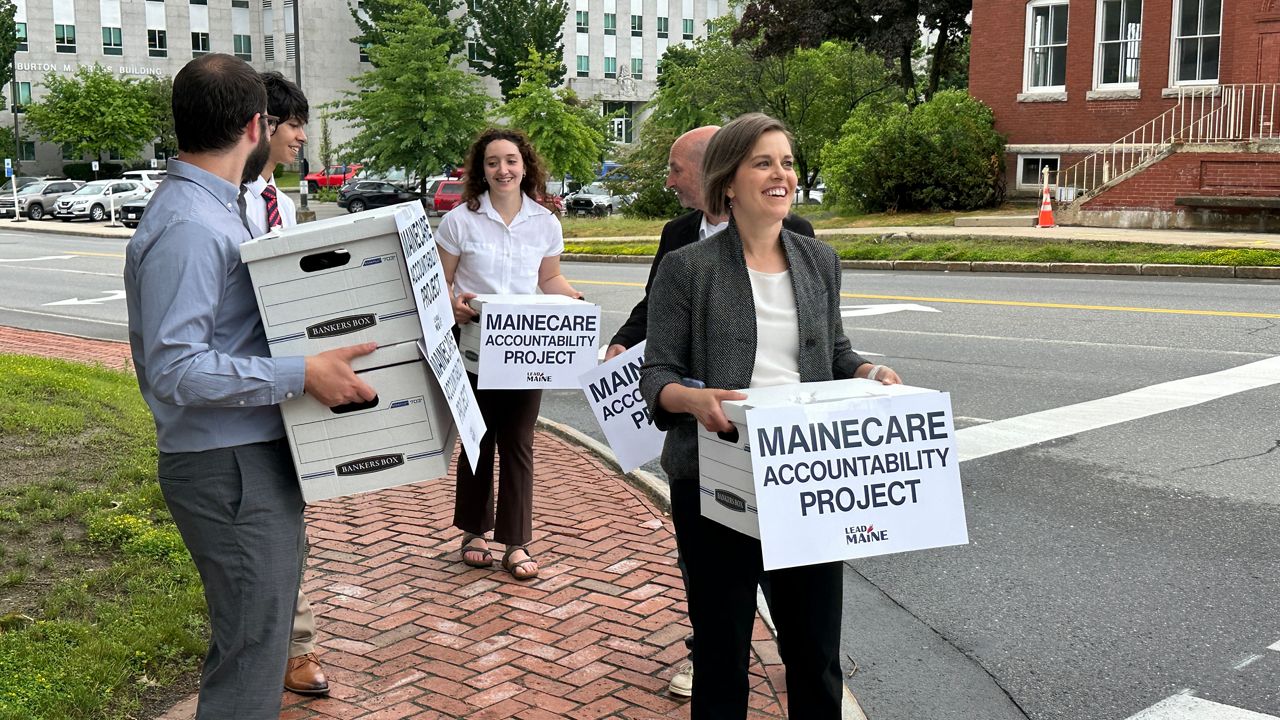
AUGUSTA — A conservative group is petitioning the Maine Department of Health and Human Services in a bid to require new rules in the MaineCare program.
Lead Maine, founded by Rep. Laurel Libby (R-Auburn), turned in more than 3,000 signatures to DHHS Tuesday calling on the department to write new rules regarding inspections and the suspension of payments.
Libby said when it comes to inspections, DHHS workers can now make a phone call or review paperwork if it has questions about a provider. She said prior to the COVID-19 pandemic, in-person inspections were more common.
“Our rule is common sense,” she said. “If the state says it has inspected a provider, an inspector should have actually been there in person every single time.”
The second request is for new rules to suspend payments to providers suspected of billing for money that they are not entitled to receive. Libby said payments should immediately be suspended, with money put in escrow until the issue is resolved.
“If the provider did nothing wrong, they get every dollar with interest and they keep on serving their patients the whole time,” she said. “If money is owed, it is right there to be recovered.”
Libby emphasized that neither initiative would cut benefits or eligibility for MaineCare, the state’s Medicaid program that spends more than $1.4 billion a year and serves 400,000 Mainers.
A DHHS spokeswoman did not respond to a request for comment.
During a State House news conference, Libby was joined by Republican gubernatorial candidate Bobby Charles and two of his former opponents, Jonathan Bush and Robert Wessels.
Charles told reporters that these types of new rules will help ensure that the money for social service programs is there for those who need them.
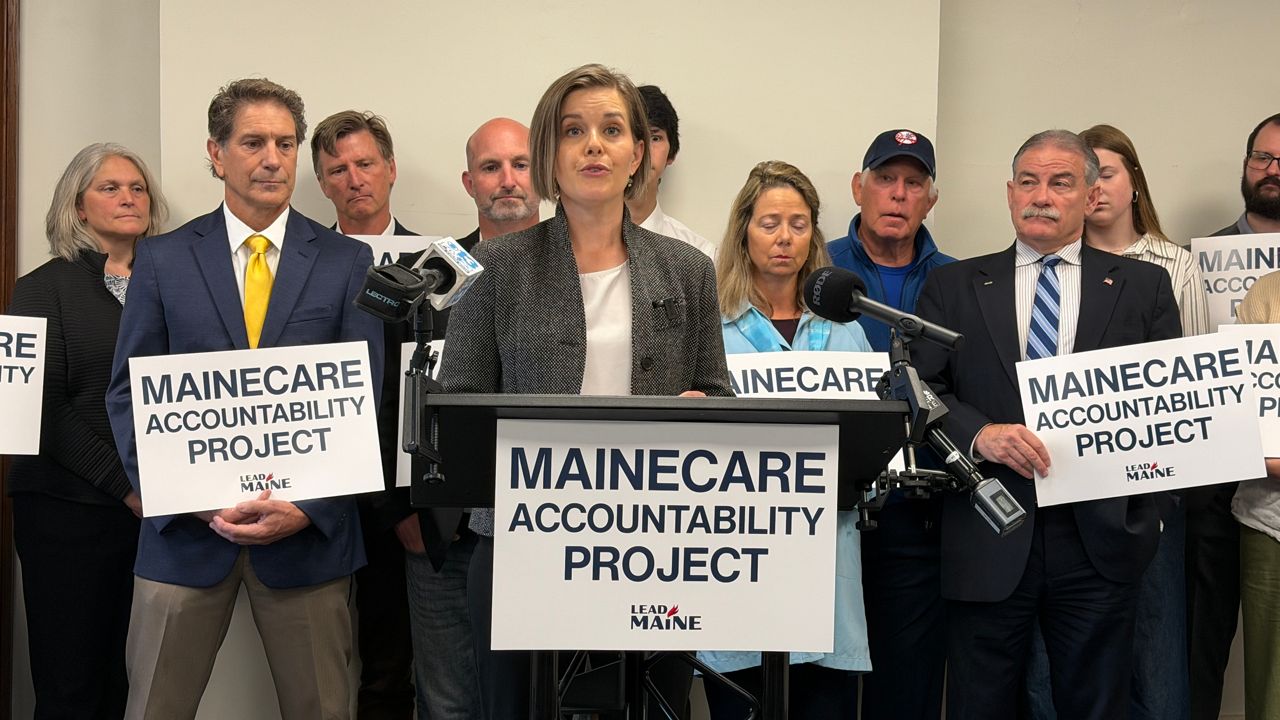
“We do not want to cut services for anybody who needs them,” he said. “In fact, quite the reverse.”
He referenced a finding by the federal government earlier this year that $46 million in payments to autism service providers were not properly accounted for. While the audit stopped short of describing the discrepancies as fraud, it questioned the expenditures and demanded part of the money be refunded to the federal government.
In another instance, DHHS suspended payments to a Portland social service provider late last year after it found “a credible allegation of fraud.”
That case has been sent to the attorney general’s office for investigation.
Following the press briefing, Libby and others carried boxes of signatures over to the DHHS office across the street. The department now has 60 days to begin the rulemaking process.
Maine law allows citizens to turn in 150 signatures to a state agency to call on it to write new rules. In 2023, the Natural Resources Council of Maine followed a similar procedure to try to get the state to adopt new electric vehicle rules.
That proposal drew vocal pushback and was ultimately defeated.
On the MaineCare front, Dr. Tom Page, an obstetrician, said he has concerns that MaineCare spending lacks proper oversight, which is why he is supporting the call for new rules.
“Without accountability and checks on the front end, those misspent MaineCare dollars will not make it to the most vulnerable Mainers who need this program to be sustainable and solvent,” he said.