




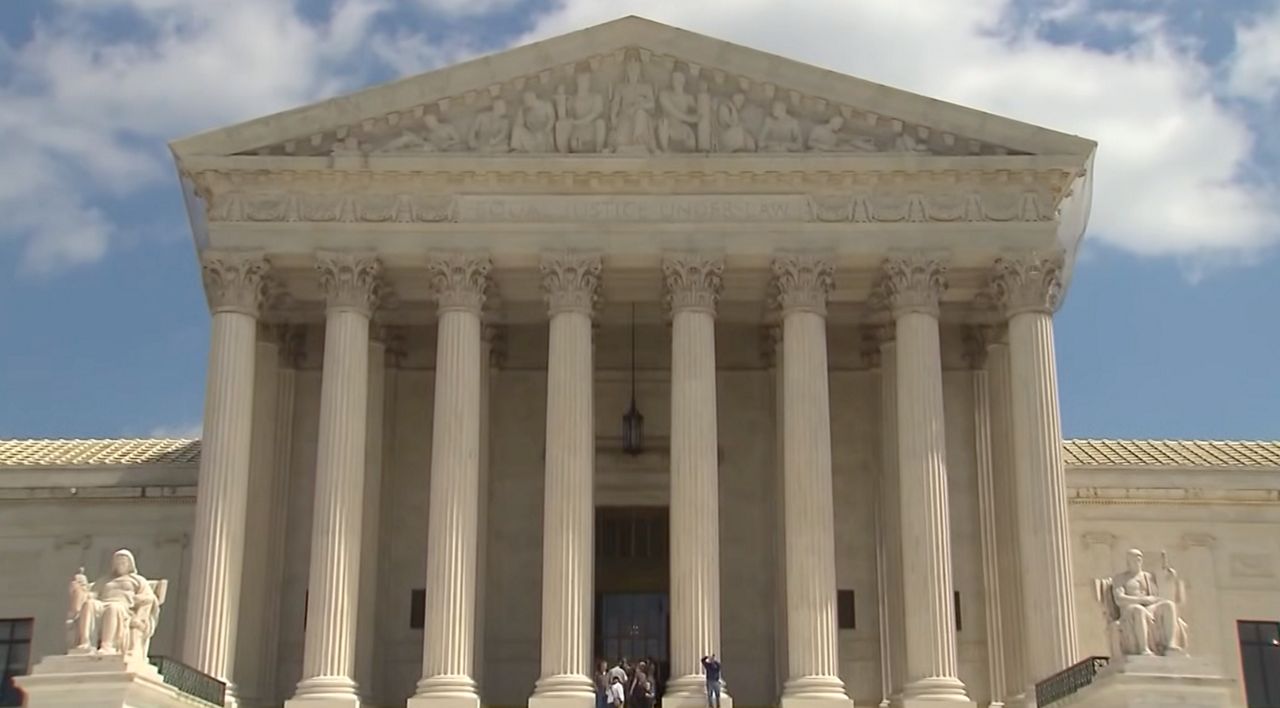
PORTLAND – Advocates for immigrants’ rights are speaking out against two U.S. Supreme Court decisions from last week, and supporting a third decision issued by the high court on Tuesday.
The Maine ACLU and the Immigrant Legal Advocacy Project in Portland both responded this week to a 6-3 ruling by the court on June 30 upholding birthright citizenship. ILAP also blasted two other decisions by the court last week, on June 25, to end temporary protected status for migrants from Haiti and Syria, and to limit the number of people per day who could apply for asylum.
“We all need to be vigilant and continue to fight for immigrants’ rights given this ongoing assault on immigrants’ rights throughout the country,” said Carol Garvan, legal director for ACLU of Maine.
In the birthright citizenship case, the court ruled 6-3 on June 30 to strike down a Trump executive order that tried to strip citizenship from children born in America to undocumented parents.
“It really reaffirms a longstanding principle in our country that every baby who’s born on U.S. soil is a U.S. citizen with only very limited exceptions,” Garvan said.
Trump responded to the ruling during a speech in Medora, N.D. on July 1. He claimed birthright citizenship was put in place a month after the end of the U.S. Civil War to benefit “the babies of slaves.”
Regarding the court’s decision, Trump said, “I believe… no, I know they got it wrong, but that’s OK.”
Sue Roche, executive director of the Immigrant Legal Advocacy Project in Portland, applauded the June 30 decision, saying that while “the decision affirms the rights of those vulnerable children, we know they still face grave risks of family separation with the Supreme Court’s Temporary Protected Status ruling and the administration’s ongoing mass deportation agenda.”
ACLU called the court’s decision a “major victory,” noting its National Legal Director, Cecillia Wang, argued the case before the Supreme Court.
Last week, the high court ruled 6-3 on June 25 in a case to allow temporary protected status to be revoked for 350,000 Haitian immigrants and 6,000 people from Syria.
Speaking with the Associated Press, James Percival, general counsel for the U.S. Department of Homeland Security, praised the ruling.
“This is a win for the rule of law and common sense,” he told the AP.
Roche noted that right now there are 1.3 million people living under protected status in America. Of those, she said, “hundreds” live in Maine.
“This decision by the Supreme Court paves the way for the administration to strip lawful status away from Haitian, Syrian, and all TPS holders in Maine and across the country, for families to be ripped apart, and for businesses to lose their workers,” she said.
Garvan said the court’s decision grants a great deal of control to the Trump Administration.
“That essentially gives a huge amount of power and discretion to the executive branch to end temporary protected status,” she said.
Also on June 25, the Supreme Court voted 6-3 in a case to support a Trump policy limiting the number of immigrants per day who can apply for asylum. Speaking to the Associated Press, Percival said it was not clear whether the policy would not be put in place, but added, “This decision opens up an important tool to continue securing our southern border.”
Meanwhile, Garvan decried the court’s decision in the case.
“The asylum decision was a real assault on our asylum system that has been in existence for decades,” she said. “It is an effort to very drastically limit who is allowed to seek asylum in our country.”
Roche said the decision will put immigrants coming from Mexico at risk.
“Asylum seekers who have been turned back at ports of entry and left stranded in Mexico have been violently assaulted, kidnapped, raped, trafficked, and even killed,” she said.
Garvan said she was pleased this week with the decision on birthright citizenship, but noted it was not unanimous, which emphasizes the need for vigilance going forward.
“It was a narrow victory, narrower than it should have been,” she said.