




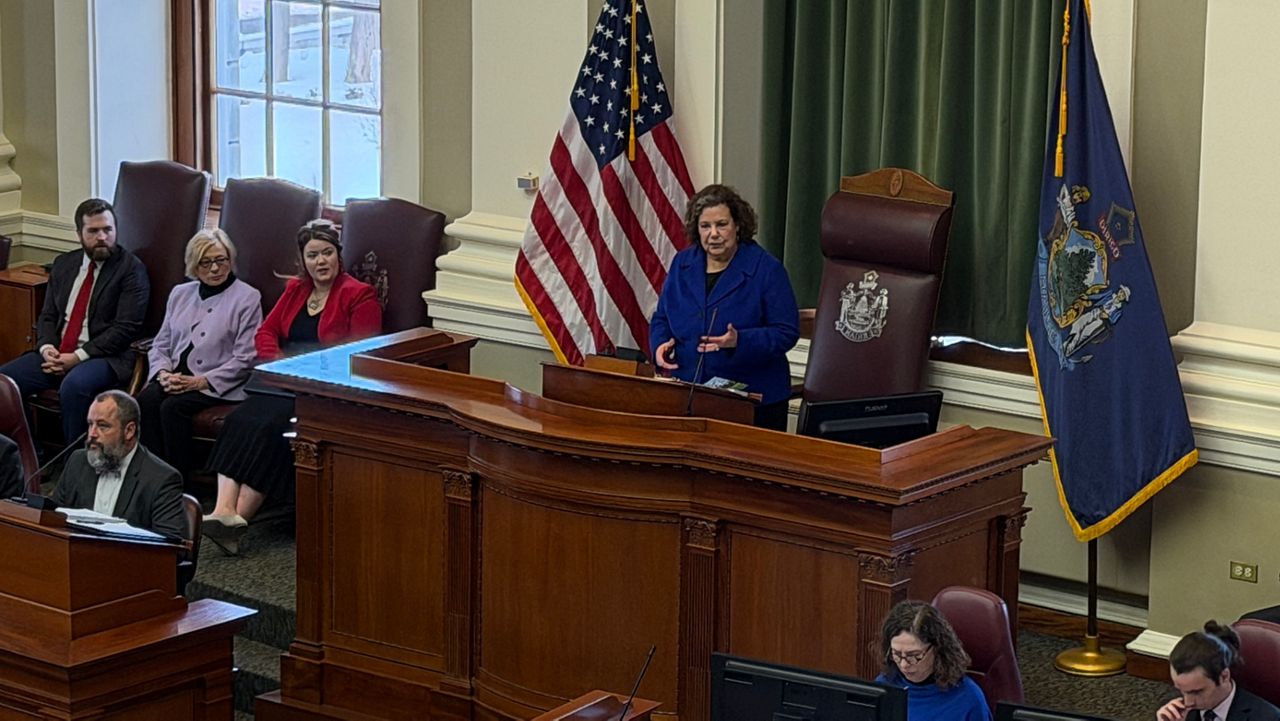
AUGUSTA — Maine Supreme Judicial Court Chief Justice Valerie Stanfill told lawmakers Thursday the state has made progress in providing legal representation for poor defendants.
But she’s still not satisfied.
One year ago, she told lawmakers that there were 1,150 legal cases pending for which an attorney was needed. That has since dropped to 285, a number she described as “unacceptably high.”
“There shouldn’t be any,” she said. “This shouldn’t be a statistic we’re tracking at all. No one should be having to wait for an attorney to represent them in cases in which there are significant rights and liberty interests at stake.”
Stanfill noted that Maine has known for years that it was not providing adequately legal counsel to low-income defendants. In 2019, the Sixth Amendment Center issued a report critical of Maine’s system of paying private attorneys to represent indigent defendants.
Since then, the state has moved to stand up new public defender offices to better address the constitutionally required need to provide legal representation.
“We’re just seeing issues that are writ large,” Stanfill told reporters after the speech. “An aging bar, decreasing numbers of lawyers willing to take these cases or address these cases. The indigent legal services commission struggles to hire lawyers.”
Stanfill said the issue not only affects criminal defendants, but parents awaiting child custody hearings or those dealing with a mental health crisis.
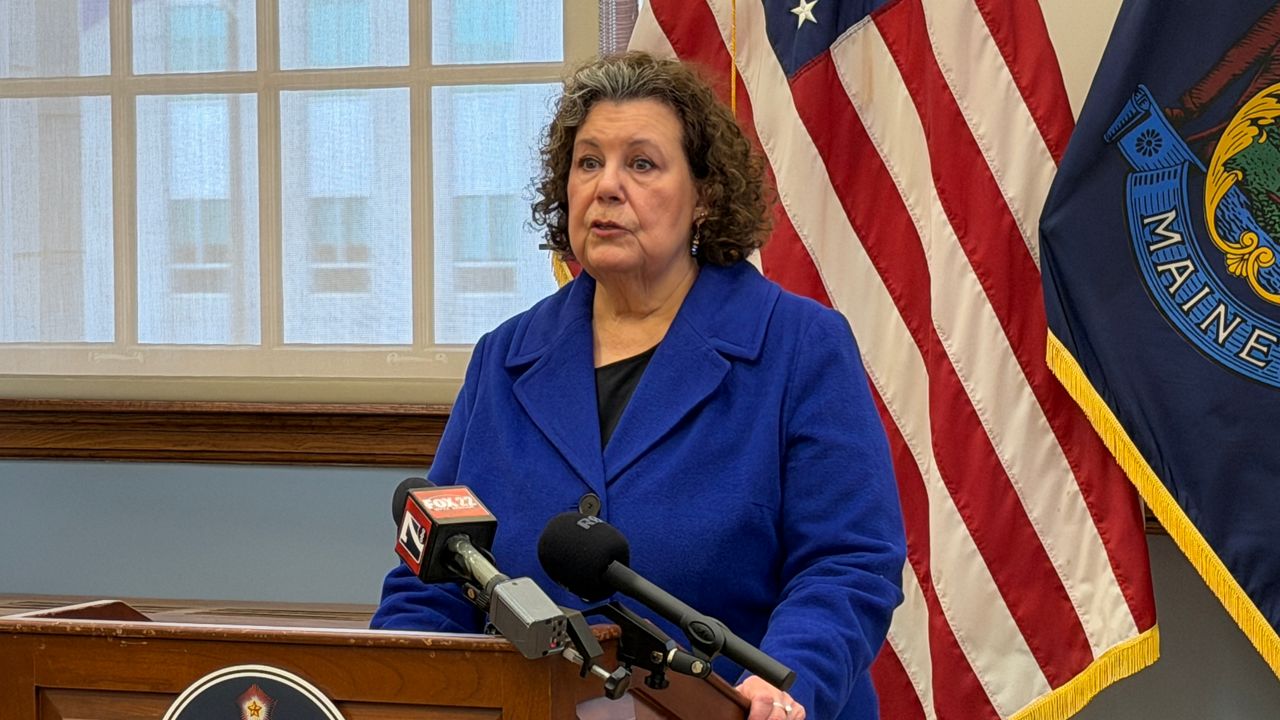
“These are all important rights and losses of liberty, although it may look different for different groups, they are all critical,” she said.
In her annual address to lawmakers, Stanfill talked about budget needs, facility upgrades, technology and caseloads.
She said a backlog of cases that began during the COVID-19 pandemic is improving, but that the criminal caseload is still 25-30% high than before the pandemic.
She also addressed the need to improve how criminal cases are handled, saying that filings for continuances that drag cases out need to be reined in.
She said a pilot program in Bangor is aimed at reducing the amount of time it takes to complete a case.
Stanfill ended her address with a call for unity.
“Public trust in our justice system and indeed in all government institutions is rarely dismantled in one fell swoop,” she said. “It can erode. A death by a thousand cuts. We, all of us, need to guard against those cuts on a daily basis. We do so by upholding the rule of law. By supporting the Constitution of the United States and the Constitution of this state.”