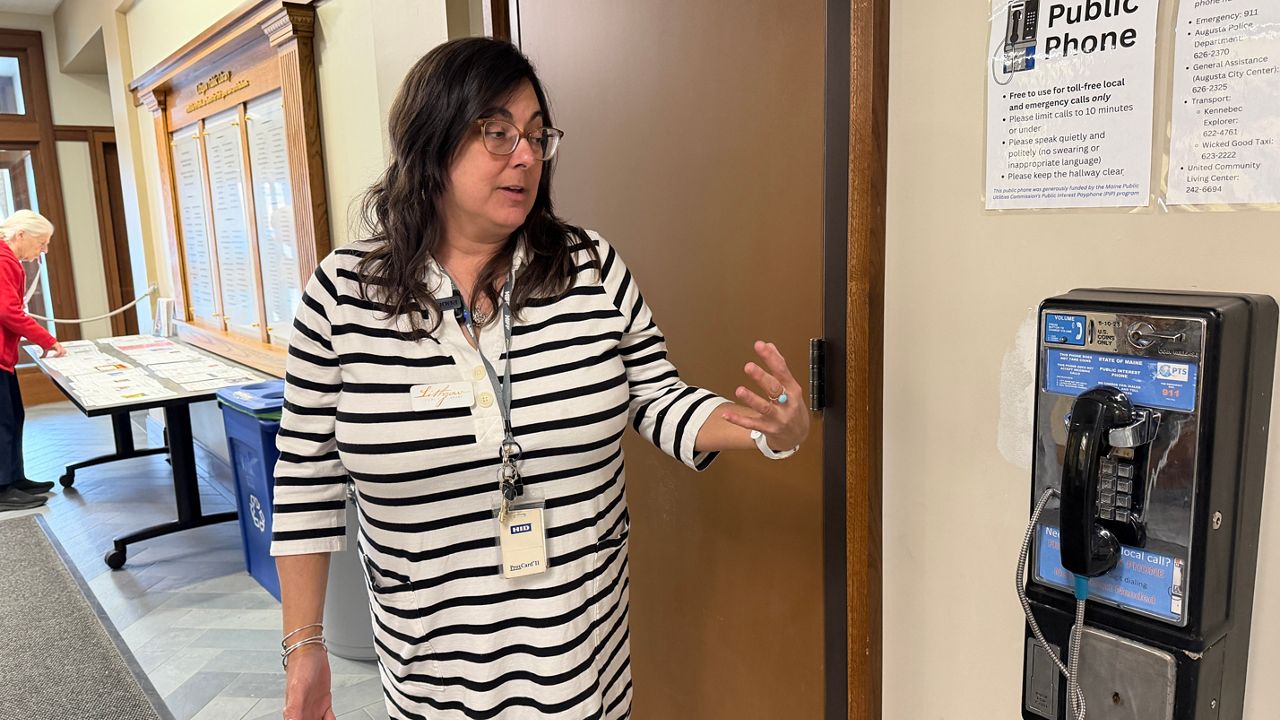
AUGUSTA — As you walk into Lithgow Public Library, just before you get to the desk where you check out books, there’s a strange, retro site on the wall to the left.
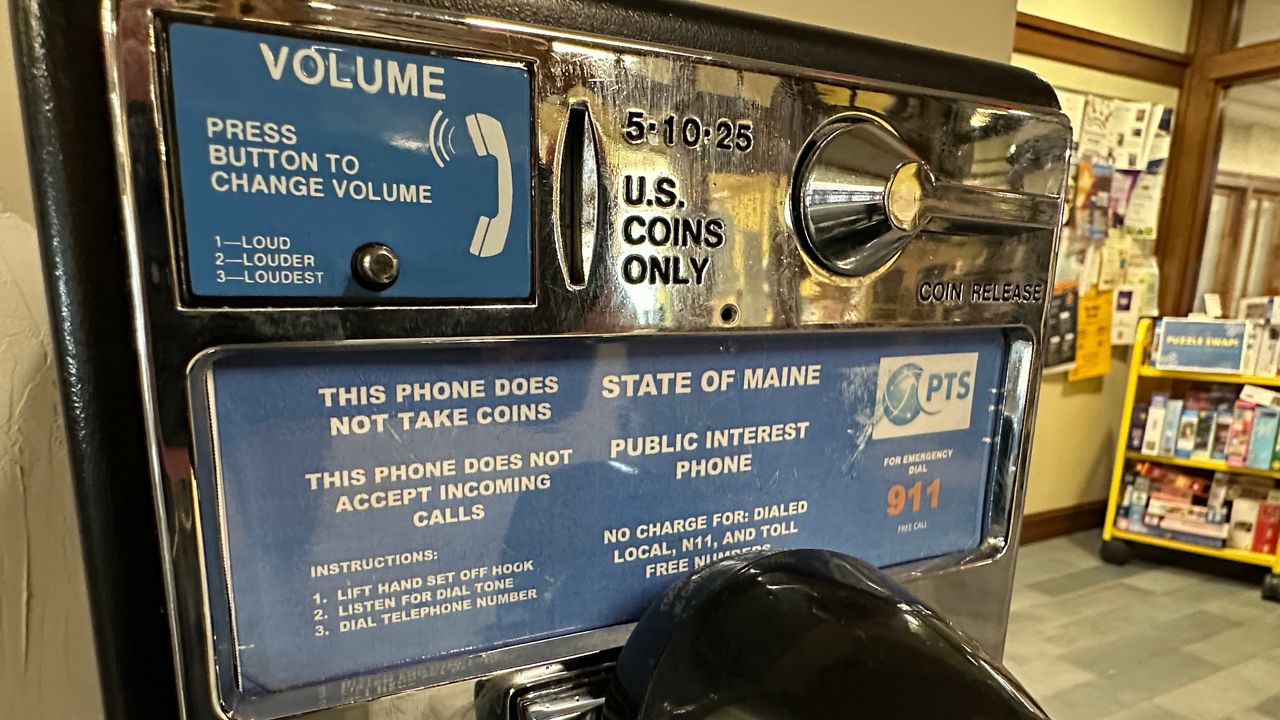
It’s a little beat up and it doesn’t take coins, although there is still a slot at the top where it’s always been. There’s no booth, so not much chance for a private conversation.
In modern lingo, it’s known as a “public interest payphone” and they are popping up all over Maine.
The phones are part of a program run by the Maine Public Utilities Commission, which calls them “PIP.”
“A PIP is a coinless telephone that allows members of the public to make free local and emergency calls or to use a card or operator assistance to place long distance calls,” according to the PUC.
The idea, as described in Maine law, is to put the phones “where they are necessary to fulfill the health, safety, and welfare needs and where no other payphone exists.”
Which is to say, pretty much everywhere, at least since the early 2000s.
So far in Maine, there are 35 of the retro payphones scattered across the state, from Palmeter’s Store in Meddybemps to the Jackman Health Center, the Machiasport Town Office to Madawaska Fire Station #2. They are also in southern Maine, including the Kittery Police Department and Biddeford Central Office.
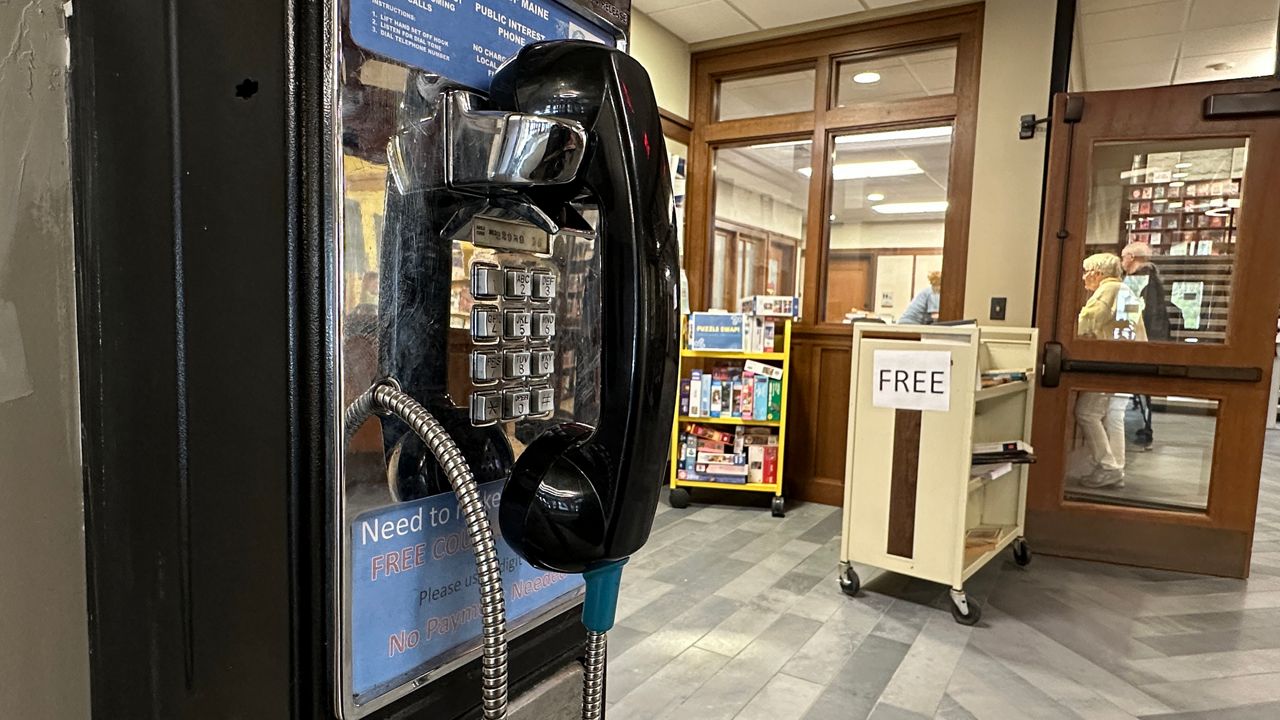
Back in Augusta, Lithgow Public Library Director Sarah Schultz-Nielsen said because the library is close to the county courthouse and jail and the city’s overnight warming center, it’s a good place for a free phone.
“We take for granted that not everyone has access to a phone or a phone that’s working or charged,” she said.
The phone went in in March, “with five or so” people using it per day, she said. They ask patrons to keep calls to less than 10 minutes. They don’t allow incoming calls and a sign above the phone lists numbers to local taxi cabs, the food bank and the city General Assistance office.
Schultz-Nielsen said the phone is another service local libraries can provide as their community mission continues to expand beyond library cards and lending the latest best seller.
“We have some people that have some needs,” she said. “You never know who is going to walk through the door so as they come through, we kind of triage them in our own library way and figure out how much we can help them.”
For those too young to remember, payphones were a ubiquitous part of public life from the 1960s to the 1990s, with more than 2 million in the U.S., according to a story in Smithsonian magazine titled “The Pay Phone’s Journey from Patent to Urban Relic.”
And while cellphones put the kibosh on payphones, there are still some for whom the newest iPhone or Android — and their monthly fees — is out of reach.
But Maine Public Utilities Commission Chairman Phil Bartlett said the phones may also come in handy in places where there’s a weak cell signal, like just off a hiking trail. Young folks might use them too, he said.
“If you think of a library, it could be young people who are there afterschool and don’t have cellphones yet,” he said. “You may have folks who are in a domestic violence situation and may be reaching out for resources. You may have folks who don’t have money on their cellphone.”