




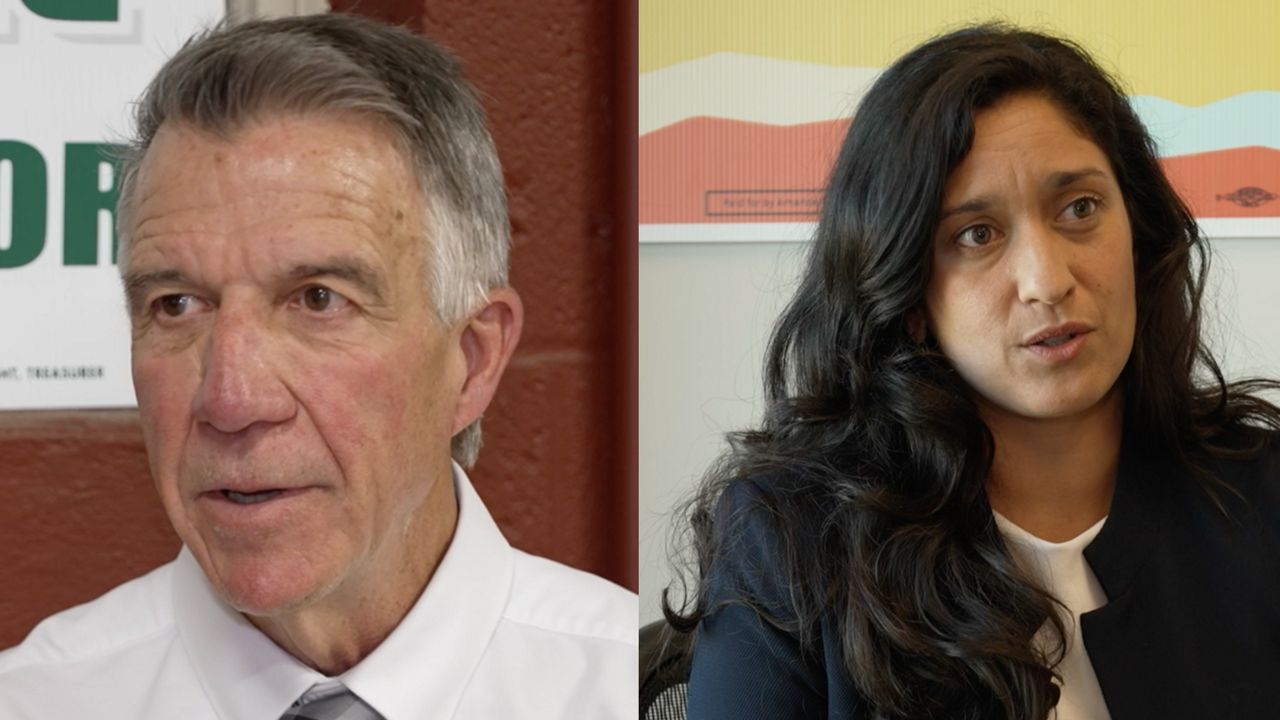
MONTPELIER, VT. — To an outsider, it’s an unusual pairing. Voters in deep-blue Vermont have elected a Republican to lead the state — five times in a row.
But Gov. Phil Scott knows reelection to a sixth term may be more difficult this year, as the Democratic base he counts on drifts left and seethes at a GOP closely aligned to President Trump.
While sticking to the “R” by his name, Scott is embracing a new label.
“I think of myself as being progressive,” he told Spectrum News during a recent interview at his campaign headquarters, a stripped-down office a few blocks from the state Capitol in Montpelier. “I care about people. I care about our environment. I want to do things,” he added, before quickly pivoting to criticize Vermont’s Democratic-controlled Legislature as having gone “too far to the left.”
Scott, a former stock car racer who co-owned a construction business, has long offered something distinct: fiscal conservatism combined with unambiguously liberal views on social issues. He’s both set a state record for vetoing Democratic bills — on everything from renewable energy to taxes — and signed a shield law to protect abortion providers from out-of-state prosecution.
The governor has also criticized President Trump. He condemned ICE tactics following the killing of Alex Pretti at the hands of federal agents in Minneapolis this winter and voiced his strong opposition to the new tariffs on Canadian goods (he called Trump’s order to rename Lake Ontario “petty and disappointing”).
In calling himself a progressive, Scott evoked Teddy Roosevelt, a fellow Republican known for his interventionalist approach to goverment in his time as President. "I think many others who have been successful could classify themselves as a progressive Republican," he addded.
At the same time, instead of viewing himself as a renegade bucking his party — like Roosevelt did when he formed his own Progressive Party in 1912 — Scott sees his politics as harkening back to Vermont’s days as a GOP stronghold, where frugal Yankees dominated the electorate.
“It wasn’t that long ago that we were a very red state,” he said. “I think the dynamics changed with Bernie coming to the forefront.”
Presidential elections chart this path. Richard Nixon and Ronald Reagan both won here. Comfortably. So did George H.W. Bush against Michael Dukakis in 1988.
But whether it was a surge of transplants from New York and Boston, or something else, the state’s political complexion changed rapidly. Vermont went from the birthplace of John Deere to the home of Ben & Jerry’s in a generation.
In 2024, Kamala Harris carried the state by more than 31 points over Trump. Scott, however, beat his Democratic challenger by nearly 52 points.
So, what about 2026?
The Republican incumbent finds himself hunting for Democratic support at a time when the party is looking for energetic change nationwide.
In Michigan and Florida, progressives Dr. Abdul El-Sayed and state Rep. Angie Nixon dispatched their establishment opponents in Senate primaries. Closer to home, Massachusetts Sen. Ed Markey, a stalwart of his party’s left flank, easily beat a challenge from moderate Rep. Seth Moulton.
In Vermont, Amanda Janoo wants to be the next headline in November.
As Democratic nominee for governor and a Cambridge-educated economist, she has run a policy-rich campaign — pushing for new taxes on the wealthy, certain businesses (hedge funds and corporate landlords) and vacation rentals.
Janoo wants the money collected to go toward lower property taxes and investments in community health care and housing. Her message reads classically progressive.
“Government can meaningfully improve our lives, but we need to hold it to a higher standard,” she told Spectrum News during a recent interview in downtown Burlington.
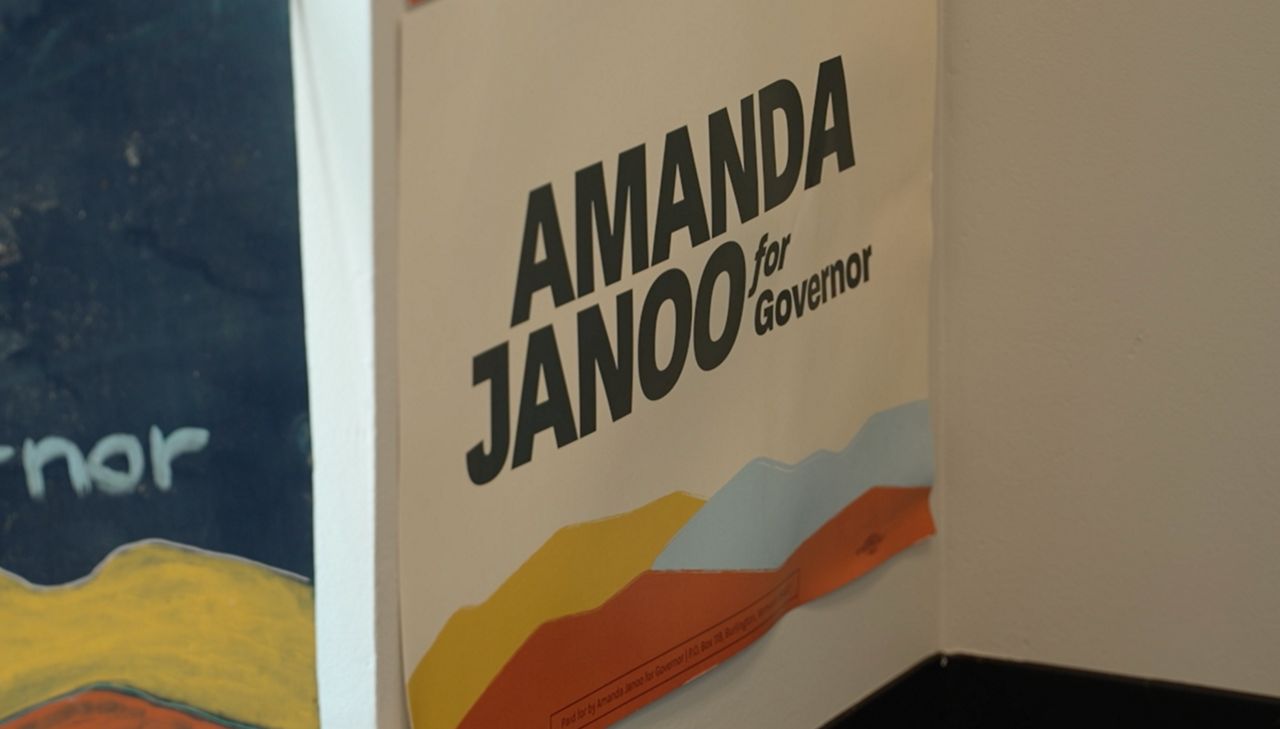
The 39-year-old’s economic platform stands in stark contrast to Scott’s, which revolves around the principle that taxes are too high and regulations are too stiff. In 2024, he vetoed (ultimately unsuccessfully) a bill to reform Vermont’s famous land-use law, Act 250, over concerns the new proposal didn’t go far enough to encourage housing development.
“We just need a little bit more balance in Vermont to get to where we’re trying to go,” Scott said.
Janoo calls it a “deficit-based mindset” instead. She likens the 68-year-old’s staid politics to “moving deck chairs around on the Titanic.”
But in all the jostling over policy, Janoo has opted not to take the most predictable line of attack against her opponent in a blue state: Scott’s shared party affiliation with President Trump.
“I’ve got a lot of respect for Phil Scott,” Janoo said. “I don't think it would be fair to paint him with the same brush as the far-right, sort of authoritarian nationalist wing of the Republican Party that has really taken over our country at this moment.”
For some voters, the Janoo message is working. Noah Engvall, a 22-year-old who previously voted for Scott, is backing the Democrat this fall.
“In the context of our state, I just don’t think [Scott] is what we need at this time,” he said, adding that the governor was a “dying breed of Republican.”
The numbers in the race, though, would suggest otherwise. A poll from the University of New Hampshire from in July, before Janoo had won her primary, showed Scott with an 11-point lead over his Democratic challenger.

However, Janoo has the financial momentum. In August, she outraised Scott by $46,000. Ultimately, the race may hinge on whether a Republican governor — with incumbency and ideological distance from his party — can convince a strongly Democratic electorate that in a year of burning bridges, this one they should keep.
No matter the outcome, Scott is unfazed.
“I’ve never worried about the next election, about getting elected,” he said. “It hasn’t been the best job I’ve had in my life. I’m honored to serve, honored to do my part. I’d much rather be in the construction business, to be honest with you.”