




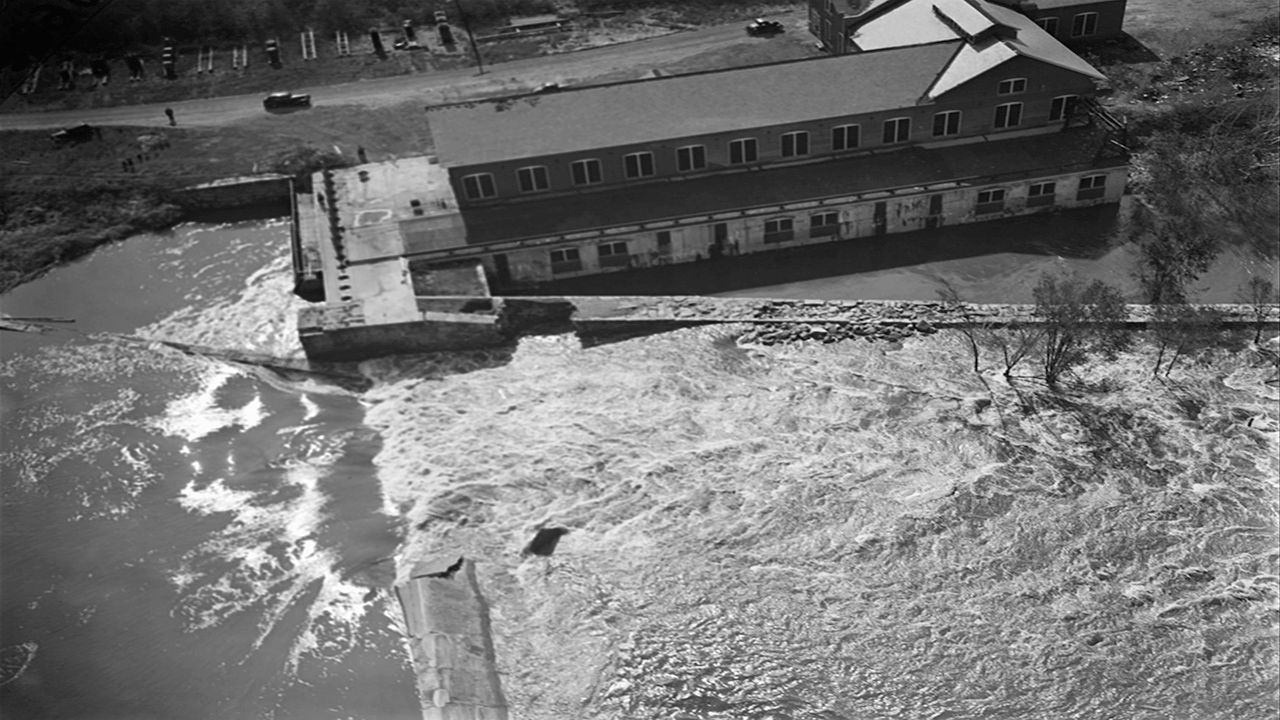
When we think of hurricanes striking the Northeast, they are usually Category 1 or 2 storms at most. A Category 3 landfall is rare, but that is exactly what happened in 1938.
The storm began as a tropical wave that moved off the coast of Africa near the Cape Verde Islands on Sept. 9, 1938. It tracked westward across the Atlantic and strengthened into a hurricane over the central Atlantic on Sept. 15. By Sept. 18, it had reached Category 4 strength, and it peaked as a Category 5 storm on Sept. 20 as it turned northward near the Bahamas.
The hurricane weakened back to Category 4 later on Sept. 20 as it paralleled the East Coast. It then continued north and eventually made landfall on Long Island, New York as a major Category 3 hurricane on Sept. 21.
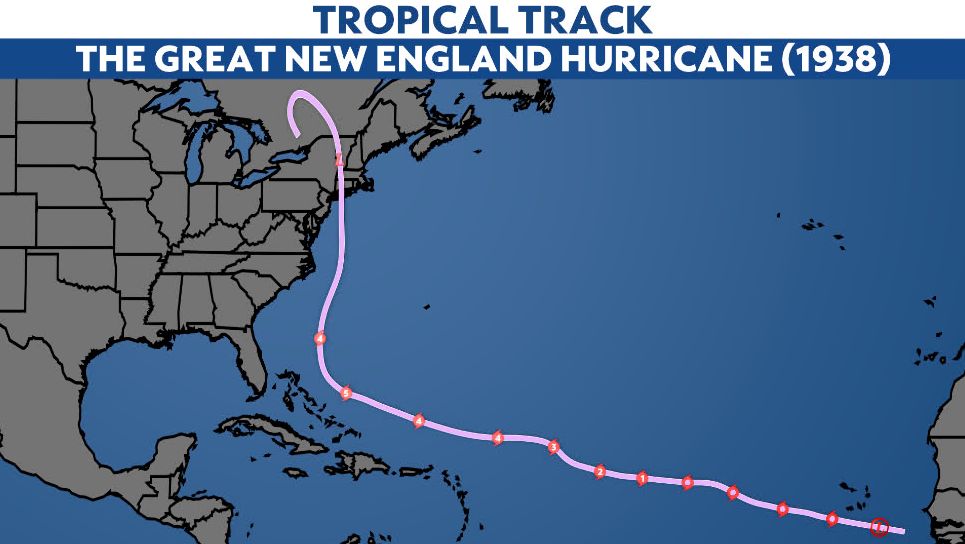
Further inland on the same day, the hurricane made a second landfall as a Category 3 storm between Bridgeport and New Haven, Connecticut.
Storm tides reached nearly 17 feet in some areas, destroying many homes. The flooding was so severe that Montauk temporarily became an island.
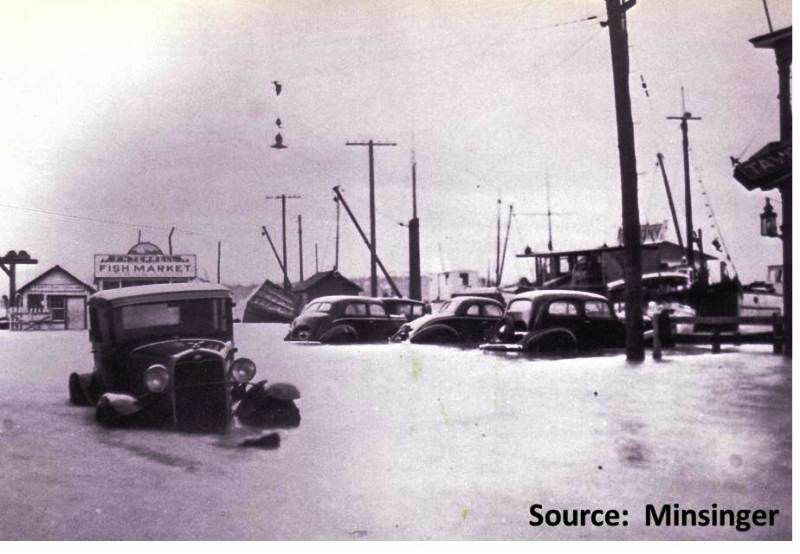
Many residents received little warning before the hurricane’s arrival, contributing to a tragic death toll estimated between 500 and 700 people.